Southampton City Art Gallery deserves to be far better known. The museum has long shared a historical relationship with the National Gallery, whose directors – most notably Kenneth Clark – played a pivotal role in shaping Southampton’s small, yet impressive international collection. In 1975, after acquiring a major and very expensive Monet, the gallery refocused its acquisition strategy on contemporary British art instead. Highlights from the gallery’s own collection, alongside a selection from the Ingram Collection are currently on display in the exhibition Art Then!, British Painting, Sculpture and Drawing 1910-1960.
I was wondering why curator David Boyd Haycock chose to frame this exhibition between 1910 and 1960. As he explains :
¨We begin in 1910 because of the exhibition Manet and the Post-Impressionists, curated by Roger Fry. It was a groundbreaking event in the history of British art. It brought Manet, Picasso, van Gogh, Gauguin, Cézanne to British audiences. It caused a great deal of controversy and a great deal of excitement, confusion, anger and inspired a many artists to look again at how they could approach art.¨
Beyond Fry’s landmark exhibition at the Grafton Galleries in London, 1910 was quite a significant year in Britain, marked by major social and political shifts. The Suffragettes were violently attacked by police outside the House of Commons, accelerating the movement’s shift toward more militant tactics. The British public was starting to enjoy the entertainment offered by the first purpose-built cinemas. In May 1910 Edward VII died– marking the end of the Edwardian era. Fittingly Frederick Hall’s stately portrait of the monarch, wearing his scarlet military dress uniform, opens the exhibition.
In contrast, by 1910 all was quiet on the art front. British artists had lost their mojo. Victorian painters such as ‘the Olympians’ – Alma-Tadema, Leighton, Poynter and Waterhouse – dominated the art scene with conservative, idealised depictions of ancient Greece and Rome. On top of that the paintings were often laden with moral narratives. Similarly, the Pre-Raphaelites rejected modern life and instead painted Shakespearean scenes and pictures reminiscent of 15th century Italian art. They were often superb craftsmen, deploying skills that were based on Renaissance drawing techniques, yet they had largely run out of fresh ideas.
Initially impressionism failed to make an impact in Britain. Although Monet and Camille Pissarro took refuge in London during the Franco-Prussian war in 1870 – Monet returned between 1899 and 1901 to paint his famous Thames series – British artists took little notice. Only Walter Sickert and Philip Wilson Steer, who were both influenced by the American impressionist painter James Abbott Whistler, actively championed the radical French style. They founded the New English Art Club in 1885 and organised the first impressionist exhibition in London four years later. However, the style found few takers in Britain, and the art critic Roger Fry ultimately dismissed British impressionism as a pale imitation of continental art.

“Truly, to be modern, one must repudiate the ancient”
Many in Britain tend to view the French as arrogant and around the turn of the century the attitude of French artists and art dealers toward British painting seemed to confirm that stereotype. The legendary art dealer and publisher Ambroise Vollard was hardly alone in his disdain when he told an English critic: “Ÿes, you have Walter Sickert, but who else have you? There are no painters in England.” Sickert was virtually the only contemporary British artists invited to hold a solo exhibition at a prominent Parisian gallery.
Despite this widespread dismissal, British art found unexpected admirers abroad.
As a young man, Picasso was fascinated by the pre-Raphalites and Edward Burne-Jones. One of his most accomplished early paintings, Science and Charity (1897) shows striking compositional similarities with Luke Fildes’s deeply personal and widely reproduced painting The Doctor (1891). Decades later, Picasso directly affirmed to Duncan Grant his long-standing admiration for the way Burne-Jones portrayed his (smouldering) female models.
Although Roger Fry studied at the Académie Julian in Paris and was a competent painter – modestly describing himself as “not a great artist, only a serious artist with some sensibility and taste”, his reputation ultimately rests on his work as a critic. He co-founded the high-quality art publication The Burlington Magazine (which is still going), and was an expert on Renaissance art. In 1906, he was appointed curator at the Metropolitan Museum of Art. In that role he came across Cézanne’s paintings. This ‘discovery’ changed everything, and from then on he embraced Post-impressionism – a collective term he actually coined and used for his exhibition at the Grafton Galleries.
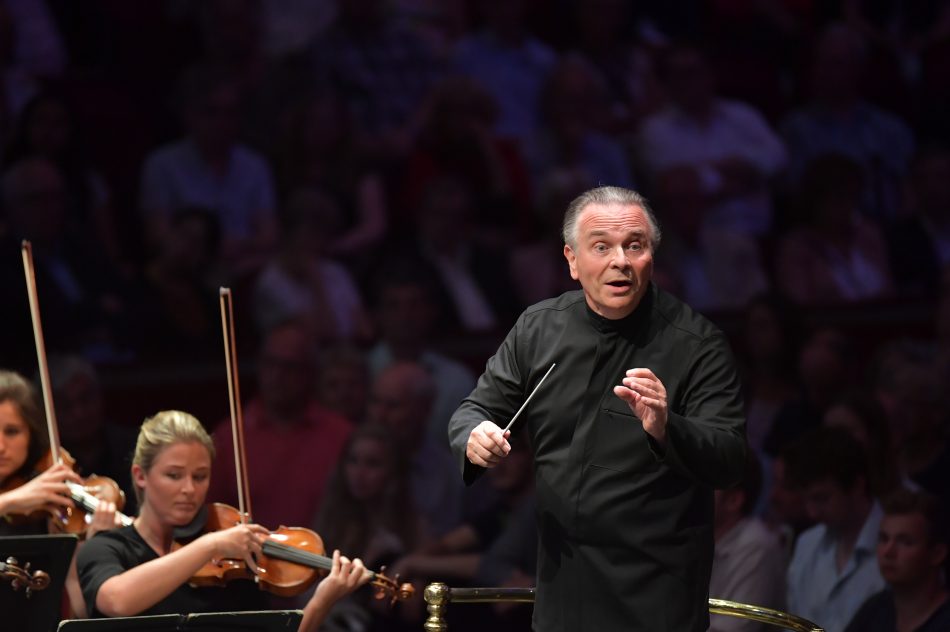
David Boyd Haycock explains why the exhibition Manet and the Post-Impressionists that opened in November 1910 was so significant.
The Southampton Art Gallery exhibits a work by Fry that illustrates perfectly his admiration for Cézanne’s Provence pictures. But Fort André, Villeneuve–les–Avignon (1913) is little more than an adequate landscape in the master’s manner.
The exhibition’s first room covers the period 1910-1930, a period in which British art changed dramatically. Judging by some of the works Haycock selected from the Southampton and Ingram collections, this transformation was not always for the better. The French influence is obvious in Augustus John’s Port de Bouc (1910), yet he makes the coastal landscape look thoroughly unwelcoming, as if stricken by a green contagion. Mark Gertler – best known for his anti-war painting The Merry-Go-Round (1916) in the Tate Gallery – is represented by The Doll (1914). His depiction of an unclad wooden doll staring at the viewer, and standing amid richly coloured book spines and a bowl of fruit, is creepy, unsettling, and nightmarish.
But it’s not all pre-war doom and gloom. Spencer Gore’s Brighton Pier (1913) captures the serene spirit of a Seurat seascape or a Pissarro riverscape, while adopting Gauguin’s flat forms and clear outlines. In many ways. Gore was the most important painter of the Camden Town Group – and arguably more talented than Sickert with whom he co-founded it. Gore was also the only member of “the English Group” represented in Fry’s Second Post-Impressionist Exhibition at the Grafton Galleries in 1912. Unfortunately, his commitment to plein air painting during a cold and wet winter in Richmond Park brought on pneumonia, causing his death in March 1914 at just 35. It was a tragic loss to the awakening independent English art scene, as his full potential was never realised.
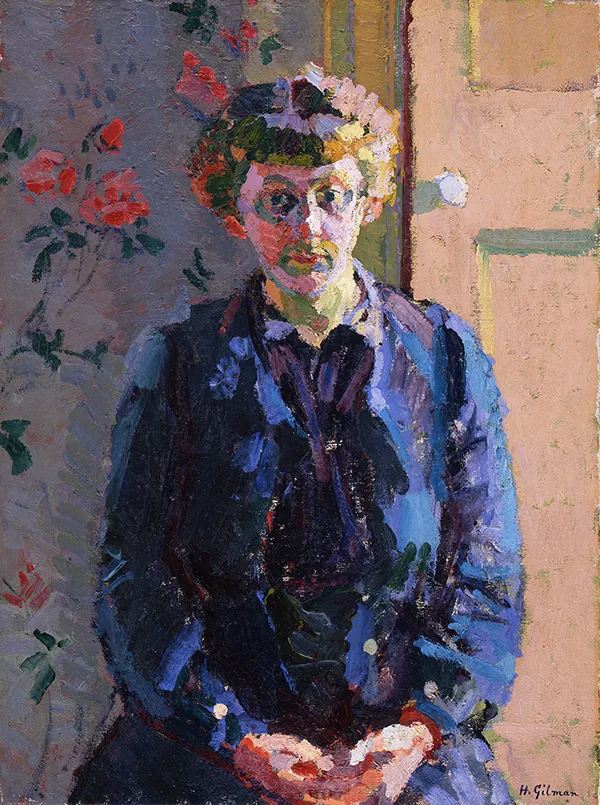
The same could be said of Harold Gilman (1876 -1919), president of the Camden Town Group. Manet and the Post-impressionist exhibition and a subsequent trip to Paris turned him into a passionate admirer of van Gogh. The Dutchman’s influence is evident in the vibrant, dotted colours and impasto application of Gilman’s three-quarter length portrait of the artist Sylvia Gosse. She became a lifelong friend of Sickert and managed his art school, eventually taking it over after his death. Gilman was particularly good at depicting domestic interiors and the ordinary life of people inhabiting them. He died during the Spanish flu pandemic, aged just 43.
Gilman’s mentor was Walter Sickert. But the German-born painter’s pencil and ink drawing Lady of the Chorus (1912) does not show him at his best, even if its subject – a young woman dressed in a chemise sitting on a bed in a soulless room – is quintessentially his style.
Percy Wyndham Lewis (1882-1957) is one of the most remarkable–and controversial – of the 30 painters featured in the first room of the exhibition. Lewis was born on his parents’ yacht to a wealthy father who was an American Civil War veteran. He moved with his mother to Britain, won a scholarship to the Slade school, was thrown out, and subsequently spent several years studying painting in Paris. Upon returning to Britain he developed an angular, geometric and quite aggressive style that drew on aspects of Cubism , Futurism and Expressionism. The American poet Ezra Pound coined the name Vorticism for the movement. Lewis enlisted in the Royal Garrison Artillery and served at the front during the Great War. The Canadians and the British recognised his real talents and appointed him as an Official War Artist.
Drawing of a Great War, the Menin Road (see picture above) displays the typical expressionist angularity applied by the Vorticists. Lewis was an innovative artist, but after the war he became better known for his writing – a body of work so acerbic and goading that on several occasions it led to costly libel actions. When he began praising totalitarianism and notoriously described Hitler as “a man of peace,” publishers and friends distanced themselves from him. He recanted after a visit to Nazi Germany in 1937, but the fascism tag stuck. Following World War II, however, he restored his reputation as an insightful art critic, championing emerging artists such as Francis Bacon.
The second gallery’s display is devoted to the 1930s and the Second World War – a period when many British artists felt confident to align themselves with their European colleagues. At the same time, sharp factionalism emerged within the British art establishment. One group of British artists drew inspiration from the Paris-based association of abstract artists, Abstract-Création , which included such figures as Naum Gabo, Piet Mondrian and Wassily Kandinsky. Barbara Hepworth, Henry Moore and John Piper were the prime movers behind the Seven and Five Abstract Group, while Paul Nash brought together painters, architects and sculptors in the short-lived Unit One group. Nash, alongside Herbert Read – the most influential advocate of modern art in Britain – organised The International Surrealist Exhibition in 1936, a hugely significant undertaking. Famously, the Welsh poet Dylan Thomas walked around the galleries offering cups of boiled string, asking visitors if they preferred them weak or strong.

The British Surrealist Group was established in response to the show, and Ithel Colquhuon (1906-88), who had traveled widely in Europe, soon joined them. Her painting Rivières tièdes (Méditerranée) was inspired by a Stéphane Mallarmé poem about the end of an affair. The depicted church is no sanctuary, it looks forbidding, its doors firmly shut. Four coloured rivulets seep from beneath the four doors, flowing down the steps and into the sand.
Mallarmé’s poem offers a few clues:
Mais ta chevelure est une rivière tiède/Où noyer sans frissons l’âme qui nous obsède
These are tricky lines to translate, but a rough version reads like this:
But your tresses are a tepid river, Where the soul drowns, haunts us
Throughout her life Colquhuon was preoccupied with the occult, magic and Eastern spirituality.To unlock the secret of this painting, one probably needs some knowledge of Swedenborg, esotericism and Tantra. While I don’t know enough about those subjects, the image remains haunting and memorable – with a hint of De Chirico in its deliberately distorted perspective. Colquhuon preferred using gesso panels, which provided a firm, smooth surface, ideal for sharp lines and fine detail. When her supplier ran out of them, he suggested she contact the only other person he knew who used the same panels: Winston Churchill, who supplied the panel for this very painting.
Some of the strongest works on show in this section of the exhibition are by female artists.
Eileen Agar’s The Object Lesson (1940), made with found objects, is about as fine a Surrealist collage as you will find by a British artist (though she was born in Argentina to a Scottish father and an American mother). Barbara Hepworth’s Sculpture with Colour and Strings is likely one of her first small string bronzes, created after she moved to Cornwall in 1939 at the outbreak of the war with her husband, the artist Ben Nicholson. You can feel the high-strung tension (sorry about the pun), yet simultaneously it resembles an aerial weapon, or a musical instrument, or….make of it what you will. It is pure, classic Hepworth.
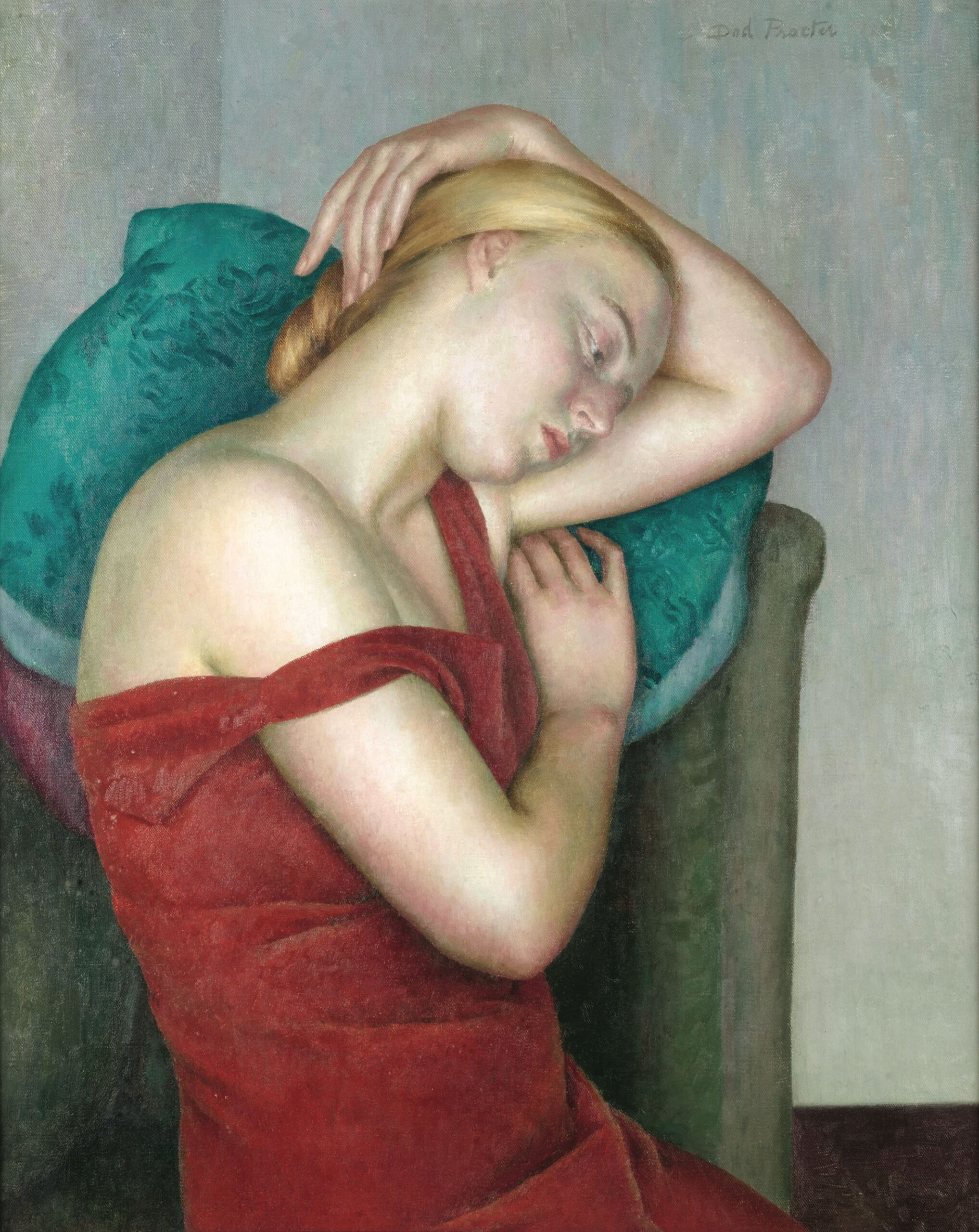
Dod Procter’s painting Morning (1926), showing a sleeping woman lying atop of the sheets in a nightdress, was widely admired for its natural femininity, and controversial for its risqué subject matter. The work was bought for the nation by the Daily Mail and presented to the Tate Gallery. The Golden Girl (c.1930), exhibited here, is similarly captivating. The blonde beauty reclining on a pillow against the arm of a sofa, seems unaware that the strap of her red velvet dress has slipped down her arm, exposing her shapely neck and shoulder. The soft yet sculptural execution shows the influence of Picasso’s neoclassical paintings from the 1920s.
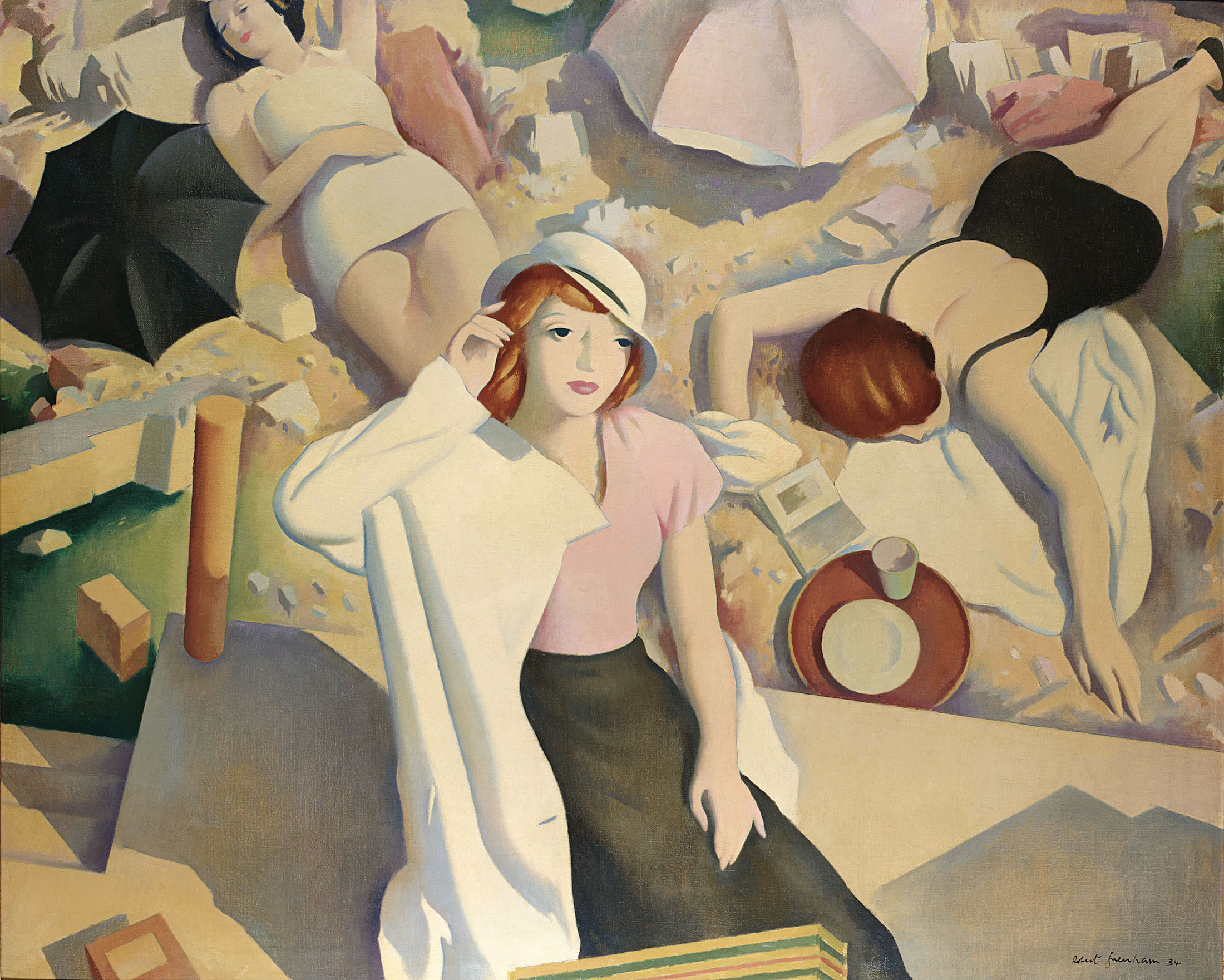
Beautiful women are also the subject of Robert Duckworth Greenham’s painting On the Beach (1934), which is my featured picture. Greenham was particularly keen on painting crowded Suffolk and Cromer beach scenes. The featured piece, however, is special because of its framing. Reminiscent of a high-angle shot in a movie, the perspective looks down at the red-haired woman with widely spaced eyes in the foreground. But why is she almost fully dressed when the other women in the picture are sunbathing? Greenham couldn’t resist a touch of Art Deco glamour, occasionally painting portraits inspired by cinema stills of celebrated stars like Jessie Matthews , Ann Todd and Greta Garbo. Duckworth may be a minor figure in art history, but On the Beach demonstrates perfectly how American cinema influenced the sleek, streamlined fashion during the interwar period in Britain.
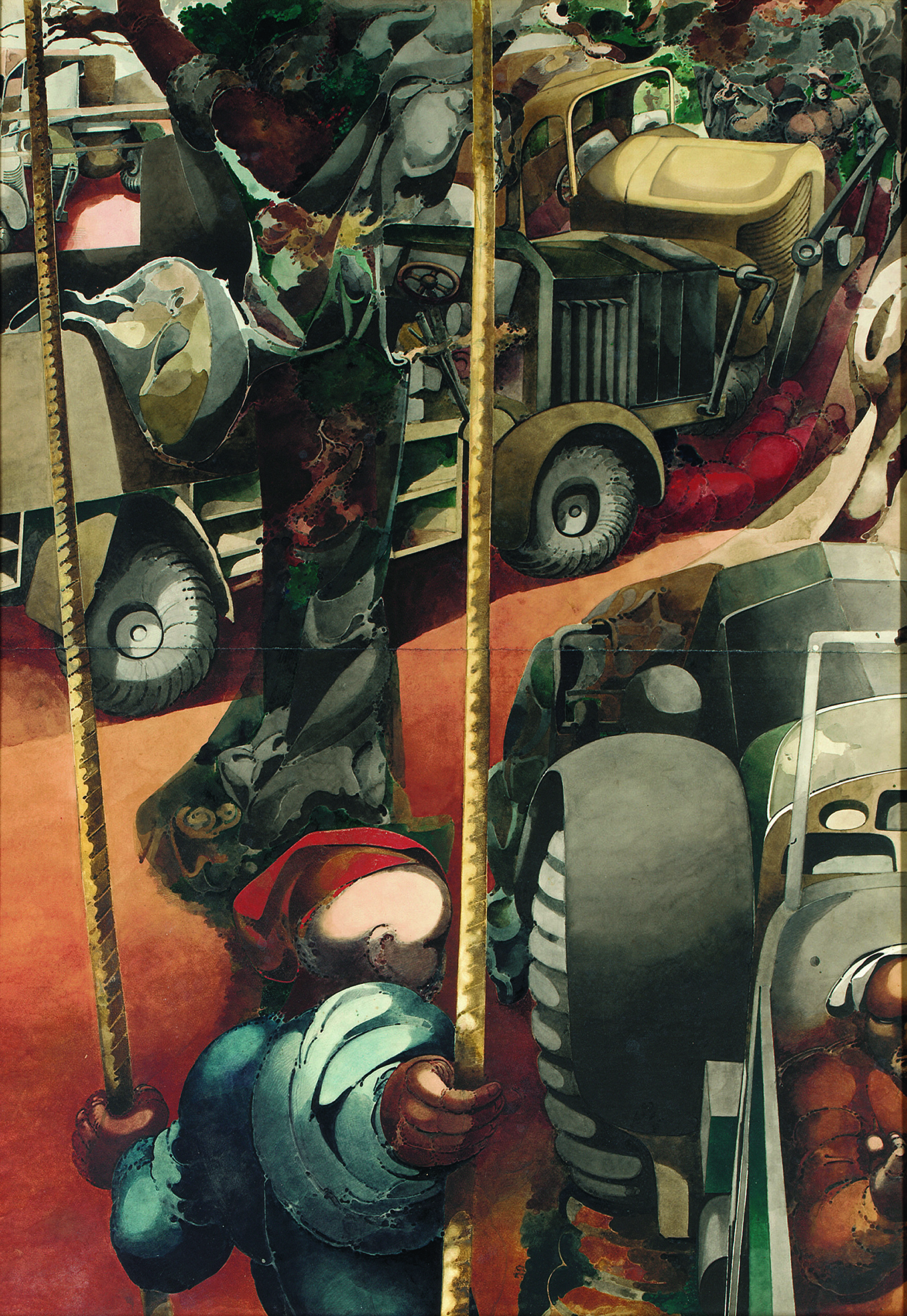
While the war isolated Britain from the rest of Europe, and perhaps strangely, it was not entirely bad for the local art scene. Infrastructure in coastal locations was targeted by German bombers, and Southampton’s City Art Gallery also suffered major damage and a number of tragic deaths. Edmund Burra’s hometown Rye also regularly came under heavy bombardment and therefore the historic town was surrounded by anti-aircraft guns and army garrisons. Burra’s watercolour Ropes and Lorries (1942-42) depicts military vehicles at close range, cutting out the horizon to convey the sense that the war invades every single physical space.
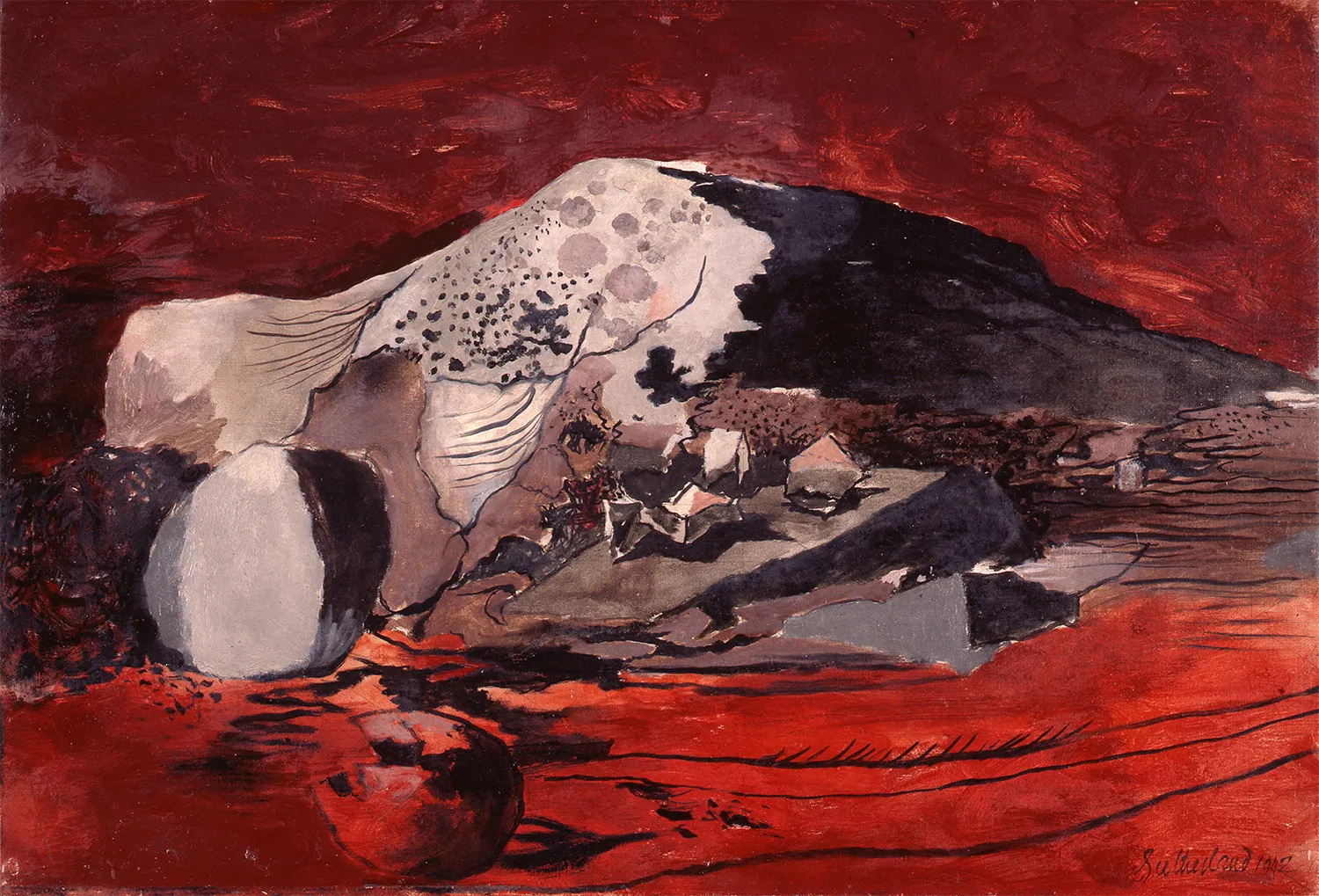
A trip to Pembrokeshire in 1934 had a deeply moving effect on Graham Sutherland (1903-1980), who remarked that it was where he truly began to learn painting. He saw it as a land of “exultant strangemess” and found a way to paraphrase nature by synthesising abstraction, Surrealism and Neo-Romanticism. Another influential event took place in 1938-39 when Picasso’s monumental anti-war painting Guernica toured Britain and was shown in London, Oxford, Leeds and even a car showroom in Manchester! The painting left a profound impact on Sutherland, Henry Moore and Francis Bacon. Nature takes on monstrous forms in Sutherland’s Black Landscape, widely regarded as one of the Tate Gallery’s masterpieces. But I think the Southampton City Art Gallery’s Red Landscape is even more powerful, bleak and ominous. Its blood-red sky, and apocalyptic rivers of blood flowing around a stark rocky landscape – illuminated only by cold moonlight – reflect the anxiety, despair and nihilism felt in 1942, a time when the war was still escalating with no end in sight. In Sutherland’s visionary landscapes from this period traditional English pastoralism meets modern European surrealism and abstraction.
The Neo-Romantic movement, inspired by visionary 19th century artists like Samuel Palmer and William Blake, originated in the 1920s and 1930s with Sutherland, Henry Moore, Paul Nash and John Piper. Keith Vaughan, John Craxton, John Minton and William Scott – all featured in this exhibition – followed the originators’ lead and reconnected with the landscape that surrounded them. While they were not an identifiable group like the Bloomsbury set or the Pre-Raphaelites, they shared a common experience: wartime isolation cut them off from the Continental avant-garde. The result was a return to a more native, English way of depicting nature, rural architecture and historic landmarks. Piper’s paintings of the bombed-out ruins of Coventry Cathedral became defining images of the war.
A number of artists served in the armed forces, while many more were employed as Official War Artists (over 400 in total!). Some even fought on the battlefields, or were held for many years as prisoners of war on the Continent.
The Blitz caused many artists to flee London, with the majority basing themselves in Cornwall, where Nicholson, Hepworth and the Russian sculptor Naum Gabo had already set up studio in the charming fishing town St.Ives. Peter Lanyon was born and raised in St Ives, and its coastal landscapes and the Atlantic Ocean underpinned his semi-abstract canvases. After receiving private lessons from Nicholson shortly after the outbreak of the war, Lanyon served with the RAF as a flight mechanic. Following the war, he returned to St.Ives and immersed himself in the surrounding landscape. Chapman’s Pool (1960), the crayon on paper work exhibited here, is unfortunately not very representative of his innovative use of colour and texture, though it does mark his shift toward Abstract Expressionism.
After the war St. Ives became a hub for testing the boundaries of representation – soaking up the surrounding land-and seascapes while exploring the limits of space, form and colour. Nicholson, Hepworth and Gabo were early influences, but by the1950s, Patrick Heron, Terry Frost, Wilhelmina Barns-Graham, John Wells and Roger Hilton (all represented in the exhibition) had each developed their own distinct modernist style.

Looking at the works in the Post-War Modernism section of the exhibition, I come to the conclusion that British art by the mid-1950s was in no way inferior to what was happening in France, Italy or the U.S. Patrick Heron even argued that American Abstract Expressiosts – and Mark Rothko in particular– owed a great deal to the St. Ives School.
Furthermore, looking at the sculptors in this show – Henry Moore, Kenneth Armitage, Lynn Chadwick Geoffrey Clarke and Elisabeth Frink – you are reminded that very few countries could boast such a rich pool of talent after the war.
The St. Ives ‘movement’ – ‘movement’ feels much more dynamic than ‘school’ – only began to receive the recognition it deserved in the 1990s. British post-war abstract painting may have been less audacious (in your face?) than American Abstract Expressionism, but I would personally take a painting by Victor Pasmore, Roger Hilton or Barbara Hepworth painting over a Franz Kline, Robert Motherwell or Theodoros Stamos any day of the week.
Curator David Boyd Haycock has put together an admirable overview of a period that transformed Britain from a relatively insignificant nation in the art world into a country standing at the very forefront of post-war modernism.
If British art was taken seriously at the turn of the last century, nobody could deny its dynamic and powerful emergence on the world stage in the 1950s. I’ll leave the parting shot to David Boyd Haycock: “Paul Nash writes about this, when he talks about being British and going modern. Trying to square the English tradition in art with continental modernism and bringing those two together. My feeling is that by 1940 that is happening and after 1945 you can see that kind of confidence or a change of direction towards abstraction that is very exhilarating.”
Albert Ehrnrooth
ART THEN! British Painting, Sculpture and Drawing, 1910-1960. Southampton City Art Gallery until 2 February 2027