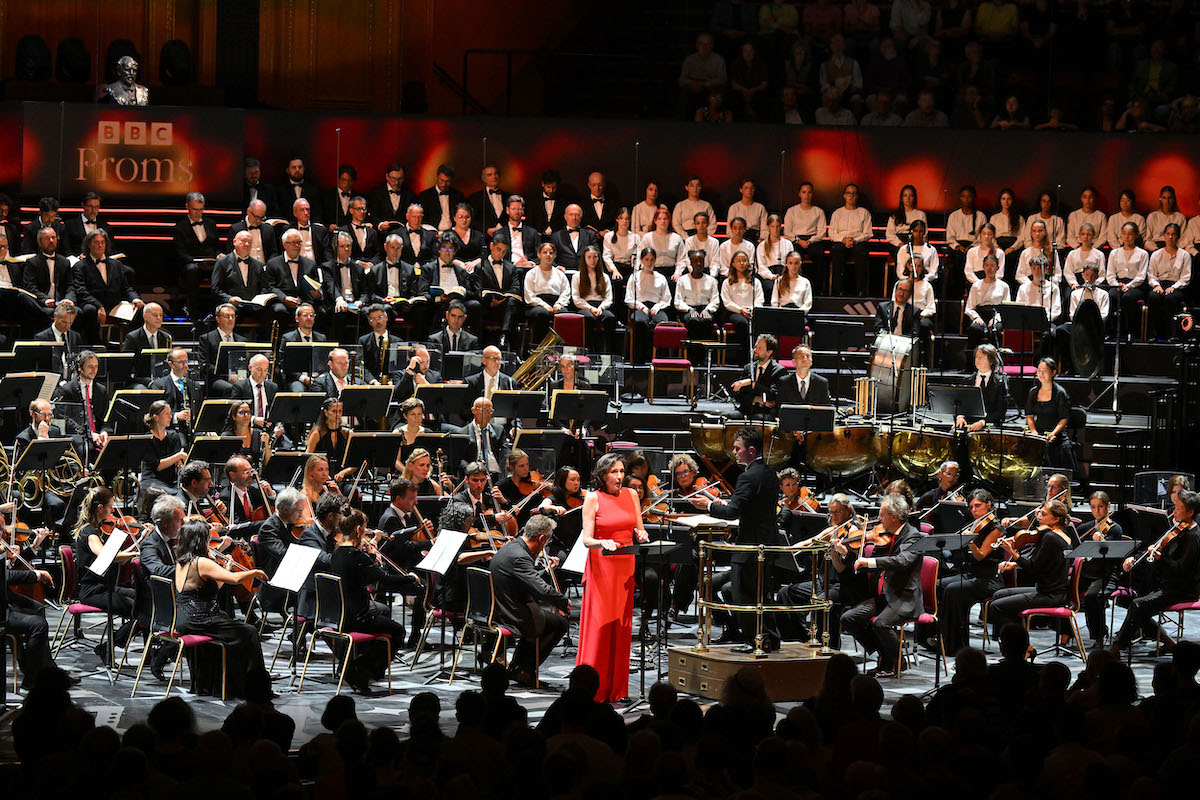
Is La Damnation de Faust an opera, an oratorio, a dramatic legend, or a symphony for four soloists, chorus and children’s choir? Hector Berlioz himself intended it for the concert hall, famously describing it as “an opera without décor or costumes.” That is precisely how it was presented at the Royal Albert Hall BBC Proms concert by the historical performance ensemble Les Siècles.
Founded in 2003 by François-Xavier Roth, Les Siècles initially brought together mainly young musicians drawn from France’s finest ensembles. The players are no longer all young, but what they have lost in youth, they have gained in experience. Their repertoire is remarkably wide for a period ensemble, and they are very meticulous about using instruments appropriate to the period for each piece. One could therefore argue that this performance came as close to what Berlioz himself might have wished to hear.
THE FAUST LEGEND
During the 19th century writers and composers became deeply fascinated by the legend of Doctor Faustus, kicking off an obsession that has never truly let up – extending today to filmmakers, comic book writers and video game developers, as well as many other cultural fields. Beethoven, Schubert and Wagner composed songs about the Doctor’s pact with the devil and his love for Gretchen (or Marguerite in French). Liszt’s choral Faust Symphony and Mephisto Waltzes remain concert staples. While Spohr’s Faust opera is now a rarity, both Boito and Gounod’s takes on the legend are staged fairly regularly. But why did Faust hold such a powerful resonance in the Romantic era?
The historical Johann Georg Faust (1480) was a German alchemist, astrologer and practitioner of magic. Even during his lifetime, he was accused of being a blasphemer and a fraudster. A few decades after his death his dubious exploits became the subject of an anonymous chapbook, Historia von D.Johann Fausten (1587) and was reprinted extensively. Christopher Marlowe based his very popular play The Tragical History of Doctor Faustus (1604) on these German tales. Over the next two centuries the story provided material for the popular puppet theaters, often accompanied by music.
These early Faust dramatisations all stuck to the original theological framework, focusing firmly on Faust’s active rejection of God, and his repeated refusal to repent, which inevitably led to his eternal doom.
Goethe, however, approached Faust from a radically different angle, transforming him into an Enlightenment figure. To Goethe the black magic, alchemy and even the traditional religious aspects were secondary. Faust’s damnation for all eternity was certainly an inconvenience, an existential hurdle. But the Faust he presented in Part One (1808) is a man very recognisable to us; a man experiencing an existential crisis, desperate to find the true meaning of life.
“I’ve mastered, and sweated through Theology’s dead deserts, too, Yet here, poor fool! for all my lore, I stand no wiser than before.” Intellectual pursuits have failed to satisfy his soul, and therefore he might as well sell it – his soul, that is – for all the pleasures of the world.
Goethe’s Faust reflected the 19th century’s deep anxiety over the dawning of a new age – an era marked by radical scientific inventions and theories, quicker means of transportation, and automated machinery that made a lot of manual labour superfluous. It was an unease not unlike what many feel today in the face of the seemingly unstoppable progress of artificial intelligence.
BERLIOZ’S OBSESSION WITH FAUST
In 1827 and 1828 Berlioz made a number of artistic and personal ‘discoveries’ that were to determine the development of his music. He was introduced to Shakespeare’s plays when he attended performances of Hamlet and Romeo and Juliet by a visiting English theatre company in Paris. Though he didn’t understand a word of English, he fell hopelessly in love with Harriet Smithson, the mercurial Irish actress playing the romantic leads. She initially ignored his impassioned love letters (and possibly remained unaware of most of them). His obsession with her, alongside the agony of unrequited love inspired his ‘chef-d’œuvre’, Symphonie fantastique (1830). Harriet and Hector finally met – five years after her first visit to Paris – after a performance of the Symphonie and they were married a year later.
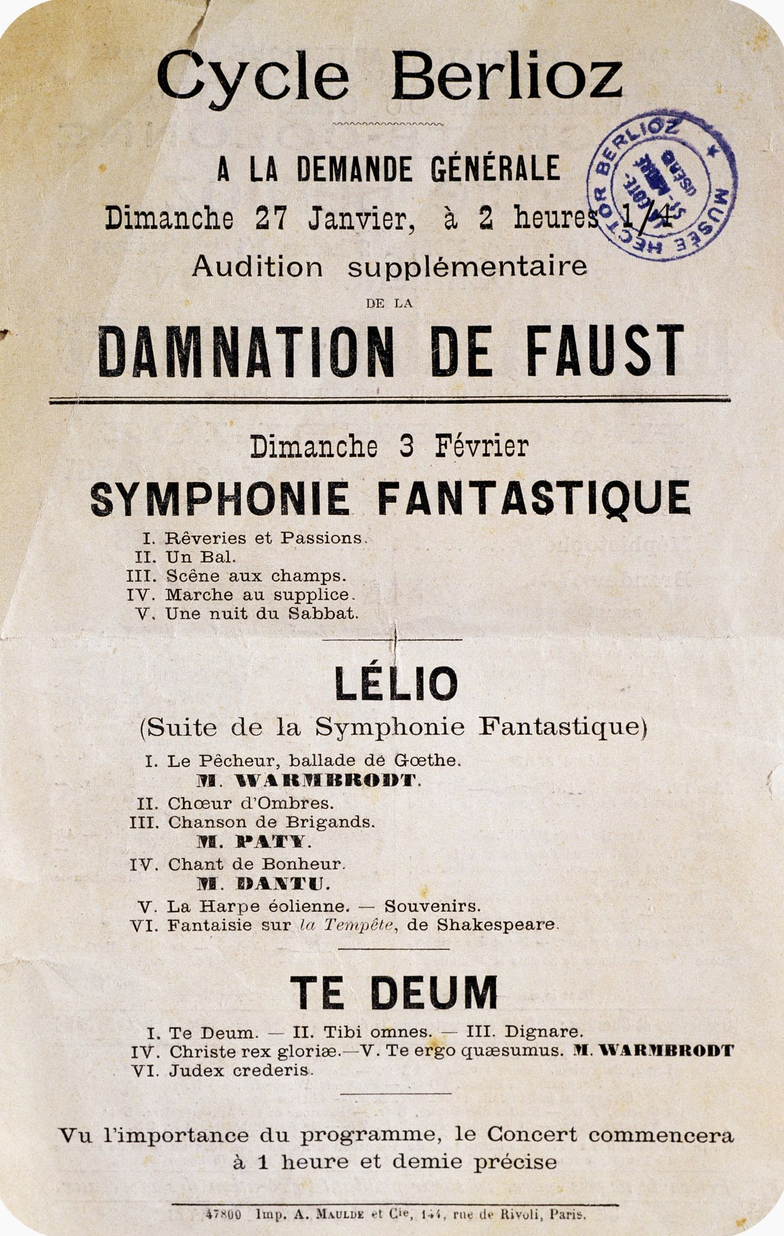
Around the time Berlioz discovered Shakespeare (and Harriet Smithson) he also came across Goethe’s Faust and wrote: “Shakespeare and Goethe—the silent confidants of my tormented soul. The key to my existence lies with them.” Add to those two Beethoven, whose symphonies opened an entirely new musical realm for the 24-year old. After reading Gerard de Nerval ‘s translation of Goethe’s Faust he just couldn’t put it away, reading it everywhere – in the theatre, on the street, over diner. He almost immediately set to work composing Huit scènes de Faust, a collection of vignettes for soloists chorus and orchestra, which became his Opus 1. Seventeen years later (!), he reworked all eight scenes and incorporated them in La Damnation de Faust.
His fascination with the ‘Faustian pact’ reawakened in the early 1840s during a conducting tour when he visited Weimar (Goethe’s home), the Elbe Valley and Leipzig. The suffering of Faust mirrored the composer’s own tumultuous love life, the endless search for fulfillment and all his other existential struggles – Emotional and Turmoil were Berlioz’s middle names.
But he did not adopt all Goethe’s themes slavishly. The German writer’s obsession with redemption and rebirth finds no place in the opera; Faust is doomed from the start , without a chance in hell of being saved. After all, the spoiler is right there in the title.
REVIEW AND SYNOPSIS
All around on the plains of Hungary, nature awakens to bird song, the rustling of foliage and the sound of flowing water. Faust longs to enjoy the peace and solitude but in the distance local peasants are celebrating the arrival of spring. Begrudging their cheerfulness, Faust moves away – only to be met by soldiers marching off to battle. He admires their courage, but their thirst for glory leaves him cold.
Berlioz made an adaptation of a Hungarian folk song and turned it into the rousing Rákóczi March which he premiered and conducted during a concert series in Budapest. The audience response was so overwhelming that he incorporated the piece directly into his Faust drama. To this day his arrangement is heard at the Hungarian army’s parades and celebrations. Conductor Jakob Lehmann, however, has little time for rigid military fanfare; under his baton Les Siècles transform the march into a vivacious dance-like celebration. And whose to say Hungarian troops can’t dance?
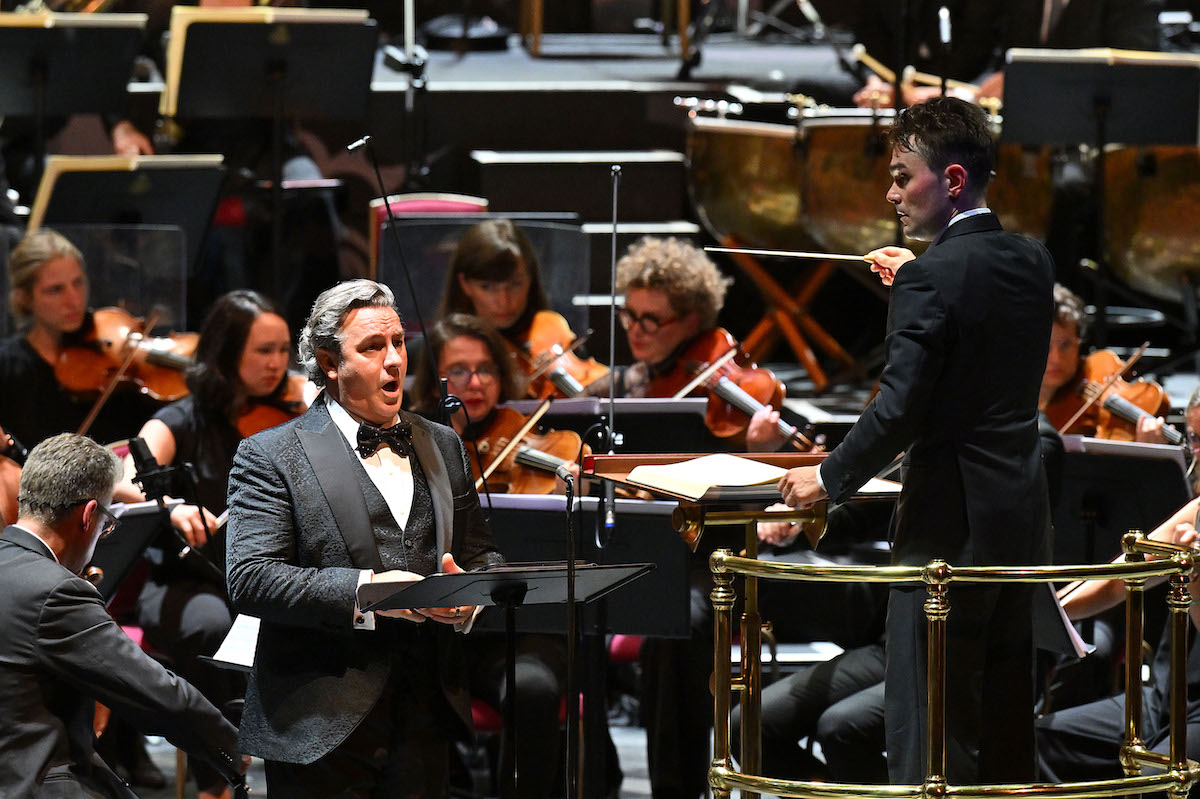
The American tenor John Osborn captures Faust’s sense of alienation with appropriate nuance. As he wanders the plain, this Faustus remains subdued and melancholic. Could he be related to Harold in Italy?
In Part II Faust returns to his study in North Germany. Still trapped in his old ennui, he remains unable to find fulfillment, and his thirst for knowledge has led nowhere. He is about to drink from a poisoned chalice to end it all when he is interrupted by church bells and voices singing the Easter canticle Christ is Risen. The heavenly hymn reminds him of his childhood, and while he is moved to tears by the singing he realises that “heaven has won me back.” There continues to be a sense of restraint in Osborn’s light-toned voice, as he avoids overplaying the sentimentality.
Berlioz himself was not particularly religious – declaring “My religion is Beethoven,Weber, Gluck, and Spontini “ – but he was exceptionally adept at using Catholic rituals in many of his compositions. His Requiem (Grande Messe des Morts) is a magnificent example, though it is wholly unsuitable for a church service. With its innovative orchestral writing and the massive ensemble required it feels much more like a colossal symphony with voices, that just happen to sing a liturgical text.
Suddenly Méphistophélès appears and Faust is easily persuaded and is ready to follow him anywhere. They’re off to visit Auerbach’s Tavern in Leipzig – a popular tourist destination to this day! In the old days, only wine was served in this ‘Keller’ where Luther (who is referenced in the Song of the Rat) Goethe and perhaps even Bach were regular patrons.
Together Mephisto and Faust listen to the drunken banter of the tavern’s student revelers. Brander (Thomas Dolié) entertains the crowd with Certain Rat, dans une cuisine, a song about a poisoned rat whose death throes make it act as if possessed by love. The strings mimic the rat’s frantic agony, while Brander must deliver the tune at a fairly brisk tempo with crisp diction– all without resorting to half-spoken declamation. Dolié, a native French speaker, handled the tricky vocal challenge comfortably while Lehmann kept the tempo at a manageable speed.
The tortured rat – animal rights advocates beware –is then honoured by the students with a sarcastic Requiescet in pace (Rest in peace), which leads into an appropriately academic, yet straight-faced delivered blasphemous fugue. It is hard to imagine that any other choir could perform this piece with so much character and more more convincingly than the 80-strong Chœur de Radio France – the country’s sole permanent professional choir.
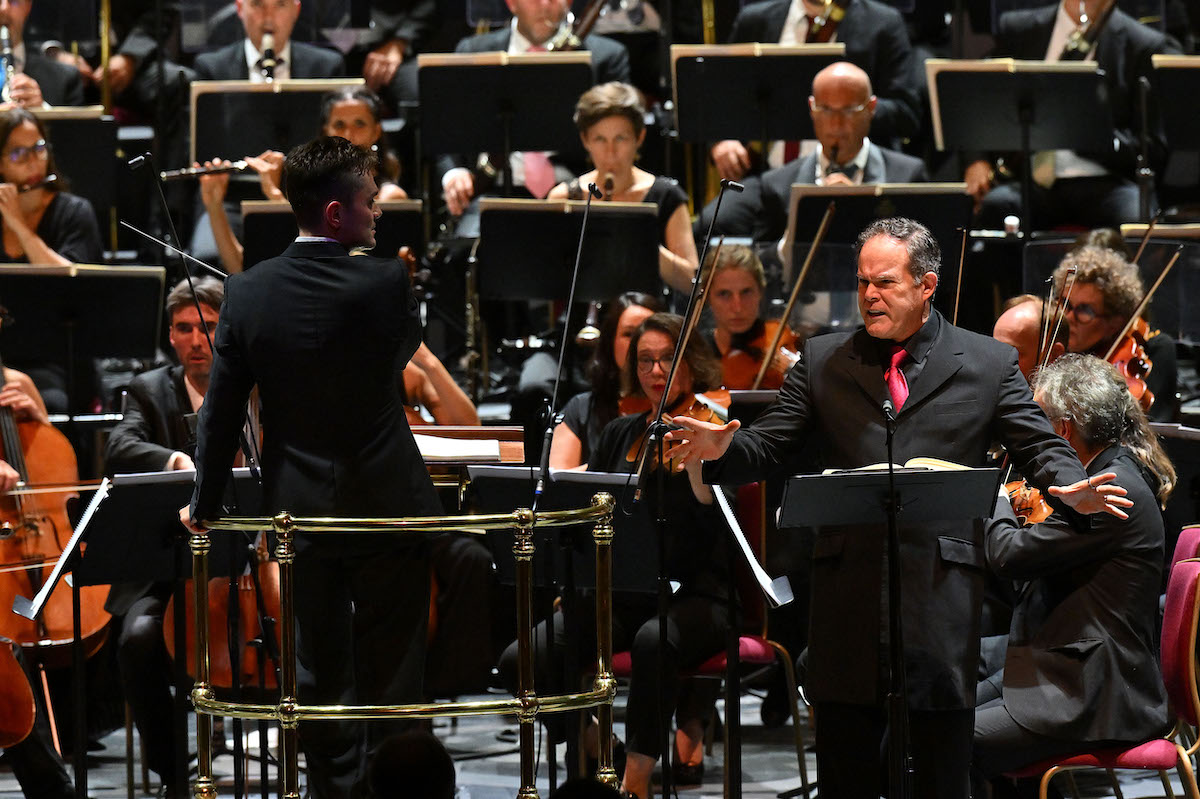
Gerald Finley’s Méphistophélès stirs the boisterous crowd even further with his song about a court infested with fleas – creatures treated, by order of the prince, like grandees. Disgusted by the vile tales and noisy students, Faust just wants some peace and quiet. Méphisto instantly responds to his request, rocking him to sleep on the banks of the Elbe with the exquisite lullaby Voici des roses. In these quiet moments Finley’s self-assured Méphistophélès – self-doubt is a human trait that demons are not troubled by – is superb, slowly ringfencing his prey. Finley’s voice, often described as burnished bronze, has acquired an effortlessness and majestic depth that has outpaced Father Time.
The following Ballet des Sylphes is a masterclass in gossamer orchestration, and Les Siècles – with their signature transparent sound – achieve a lightness resembling ballet tulle.. The cellos and double basses hold an almost imperceptible single pedal note while two harps weave through plucked strings – light and airy as feathers from a fallen angel – before concluding with the softest possible baguette d’éponge drum and harp notes. It should come as no surprise that the music conjures heavenly visions of Faust’s beloved Marguerite.
The period musicians of Les Siecles have tuned their instruments slightly lower than the modern standard pitch of A=440 Hz, which noticeably creates a warmer and darker sound than modern instruments produce.
In Part III, Faust is hiding behind a silk curtain in Marguerite’s room, as soldiers march outside. He believes he has found the pure, enchanting woman of his dreams. Merci doux crépuscule demands a tenor with perfect breath control, exquisitely nuanced phrasing and the ability to float up to A -flat. Osborn takes it all in his stride.
All eyes are on Véronique Gens once she takes the stage: tall and dressed in a red gown, she looks every inch the aristo (yes, not so much the innocent maiden, but who cares?). Marguerite is troubled by a dream about a future lover whom she fears she will never meet. Accompanied by a plaintive solo viola Autrefois un roi de Thulé sounds like a song from a distant past, a chanson Gothique. Gens negotiates the ballad’s awkward opening interval with ease, while her mellifluous French – she is a native speaker – colours the song with exquisite delicacy.
Méphistophélès summons the “spirits of fickle flame”, who perform a Minuet of Will-o-the-Wisps, which keeps the three piccolos players busy.The Demon tempter’s taunting serenade predicts that Marguerite’s innocence will get compromised. That is precisely what the devil’s representative intends, and he engineers the meeting between the two star-crossed lovers.
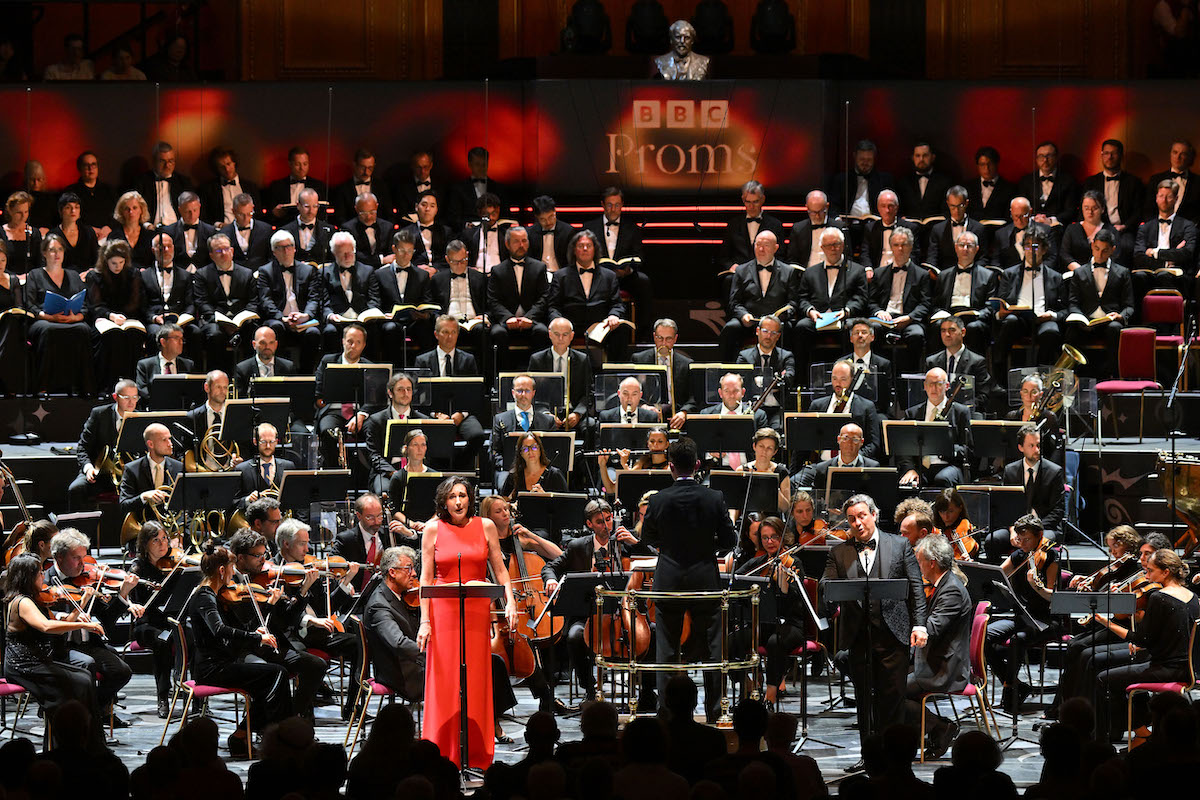
Marguerite and Faust have barely enough time to declare their mutual love before Méphistophélès intervenes, warning that Marguerite’s mother has been roused by the neighbours and is on her way. The commotion outside the door grows louder as the agitated lovers take their leave, reassured by Méphistophélès that they will meet again tomorrow. He is now convinced that he has secured his hold over Faust.
Part IV Accompanied by the dreamy tones of a cor anglais (played beautifully and unhurriedly by Stéphane Morvan) the now-pregnant Marguerite sings of her longing for Faust, who has abandoned her.
Gens tackles the technical challenges of D’amour, l’ardente flamme so smoothly that the performance becomes almost as much about the singer as the role. Her voice has the colour and depth of a perfectly mature Burgundy Pinot Noir from a vintage year. She negotiate the sweeping lines, smooth leaps and dotted rhythms with such ease that younger sopranos might be tempted to reach for the magic potions that has kept her voice in such good nick.
Speaking of potions, Marguerite gives her mother a sleeping liquid supplied by Faust so they can meet undisturbed. Méphistophélès reveals to Faust that the ‘innocent’ brown liquid was actually poison, while the hunt-like music suggests that Faust is the prey. Marguerite is condemned to death for her mother’s murder. Panic-stricken, Faust demands her rescue. Méphistophélès agrees on condition that Faust surrenders his soul.
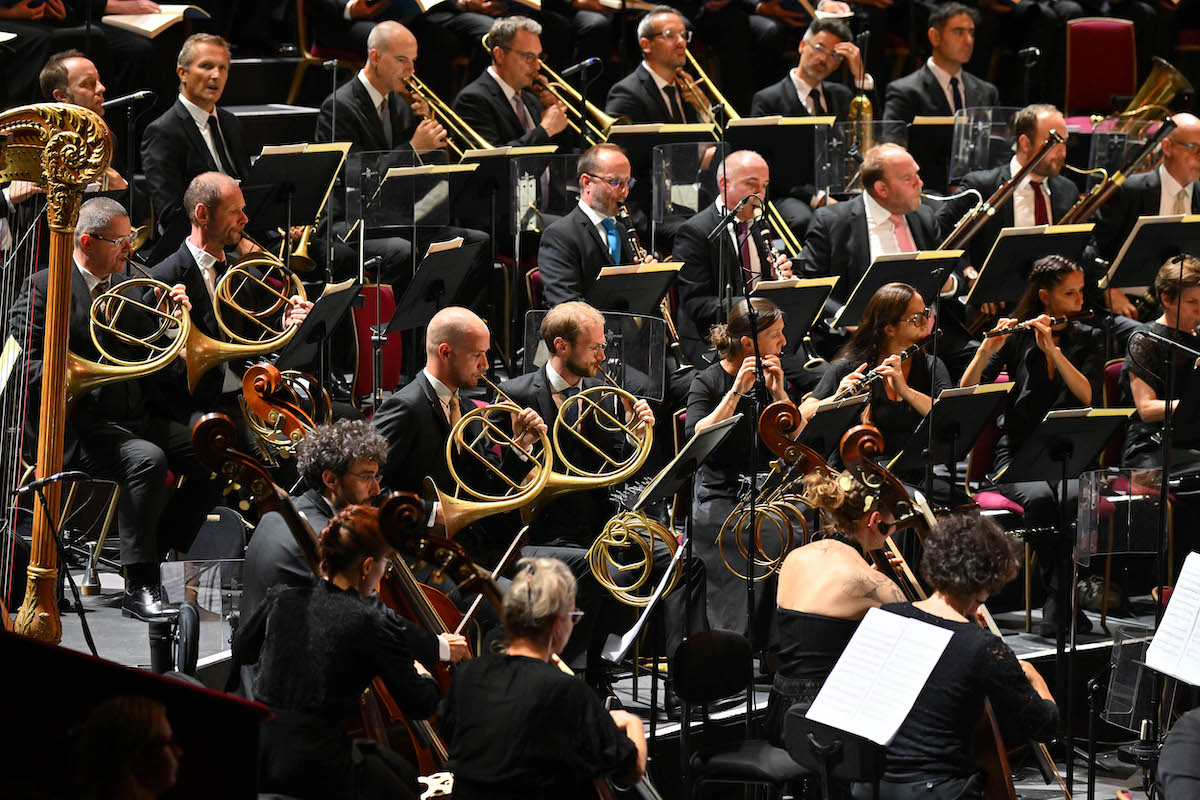
Once the deal is struck, two black horses carry them off at breakneck speed, nearly trampling praying peasants, women and children. Giant birds brush them with their wings, skeletons dance and blood rains down. Trombones and the tuba-like ophicleide rasp, fart and sneer. “Are you afraid? Then turn back!” Méphistophélès bellows. No, Faust thinks he can hear Marguerite’s distressed calls. He realises too late that all along he has been riding straight into the abyss – and suddenly, there it is… Horreur!
Pandemonium breaks out. Monsters wail and shriek as Méphistophélès commands the legions of hell. Gerald Finley is having a ball and so are we in the audience. The orchestra hits boiling point and we are reminded that Faust freely signed the pact that consigns him to the eternal flames. So there. Chœur de Radio France starts speaking, or rather singing, in tongues, playful demonic jargon: Diff! Diff! Bélzebuth
Then hell falls silent.
We return briefly to Earth to listen to “a few voices” quietly and briefly describe what awaits us in hell before we are finally transported to the realm of the seraphim. Marguerite ascends to celestial pastures, wrapped softly, ever so softly in upper woodwinds, four harps and violins.and the angelic children’s choir of the Maîtrise de Radio France. It is simple yet deeply effective choral writing that leaves you longing to be received by a host of angels in much the same way.
Throughout the opera Les Siècles achieve a delicately textured, highly articulated sound. This clarity and special tonal weight is particularly noticeable in the woodwinds – most notably the French wooden flutes, narrow-bore oboes, bassoons and in this performance also the cor anglais.
A marvelous concert, with almost the best possible singers and definitely the very best choirs and orchestra for the occasion. Conductor Jacob Lehmann never allowed the dynamic and action-packed score to slacken and was not tempted to slow down to emphasise the marvelous, over-the-top enlightened romanticism of it all.
N.B. If you live in the UK, you can listen to this concert on BBC Sounds until SUNDAY 11 October 2026
ALBERT EHRNROOTH
This was a concert performance – as originally intended by Berlioz . However, with an imaginative director at the helm – such as Terry Gilliam, whose Monty Pythonesque production I saw at the Flemish Opera 14 years ago – it also works very well as a fully staged performance. I think La Damnation de Faust deserves to be performed more often!