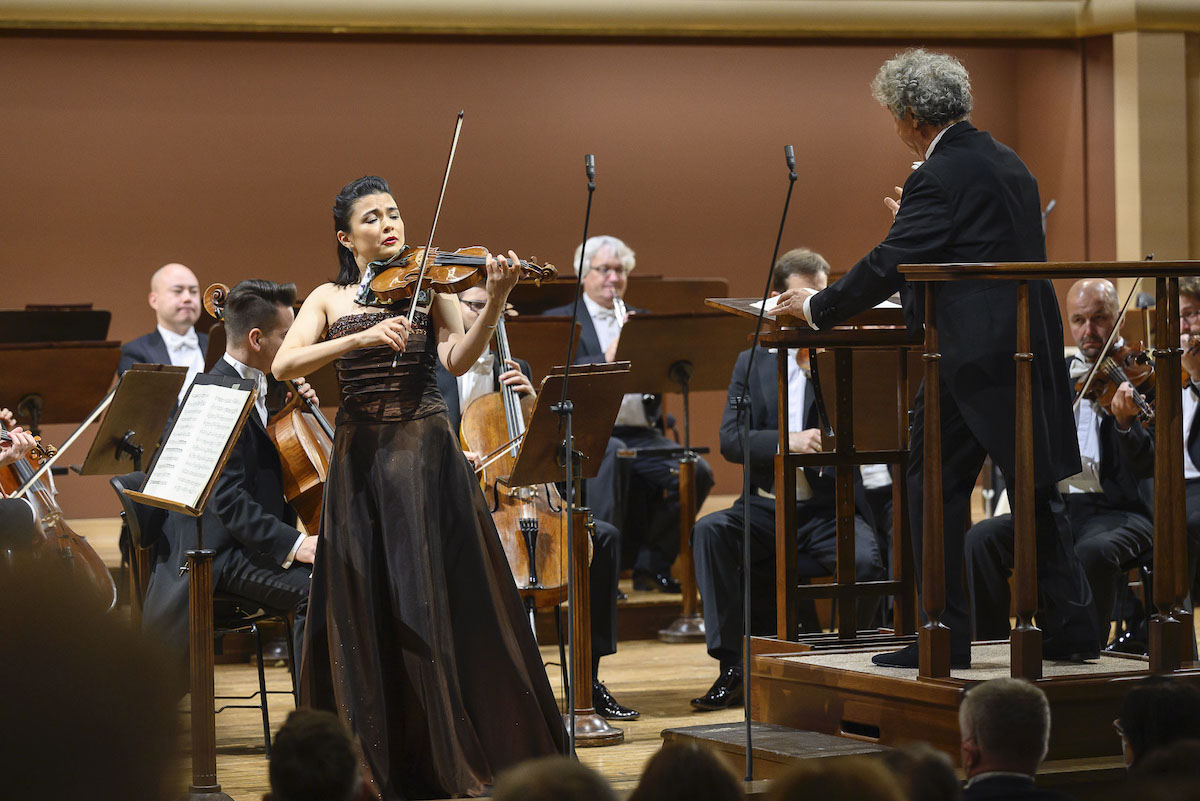
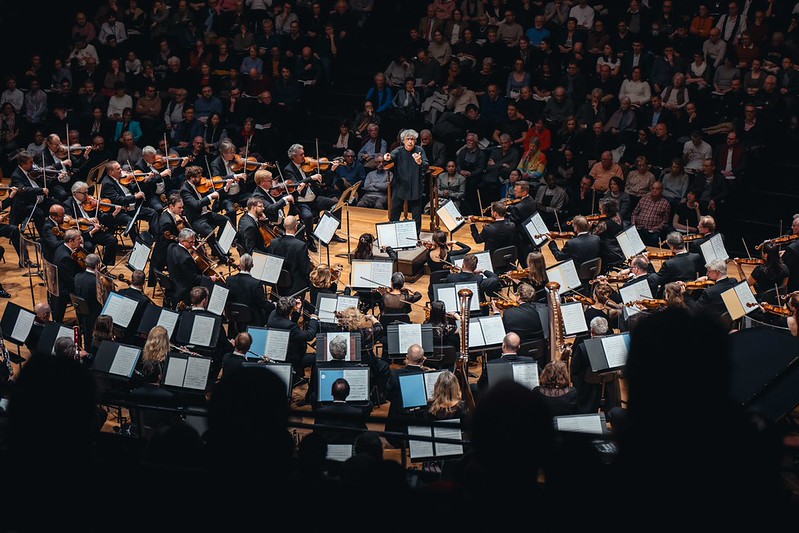
The Czech Philharmonic has started its touring schedule for its 131st season with two concerts in Stockholm’s Berwaldhallen (25-26 August). The Helsinki Festival is next. Under the baton of the world renowned Chief Conductor and Music Director Semyon Bychkov, the orchestra on Friday 28 August performs Shostakovich’s 1st violin concerto, with Japanese-Canadian violinist Karen Gomyo. On Friday (28 August) the current poster boy of South Korean classical music, Yunchan Lim, plays Ravel’s Piano Concerto in G major, followed by the complete cycle of Smetana’s Má vlast which was premiered by the orchestra in 1901, in a brewery. Ah, bring back those days, when they served decent beer in concert halls. But that’s another story.
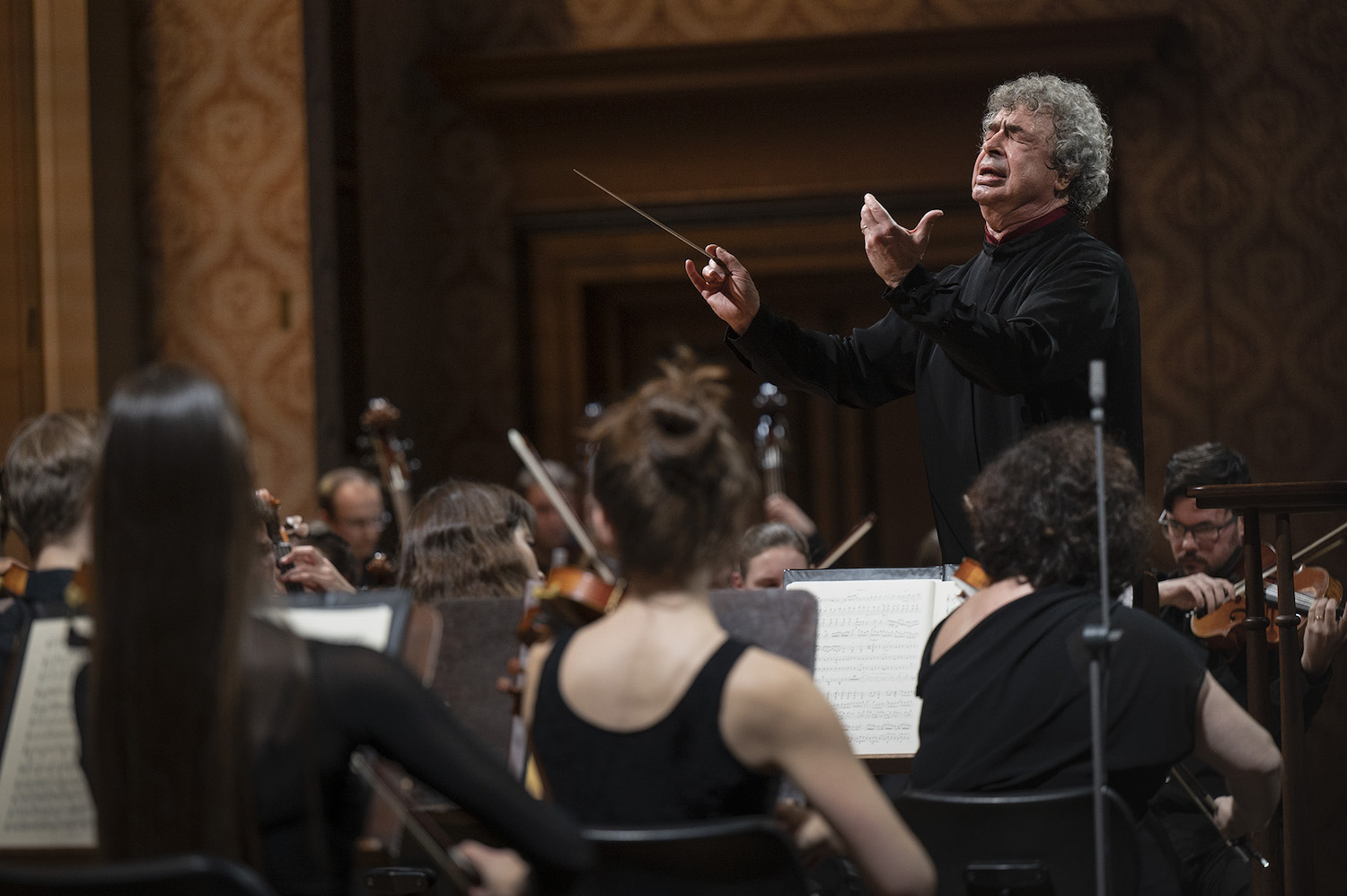
I interviewed Semyon Bychkov seven years ago in London, where he continues to be a frequent guest conductor of both the BBC Symphony Orchestra and the Royal Opera House. He recently became the music director designate of the Paris Opera, assuming the full title in 2028. He has been the music director and chief conductor of the Czech Philharmonic since 2018.
What almost immediately sticks out, when you study the orchestra members, is that they are predominantly Czech. When I met Bychkov the orchestra had just appointed its first international orchestra member, the Japanese flutist Naoki Sato. I can on their see on their website that the orchestra has employed a couple of other international musicians since then, but most are still recruited from the Czech Republic. To have such a distinctive national identity is quite unusual for a top orchestra. However, it can have its advantages, particularly when you play Czech compositions and the repertoire that was composed during the period of Austrian empire. Bychkov says that it has nothing to do with nationalism.
“The orchestra has traditionally been all Czech, simply because of life itself. When you think that until 1918 the country has always been dominated by those that are bigger and stronger. For example Austrian Empire. 1918 they became independent. It only lasted 20 years before the Nazis came. Then controlled by Nazis until end of WWII they were dominated by Nazi Germany. The war ended. Who replaced the domination? The Soviet Union replaced domination. So they were in fact most of the time behind the Iron Curtain. What could they do if not continue their existence with the musicians born in their own country ?”
The advantage is that most of the musicians have trained in their own country and have been taught the same technique, and are familiar with the local orchestras and conductors..
This century there have been many complaints about the ‘sameness’ of the sound many of the world’s, supposedly leading, orchestras produce. Which is why I want to know what distinguishes the Czech Philharmonic from any of the other superb European orchestras? Bychkov points out that one reason for this ‘sameness’ is the fact that many young musicians no longer study in the country they were born. Another reason is that music from other cultures is readily available and young people, thanks to the internet, can and do pick up influences from anywhere in the world and if they like something they will imitate it. Bychkov thinks the Czech Philharmonic has managed to retain their own, unique sound.
“ Juat like the Vienna Philharmonic, the Concertgebouw Orchestra, the Cleveland Orchestra, Dresdner Staatskapelle and the Gewandhaus Orchestra in Leipzig.”
Bychkov has conducted all those orchestras, so you can be sure that he knows what he is talking about.
If it is true that the orchestra has an “unmistakeable individuality’, I ask Bychkov, how would one describe its sound?
“They are Czech. They are special. It is difficult to describe sound, but one could say that it is a particularly warm sound. It is a sort of a hugging sound which comes from their musical tradition. When you think of the music that came from their culture: Smetana, Dvorak and Mahler was born there. Then later on Janacek, Martinu, and others. You will associate the sound of the orchestra with that kind of music. Bohemia, which means soft grained. Gentle, sensitive and because they are all coming from the same culture, the same tradition, from the same way of being educated, there is a unity about the way they will phrase music, they will articulate it, they will speak its language. That makes them distinct. “
Semyon Bychkov was born to non-practising Jewish parents in Leningrad in 1952. His father was a renowned medical scientist who worked in a classified field of sciences. After the WWII the Soviet Union, in accordance with the Moscow Armistice agreement, established a naval base on Porkkala Udd, 40 km southwest of Helsinki. Semyon’s father was sent to the strategically important peninsula in the Gulf of Finland. Semyon spent the first three years of his life in Finland. He talks about to his Finnish years here:
Singled out for an extraordinarily privileged musical education from the age of 5, Bychkov studied piano before winning his place at the Glinka Choir School where, aged 13, he received his first lesson in conducting.
“I was given extraordinary opportunity and chances as a student from the beginning. In 1960, I am seven years old passing the tests to enter Glinka Choir school in Leningrad. There were 500 boys my age auditioning, that came from all over the country, not just Leningrad. Only 20 were accepted. Ten years later only 13 of us graduated. The others didn’t make it. Then it is time to enter the conservatory. I wanted to enter the class of the legendary conducting teacher Ilya Musin. There were 78 candidates in the first round. The rounds go on from dictation, ear training to other subjects. First round of conducting, conducting two pianists. In the next round you walk into a room and the whole faculty of professors is assembled there. On a big table there are lots of scores that are open anywhere, in the middle, at the end, not in the beginning naturally, that you are supposed to identify. You can be asked all kinds of questions, that relate to the piece itself, or it relates to the composer or to anything else. Then comes the final round of conducting an orchestra. You have to pass all those rounds to get to conducting the orchestra. 78 were in the first round, 18 remained for the final round conducting an orchestra. At the end of that only one could be accepted. Because only one has graduated the year before. If only one has graduated, [it meant] only one person could be accepted. That person was me, at the age of 17. Never happened in the history of conducting department of conservator before.. That was a privilege. Later on I won the Rachmaninoff conducting competition in 1973. That was a privilege. As a result I was invited to make my debut with Leningrad Phil. It was there and then that the trouble started. I was deemed to be politically unreliable. That is a quote. That made the government tell Leningrad Phil Society that this concert should not take place. And it didn’t. One week prior to that the concert was cancelled.”
The authorities attacked him viciously in a publication and that was when he knew there was no future for him in the Soviet Union. He started learning English, and when he applied to emigrate the International Jewish Agency for Refugees supported him. In 1974 he was flown to Vienna where he came into contact with a wide network of refugee musicians. He had brought nothing with him, just some scores and $100 in his pocket. After Vienna, he spent were six months in Rome, where he lived in a tiny room outside the city. He was supported by another Jewish organisation that helped him get his immigration papers and in Augsut 1975 he arrived in New York.
It was in the middle of the Cold War. People from communist countries, and many Jews, were given conditional entry. In those days the equivalent to the U.S. refugee Admissions Program was not about religion or ethnic affiliation, “it was about humanity.” The U.S. was a different country in those days. Bychkov was welcomed with open arms by a country that was larhely built by successive waves of immigrants. Listen to Bychkov explaining:
From 1989 to 1998, he served as Music Director of the Orchestre de Paris. He returned to St Petersburg as Principal Guest Conductor of the Philharmonic Orchestra (1990-1994), was the WDR Symphony Orchestra Cologne ‘s Chief Conductor (1997-2010) and held the same position at the Semperoper Dresden (1998–2003). He has conducted in all the major opera houses and is a regular guest conductor of Europe and America’s finest orchestras.
He is married to the very well-known pianist Marielle Labèque and lives in France.
The Dutch violinist Janine Jansen, who is the orchestra’s artist-in-residence was originally meant to play the Shostakovich concerto but she is unfortunately unwell and has been replaced by the Japanese-Canadian virtuoso Karen Gomyo. She has performed this particular concerto a number of times with maestro Bychkov– most recently with the Cleveland Orchestra.
The South Korean Yunchan Lim is something else. He was the youngest ever winner of the Van Cliburn International Piano Competition in 2022 and since then he has taken the classical music world by storm. Ravel’s Piano Should you visit Berwaldhallen in Stockholm or the Music Centre in Helsinki, I can guarantee that you will see surprisingly many young South Korean women in the audience. He has a huge fanbase in his home country (and abroad), which is reflected in the number of views of his concerts on YouTube (in the millions).
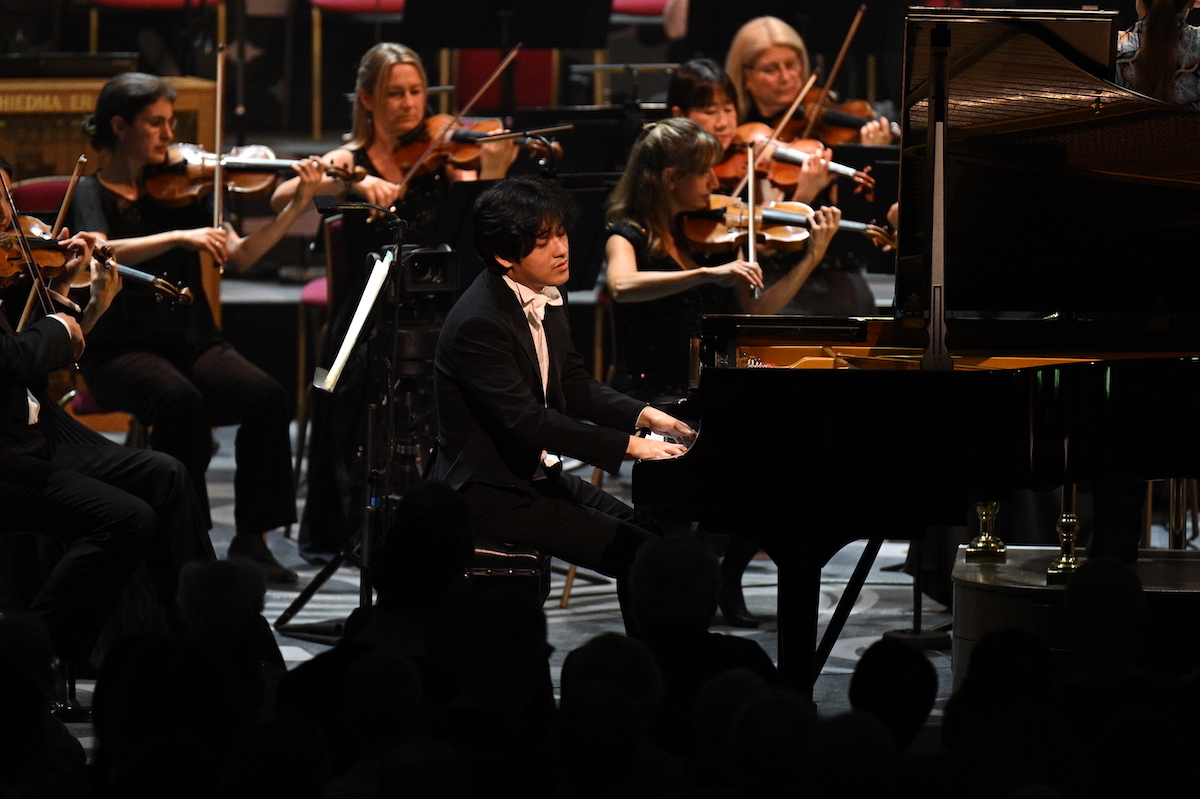
Yunchan Lim is very shy – he says so himself – and is not interviewed very often, but recently he gave a short interview to the BBC. He played the Ravel Piano Concerto in G major at the opening night of the BBC Proms. His thoughts about the piano concerto: “In Ravel there is so much imagination. The most enchanting moment is right after the cadenza in the first movement. It is like the my past is unfolding before my eyes, like a fast panorama. Second movement is for me like the Little Mermaid story, mercy and compassion. The last movement is like a sled for me ; it’s very exciting, freshness. This piece is incredible.”
Earlier this year I reviewed the Czech Philharmonic’s recording, of Mahler’s nine completed symphonies, all conducted by Semyon Bychkov. You can find my appraisal here
Albert Ehrnrooth
Tuesday, August 25 at 19:00: Shostakovich first violin concerto with soloist Karen Gomyo and Dvořák’s Symphony No. 7
Wednesday, August 26 at 20:00: Smetana’s Má vlast and Ravel’s Piano Concerto in G major featuring pianist Yunchan Lim