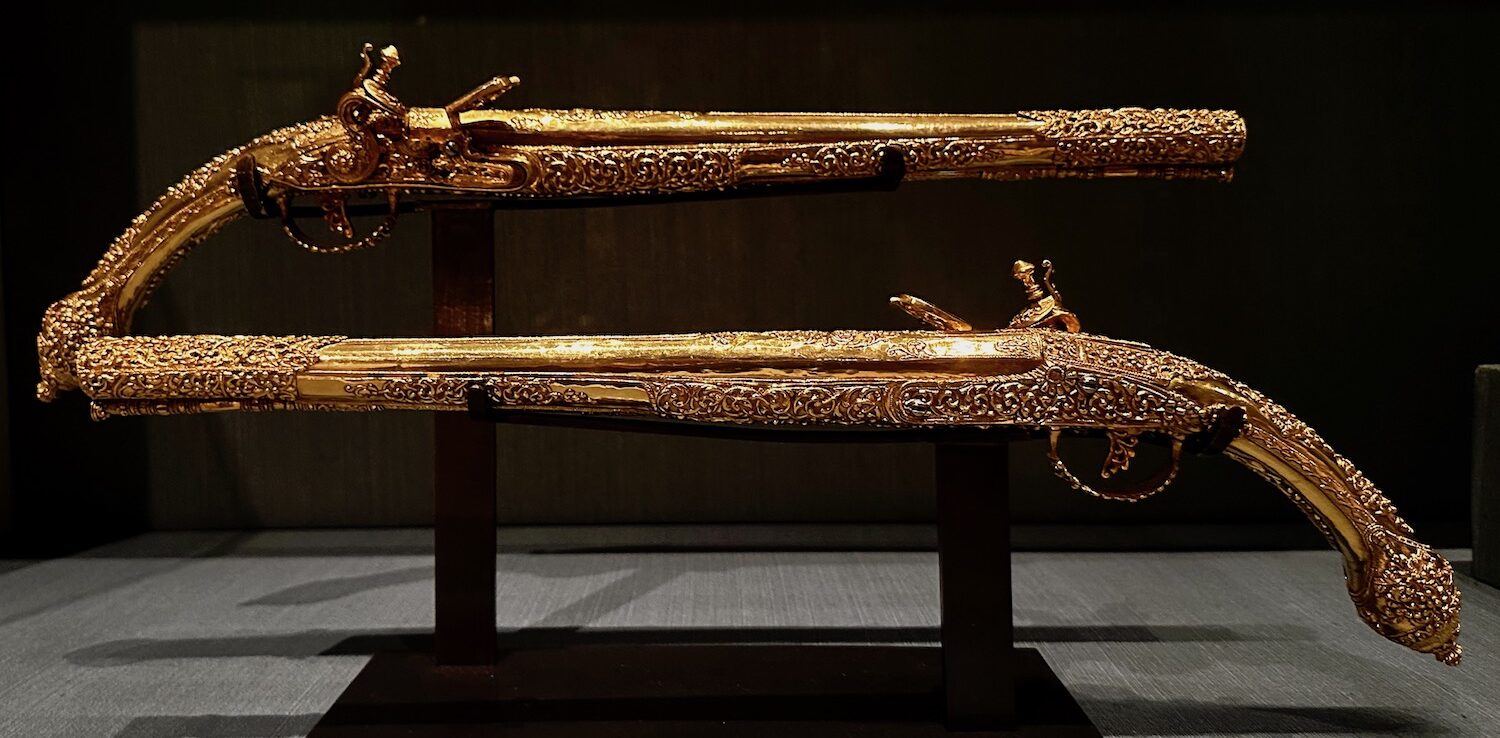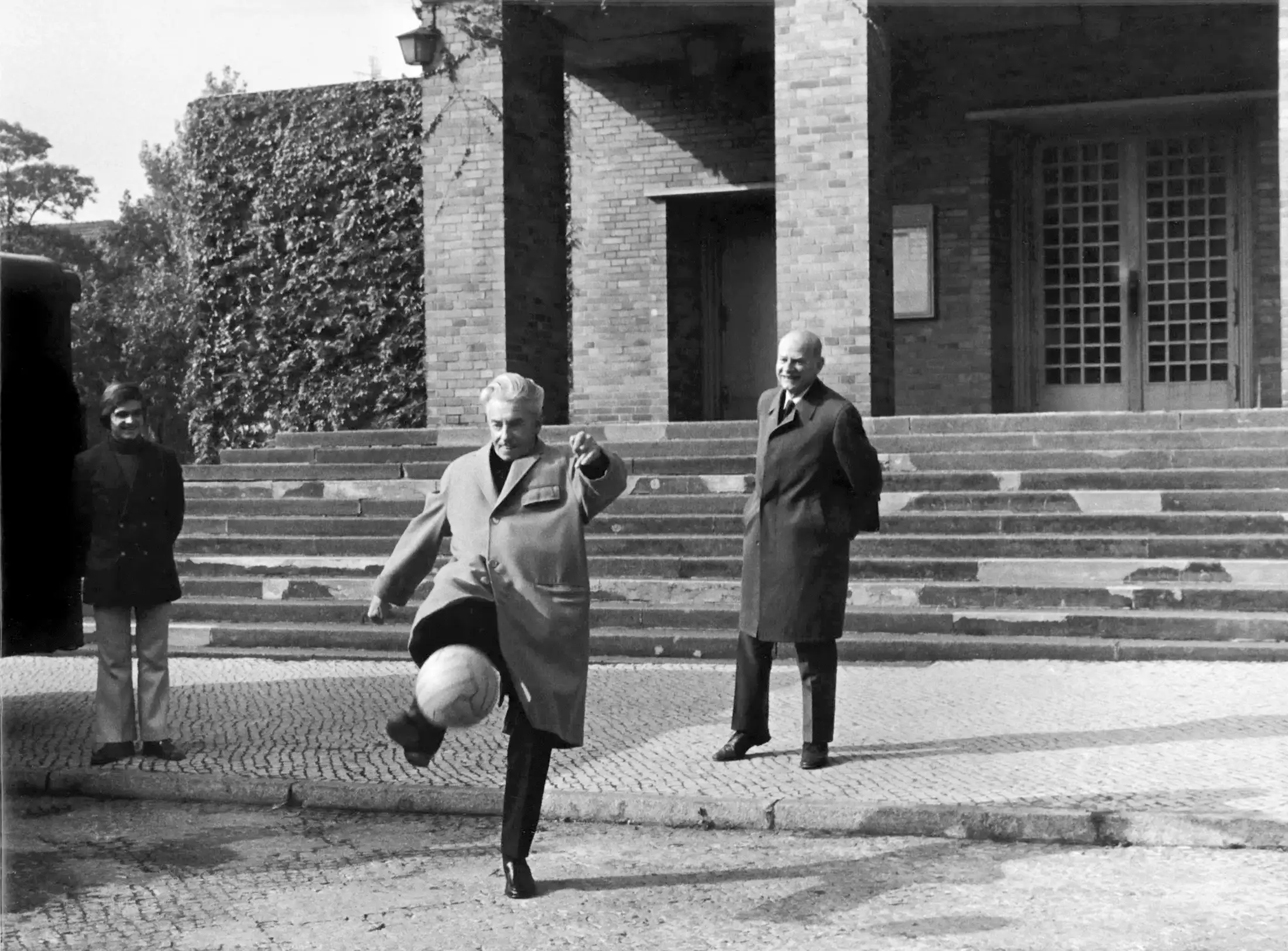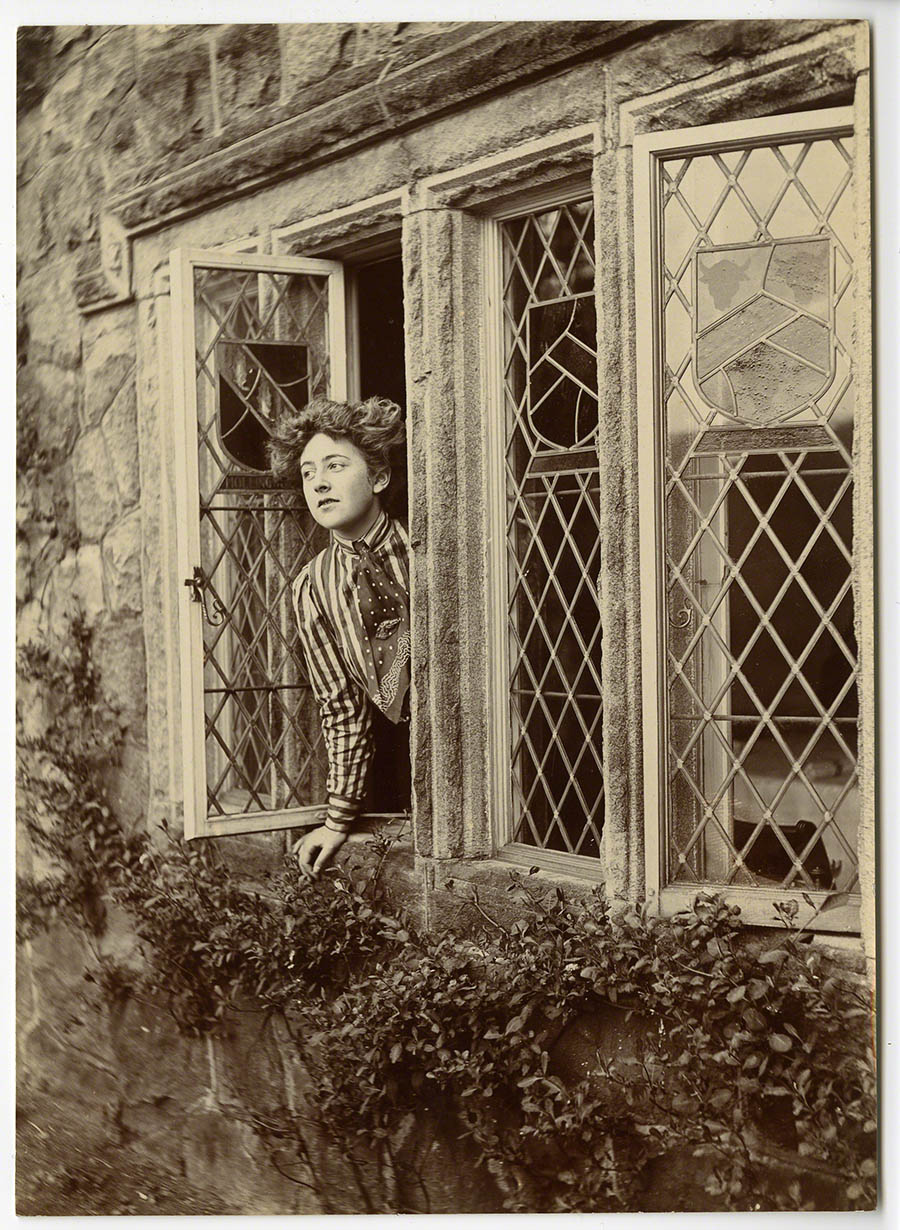
You would need weeks if not months to explore all of Istanbul’s incredibly rich heritage. The Victoria & Albert museum’s exhibition Constantinople to Istanbul: One City, Two Empires somehow manages to give a pretty good overview of most of the (sometimes hidden) cultural layers. To condense 1600 years of history into a space that only occupies two of the museum’s galleries is no mean feat. This impressive exhibition brings together hundreds of objects, spanning from the early fourth century – when Emperor Constantine made a modest Roman settlement the capital of Imperial Rome – all the way to the end of the Ottoman empire in 1922.
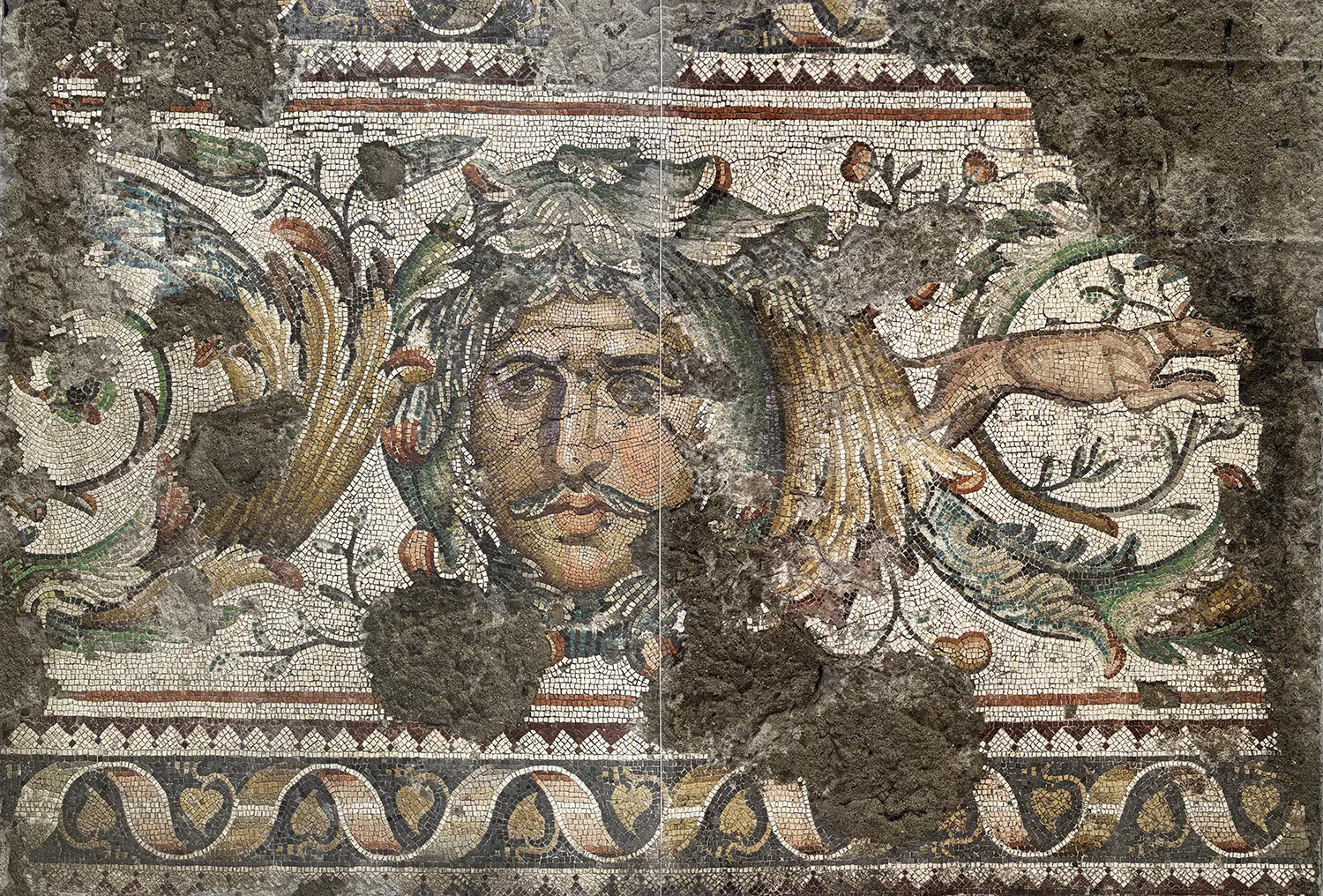
In the first room one is immediately struck by a large mosaic from the Great Palace. The V&A has managed to borrow this extraordinary piece from the Great Palace Mosaics Museum in Istanbul, a hidden gem which is often skipped by tourists. For almost a thousand years the Great Palace was one of the most important buildings in Constantinople .
Bella Radenović is one of the two curators of the exhibition and an expert on Byzantine art. She explains why the mosaic is such a special piece:
The floor mosaic (see featured picture) comes from the pavement of the covered portico that surrounded the courtyard. The face of the man who emerges from the scroll has remarkably expressive eyes, and his mouth is rendered with equal precision. Who is he? He may represent Winter, as his moustache appears to be covered in frost. The hunting scenes, the acanthus stems, the foliage, fruit and scrolls are all popular motifs in the Greco-Roman and Byzantine decorative repertories.
Modern-day Istanbul was founded by Greek settlers around 660 BC, who named it Byzantion (Byzantium). Its strategic position – offering total dominance over the entry and exit of the Black Sea – made the small city-state an important trading post. Over the course of a few centuries, the port city changed hands between Persians and Athenians, until it became a Roman outpost in the first century BC.
Emperor Constantine (the Great) made it his main residence in 324 CE and six years later it became the imperial capital, officially renamed Nova Roma. Only after Constantine’s death in 337 was it christened Constantinople. The first major expansion took place during the emperor’s reign; he set about planning the Great Palace alongside the Hippodrome, which was expanded to hold up to 100,000 spectators in its heyday.
The Hippodrome was built for horse and chariot racing – a popular pastime for the masses that replaced the bloody gladiator games. The median strip, or the spina, of the racing circuit featured a display of statues depicting gods and heroes, alongside commemorative columns and obelisks brought from across the empire to adorn the capital in an attempt to rival Rome.
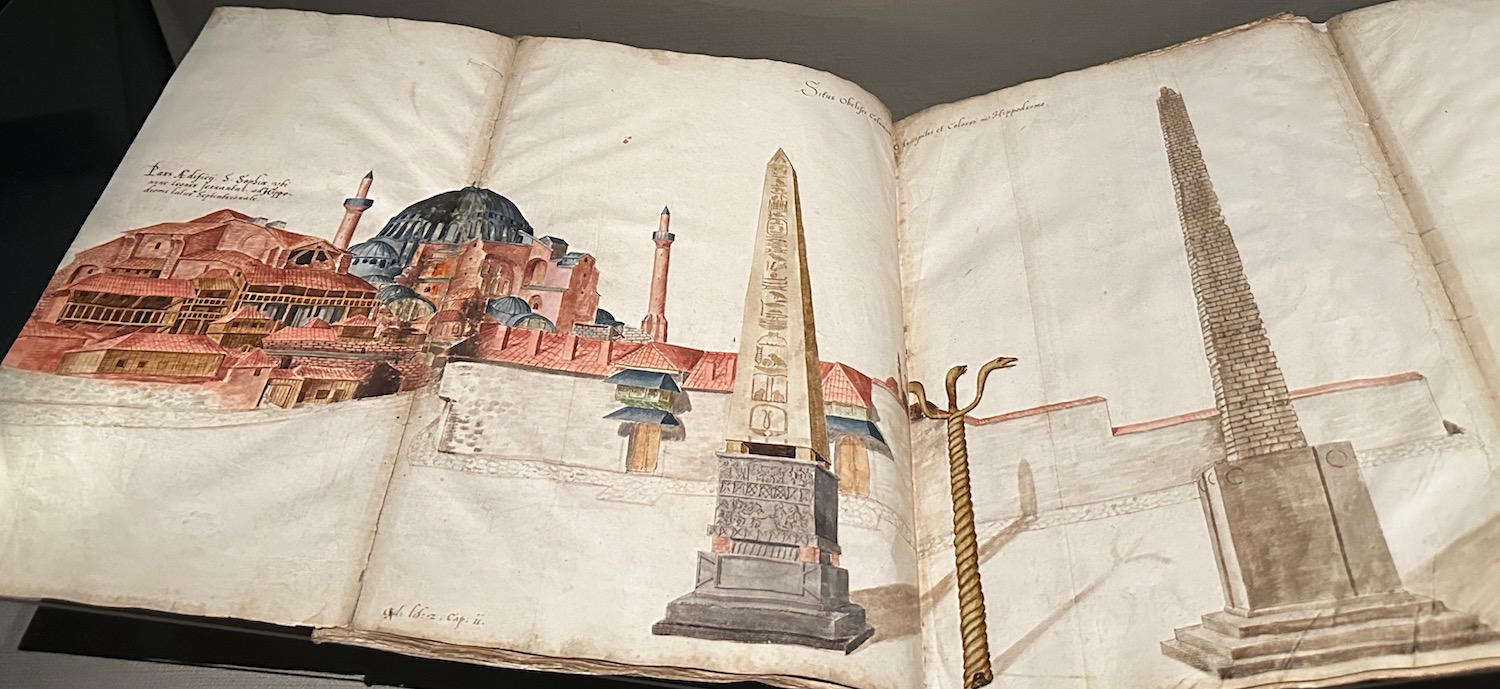
Very few traces of the large palace have survived, but imagining what the racetrack once looked like is remarkably easy. Where the Hippodrome once stood remains an open square, and some of its monuments have miraculously survived.
The Walled Obelisk was originally clad in gilded bronze plaques, only to be stripped by marauding Crusaders. Nearby the granite Obelisk of Thutmose III remains in such pristine condition that on my visit last month to Istanbul I wondered if it had been recently restored (it hasn’t). Then there is the intertwined pillar of the Serpent Column – cast from the melted-down weapons of defeated Persians after they lost against the Greeks in the Battle of Plataea in 479 BC. The surviving pillar – minus the three serpent heads that once adorned it (see picture above) – is all that remains visible today after the monument was severely damaged in 1700. However, a fragment of one of the heads was recovered during restoration work on Hagia Sophia in 1848, and curator Bella Radenović is thrilled that the V&A is able to present it in the exhibition:
The Hippodrome was the true heart of the Byzantine city, where the major spectacles were held and where the emperors were expected to show themselves to their subjects in ceremonial processions. Until the Hagia Sophia was built, the Roman emperors were even crowned in the stadium.
Emperor Septimus Severus (193-211) conquered Byzantion on the European side of the Bosphorus in 196 CE and razed the city to the ground. Recognising its immense strategic value he set about rebuilding it, laying the foundations for the first Hippodrome.
When emperor Constantine declared the city the new capital of the Roman empire, most inhabitants were native Greek speakers. Throughout the Byzantine period, Greek–not Latin–remained the main local language. The rulers, on the other hand, called themselves Emperor and Autocrat of the Romans. The inhabitants of Constantinople always viewed themselves as Romans, maintaining that the Roman empire never ended with the deposition of the last Western emperor in 476.
The Eastern Roman empire continued until 1453, when it finally fell to the Ottomans. The term “Byzantine” only starts to be used after the German historian and humanist Hieronymus Wolff introduced the phrase Corpus Historiae Byzantinae in the 16th century. It was subsequently adopted by Western European historians.
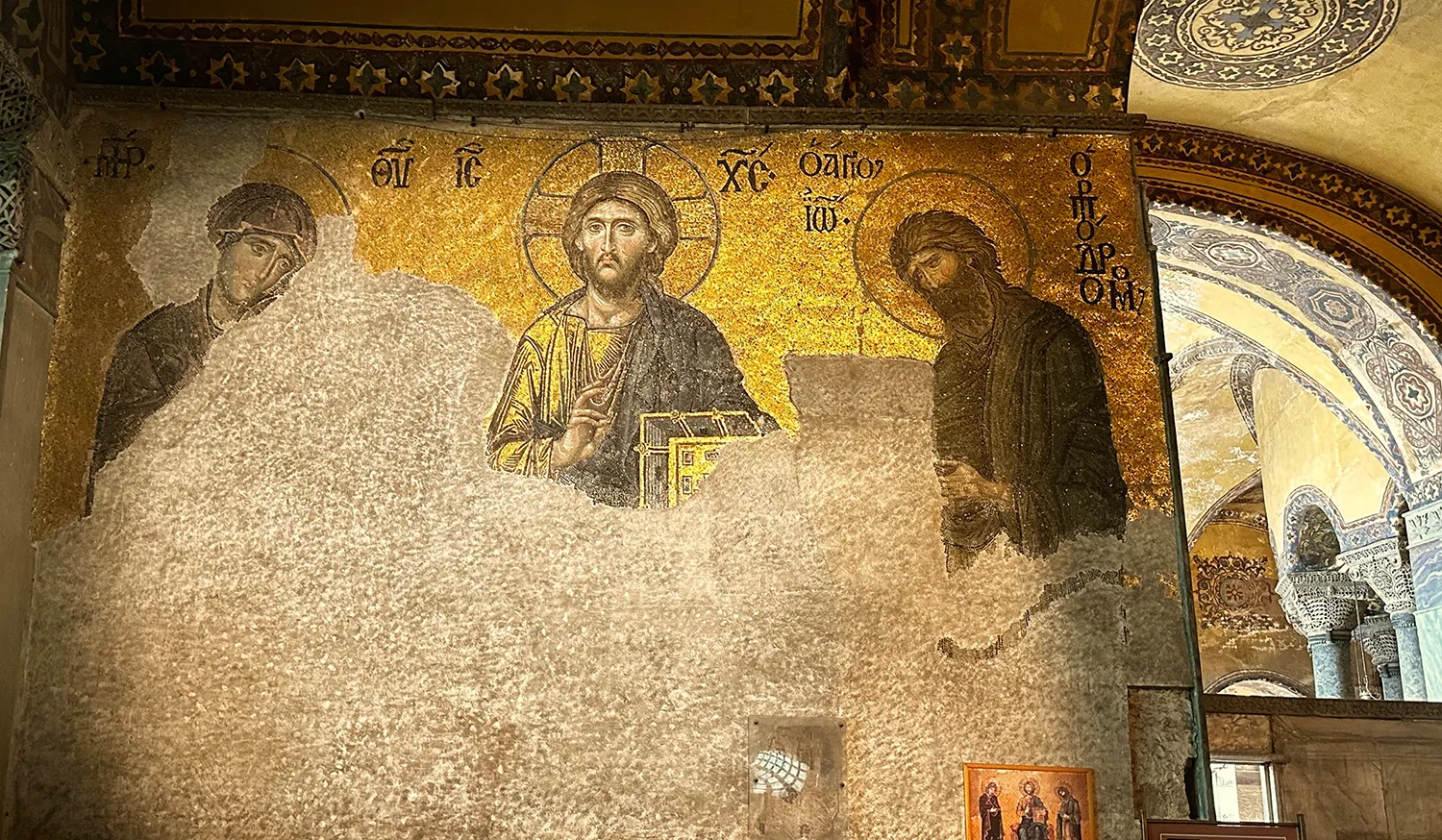
In the second section of the exhibition, the focus shifts mainly to Byzantine icons, and some marvelous examples of the empire’s ‘silken diplomacy’. There are also a number of fascinating small triptychs, one of which portrays Constantine as a lay eunuch. A whole section is devoted to the Hagia Sophia – which remained the world’s largest building for a thousand years. Emperor Justinian I ordered the church to be constructed in 532 after the previous cathedral was destroyed in the Nika riots. People were awestruck when, six years later, the Church of the Holy Wisdom (in Greek Aya Sofia) was completed, revealing its stunning dome soaring to 55 metres and spanning more than 30 metres.
When Sultan Mehmed II conquered Constantinople in 1453 he showed great interest in the Byzantine heritage. He converted the church into a mosque, but figural mosaics and paintings were not destroyed, though several were covered.
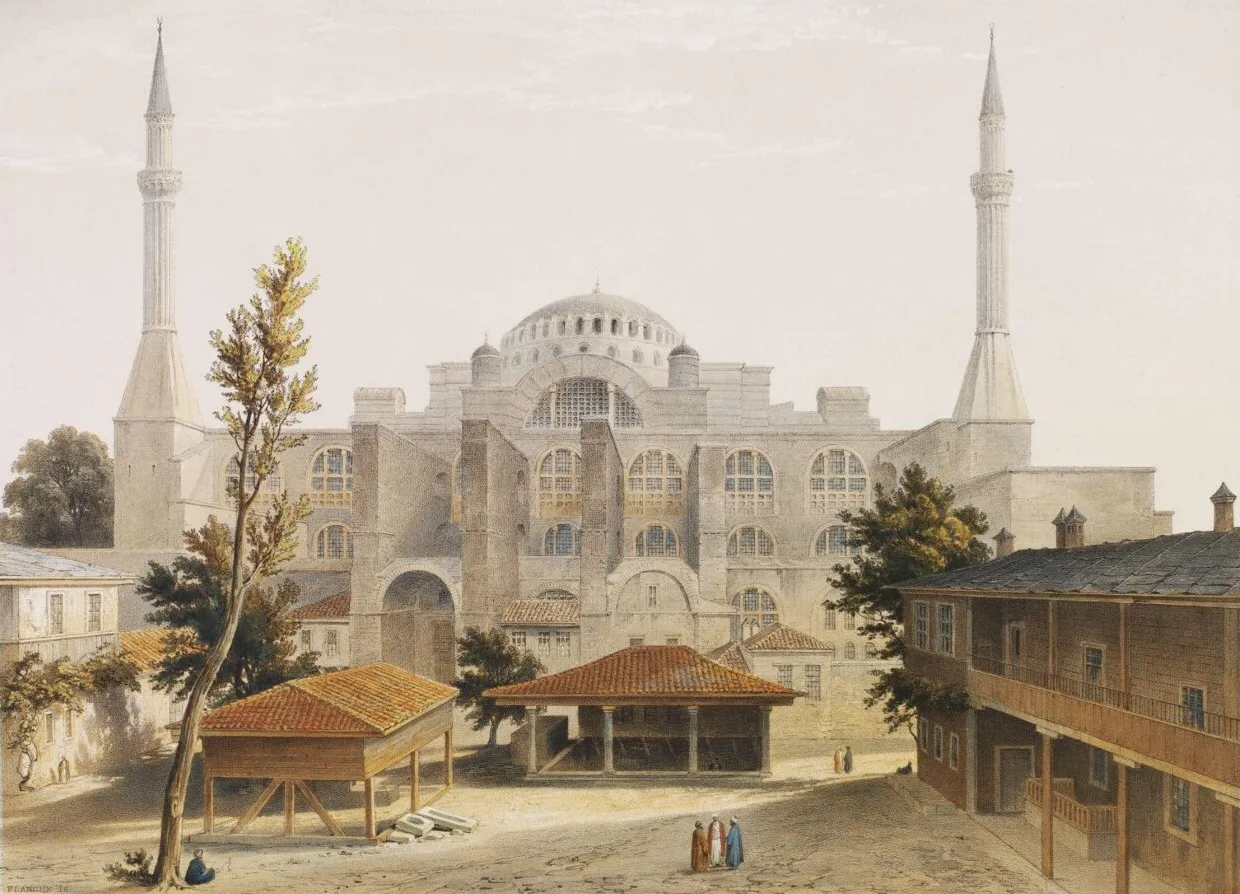
However, for centuries non-Muslims had limited access to the main prayer hall, making 19th-century lithographs and paintings of the interior immensely popular among Western European travelers. A selection of these evocative illustrations is on display at the exhibition. In 2020, the mosque’s ground floor was once again reserved exclusively for Muslim worshippers.
Until the Muslim conquest of Constantinople the city’s primary churches also served as vital repositories for relics. They attracted religious tourists and pilgrims fascinated by physical remains of martyrs, such as the bizarre (or is it creepy?) Reliquary for the arm of St.John the Baptist (15th C.)
Icon is the Greek word for picture. In 431 CE, the Council of Ephesus declared the Virgin Mary as Theotokos – meaning God-bearer, or Mother of God. She subsequently became the central figure in Byzantine spirituality and was revered as the holy guardian of Constantinople. On a number of occasions, the city endured long sieges–first by Avar and Persian forces, and later twice by Muslim Arab armies. Each time the enemy abandoned the siege following dramatic and violent atmospheric disturbances that the Byzantines attributed to the intercession of the Virgin. Consequently, she was widely venerated in Constantinople and appears in nearly all the icons featured in this exhibition.
Early Byzantine icons are exceedingly rare due to two waves of iconoclastic violence in the 8th and 9th centuries, leading to the widespread destruction of sacred images. For more than one hundred years the Orthodox Church banned the making of religious images and figurative art depicting living beings. Church leaders had come to believe that God was favouring Muslims in all the battles, because Islam forbids representations of the divine, and discourages pictures of humans and animals.
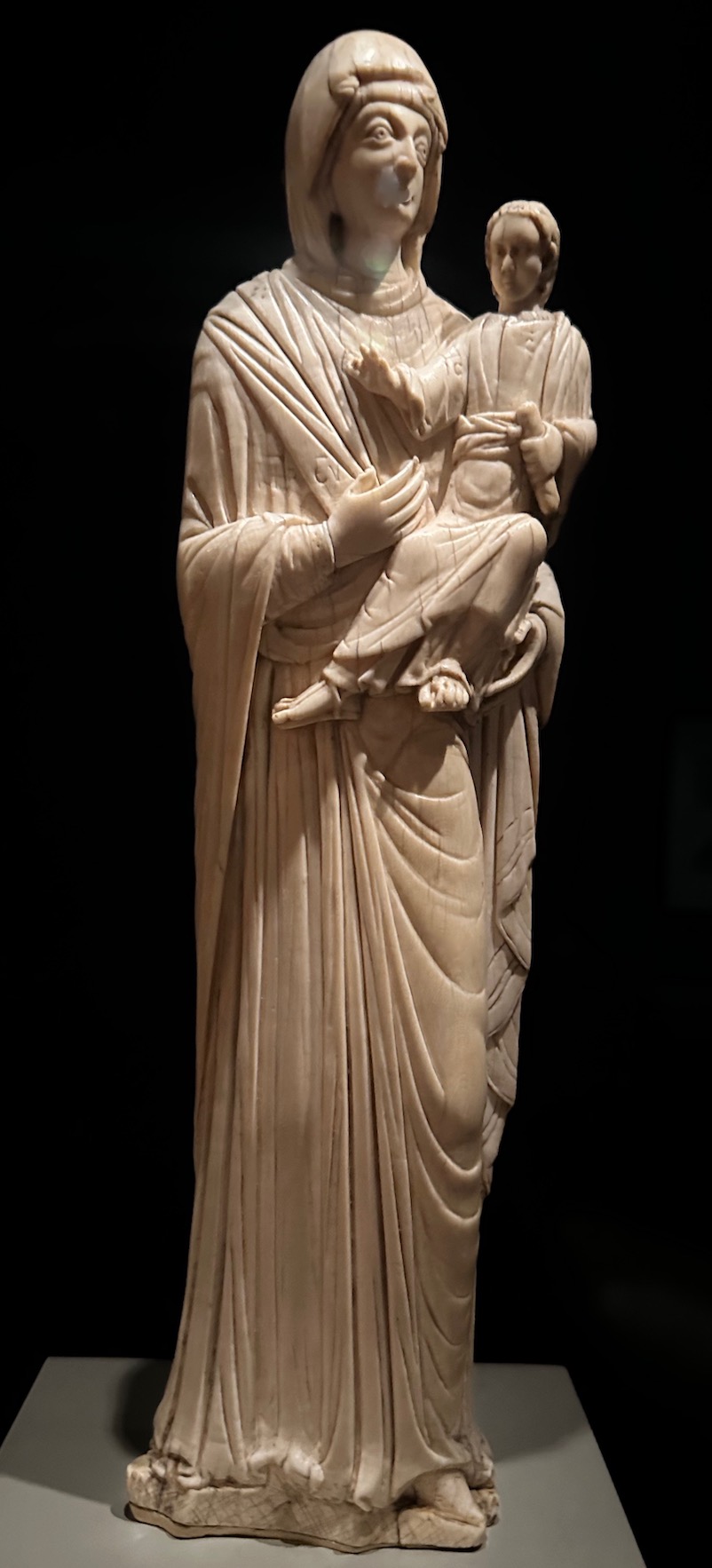
The most popular representation of the Virgin is a devotional type known as the Hodegetria which depicts her holding Christ on her left arm, while her right hand gestures toward him. The Byzantines regarded these icons in particular as miracle-working images.
There was no attempt to reproduce a naturalistic portrait of the Holy Mother and Child, the pose is consistently frontal, and rather flat. But this avoidance of naturalism was entirely deliberate. Bella Radenović explains the reasoning behind this distinct visual style:
The European armies of the Fourth Crusade sacked Byzantium’s capital in 1204, having a profound effect on the empire and causing severe political fragmentation and displacement of the population. A new reigning dynasty , the Palaiologoi, managed to reclaim Constantinople in 1261 and restore its illusion of splendour and luxury.
But the empire that at its peak covered most of the Balkans, Spain, Italy , parts of North Africa, the Levant and Anatolia, was drastically reduced under the new rulers. Nevertheless, even as its physical territories shrank, its religious and cultural influence continued to be felt far beyond its borders. The exhibition clearly demonstrates that its art and architecture continued to flourish during this final golden Byzantine era.
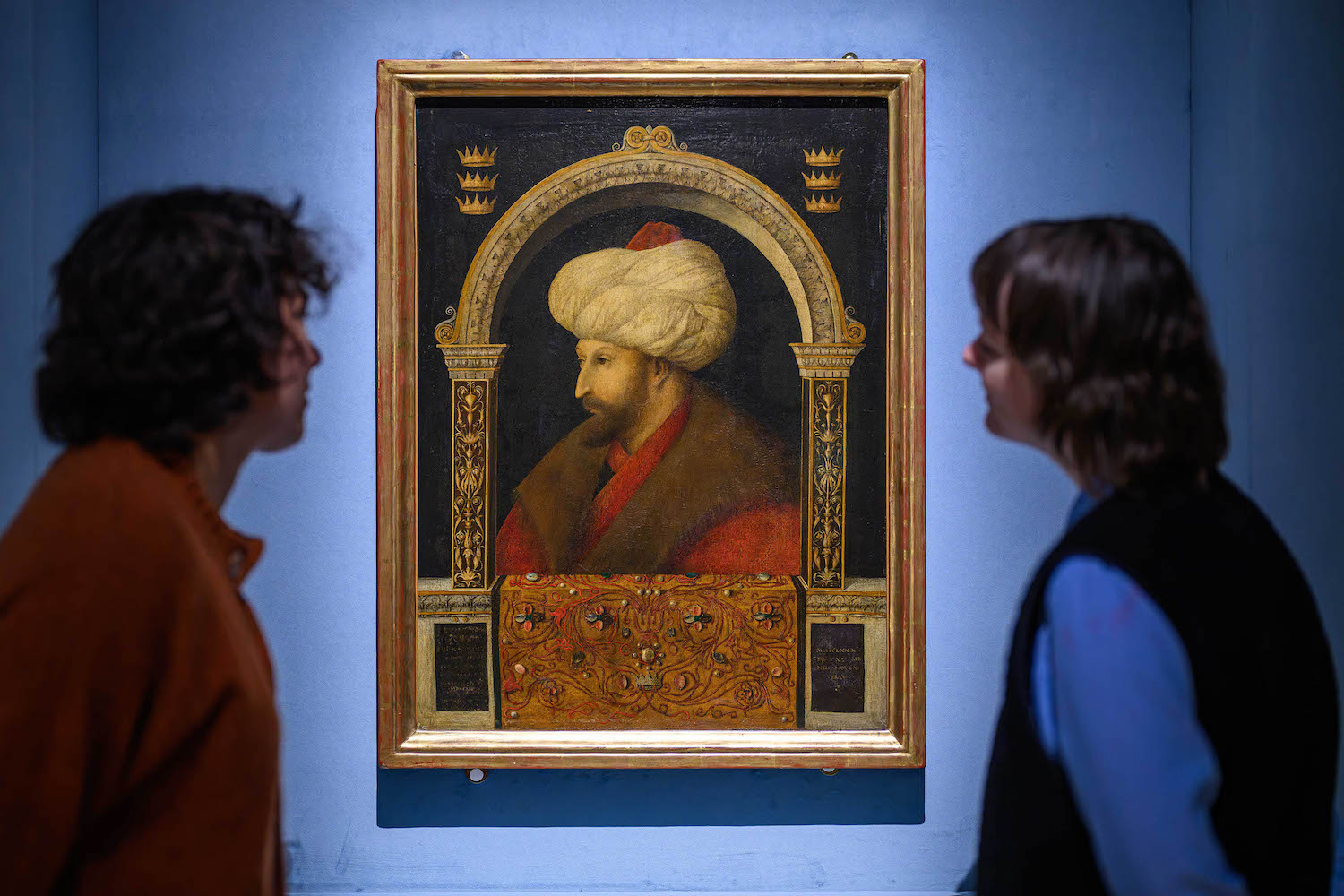
Osman I, whose Turkmen-nomadic ancestors had entered central Anatolia, established the Ottoman principality around the end of the thirteenth century, following the Mongol defeat of the Seljuqs. Osman seized the Byzantine territory around Bursa, which his son Orhan, made the first Ottoman capital. Exploiting regional discontent with Christian rule, the Islamic Ottomans gradually absorbed more Byzantine territories. Orhan’s son Murad I, used Gallipoli as a launchpad into the Balkans – bypassing Constantinople’s formidable fortifications.
The empire faced a major crisis in 1402 when Timur’s Turco-Mongol warriors crushed sultan Bayezid I’s army at the Battle of Ankara, pushing the state to near-collapse. However, within eleven years, central authority was fully restored. Sultan Murad II later besieged Constantinople (1422), and repelled Hungarian incursions, culminating in a decisive victory over a Papal army at the Battle of Varna (1444) – the last Crusade launched against the Ottomans.
Known simply as ‘The Conqueror,’ Murad’s son, Mehmed II led 25 military campaigns, vastly expanding Ottoman control across Southeastern Europe, and locking down Black Sea trade routes. He was the first sultan to codify Ottoman state practices into formal law, and he restored and reshaped the capital by commissioning monumental landmarks like the Topkapi Palace, which became the empire’s administrative heart. He was also a pioneer in the use of heavy artillery and passionate about mathematics, astronomy, and spoke at least seven languages – making him a true Renaissance polymath.
At just 21 years old Mehmed II entered Constantinople in May 1453 after a 53-day siege. He permitted his soldiers a short period of pillage, looting, destruction and rape. Tens of thousands of Christians (infidels) were slaughtered or enslaved, palaces and tombs were plundered and Byzantine churches were desecrated. Visiting the Hagia Sophia, Mehmed was mesmerised by the size of the building and the enormous dome. Consequently the design of the dome was copied in all the new mosques he commissioned. Though he ordered the church to be converted into the Ayasofia mosque, the Greek Patriarch and the chief Jewish rabbi were invited to stay in the city.
The Ottoman Empire was ruled according to Islamic laws, but the sultans were much more tolerant toward Jews and Christians than contemporary European rulers were toward Jews, Muslims and Protestants. In fact, most members of the Ottoman elite and people in senior administrative posts were converted Christians or Jews. The concubines in the harem were almost exclusively enslaved non-Muslim foreigners. Business was in general conducted in Turkic (languages), Persian and Arabic. The written and religious language was Arabic, which most inhabitants of the city didn’t speak.
Constantinople was a truly multi-ethnic society, even if non-Muslims didn’t have the same rights as Muslims. Women in Ottoman society, on the other hand, had a greater financial and legal independence than their European contemporaries.
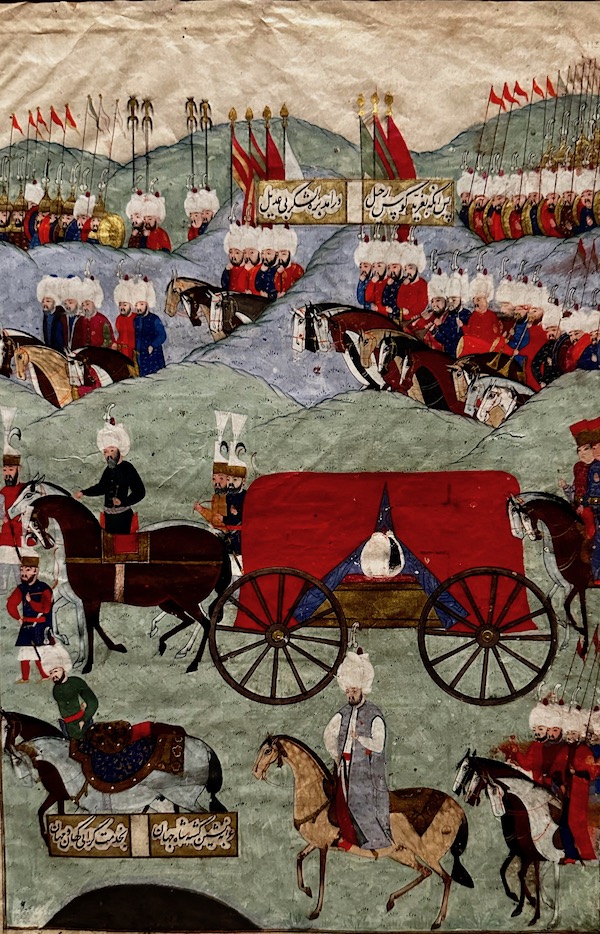
During the brief opening up of China in the 15th century ships laden with porcelain ballast arrived in the Persian Gulf. Selim I and Süleyman the Magnificent (reigned 1520-1566) acquired a taste for blue-and-white pottery of the Yuan and Ming periods. The Iznik potteries were sent stencils of favourite motifs and ordered to make copies. The rulers amassed Chinese porcelain and the Iznik copies were used as the Sultan’s tableware. The Topkapi Palace has a substantial collection of Chinese and Iznik wares, but the V&A also holds some fine blue-and-white Chinese porcelain as well as excellent Iznik imitations made of stone paste ( also known as fritware), which is more fragile and less brilliant than porcelain.
The use of colourful tiles was initially only affordable to the ruling classes, becoming an important decorative feature in mosques. Tiling was also introduced into traditional bathhouses – or hamams – frequented by the elite following the opening of the Zeyrek Çinili Hamam in the 1530s. Commissioned by the Grand Admiral ‘Barbarossa’ the bathhouse was adorned with thousands of blue-and-white tiles. While this Ottoman innovation took some time to reach the West, tiled bathrooms had become commonplace in European upper-and middle-class homes by the second half of the 19th century.
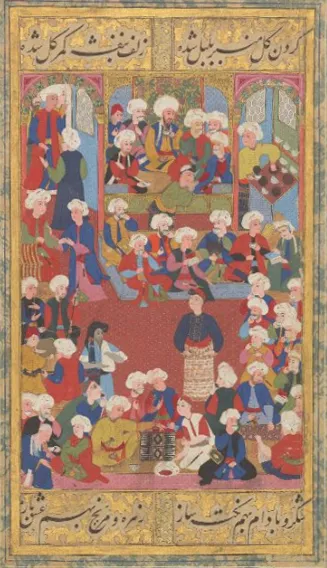
Europeans could socialise in taverns and pubs where alcoholic drinks were served, but Muslims needed a non-alcoholic place to gather. Coffee drinking was already well established in Arab and Sufi communities by the 15th century. The first coffeehouses in Constantinople opened in the 1550s, and the featured kahvehane scene shows that larger establishments also offered music and dance. Ottoman traders introduced coffee to Venice in the 17th century, and by the latter half of the century, coffeehouse, café and Kaffeehaus culture had spread across Western Europe
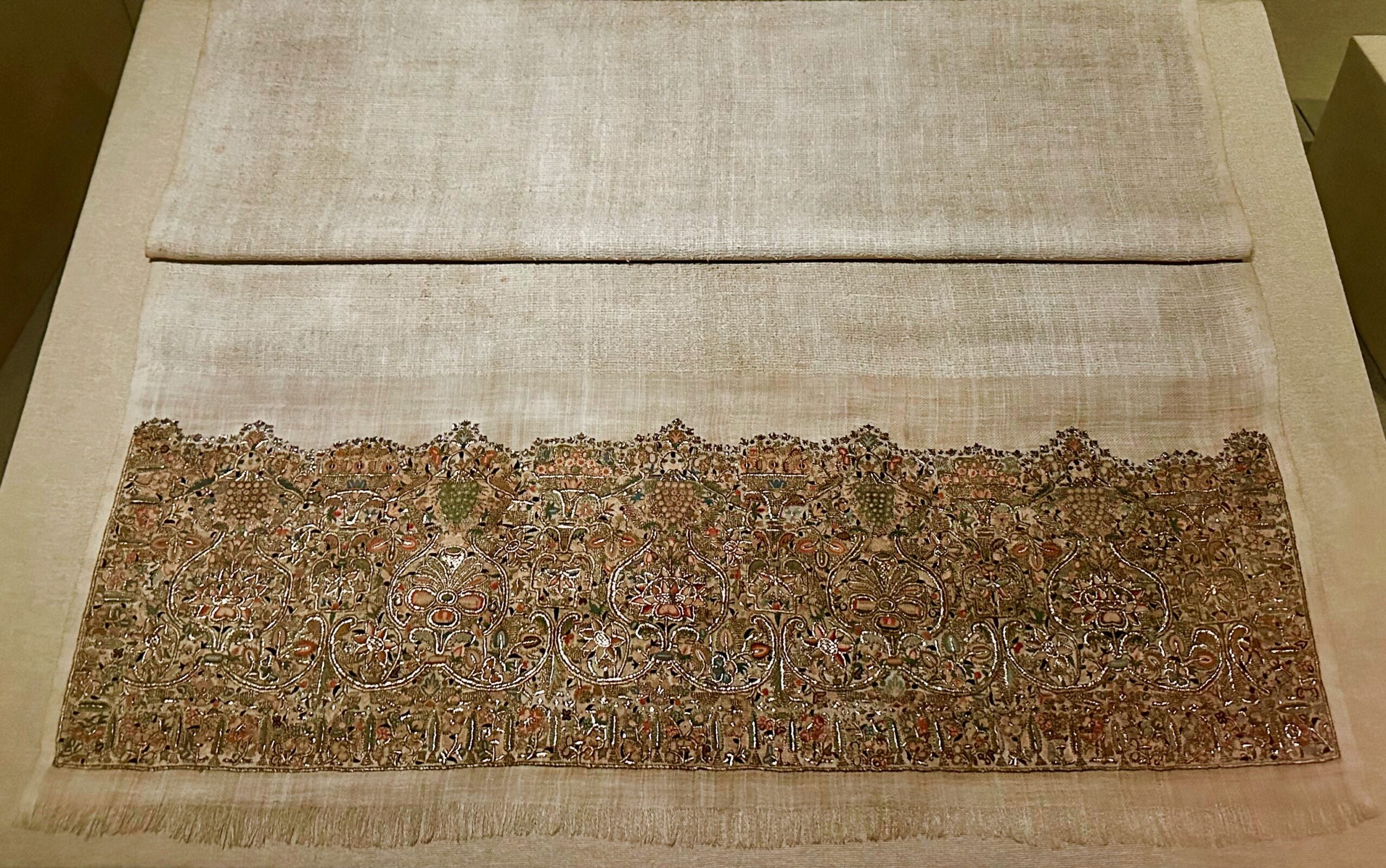
The forerunner of the absorbent towel we use today can also be attributed to the Ottomans, whose weavers invented the raised, looped piles made of cotton or linen. These towels remained a handwoven luxury until the first industrially produced looped terrycloth towels were manufactured in Manchester in 1850. Queen Victoria was impressed–she ordered six. The Turkish linen and silk towel featured in the exhibition boasts intricate hand-embroidered borders at both ends.
In the 19th century, an official decree required government officials to conform to a more European dress code, expecting men to wear frock coats and pantaloons. Sultans often dressed in European-style military uniform. The traditional turban was retired in international contexts, sultans and men of high status began donning the red felt fez with a silk tassel instead. Women’s fashion also changed dramatically over the course of the century; upper-class women began wearing designs inspired by Parisian haute-couture, though the intricate embroidery in gilt and silver thread remained distinctly Ottoman.
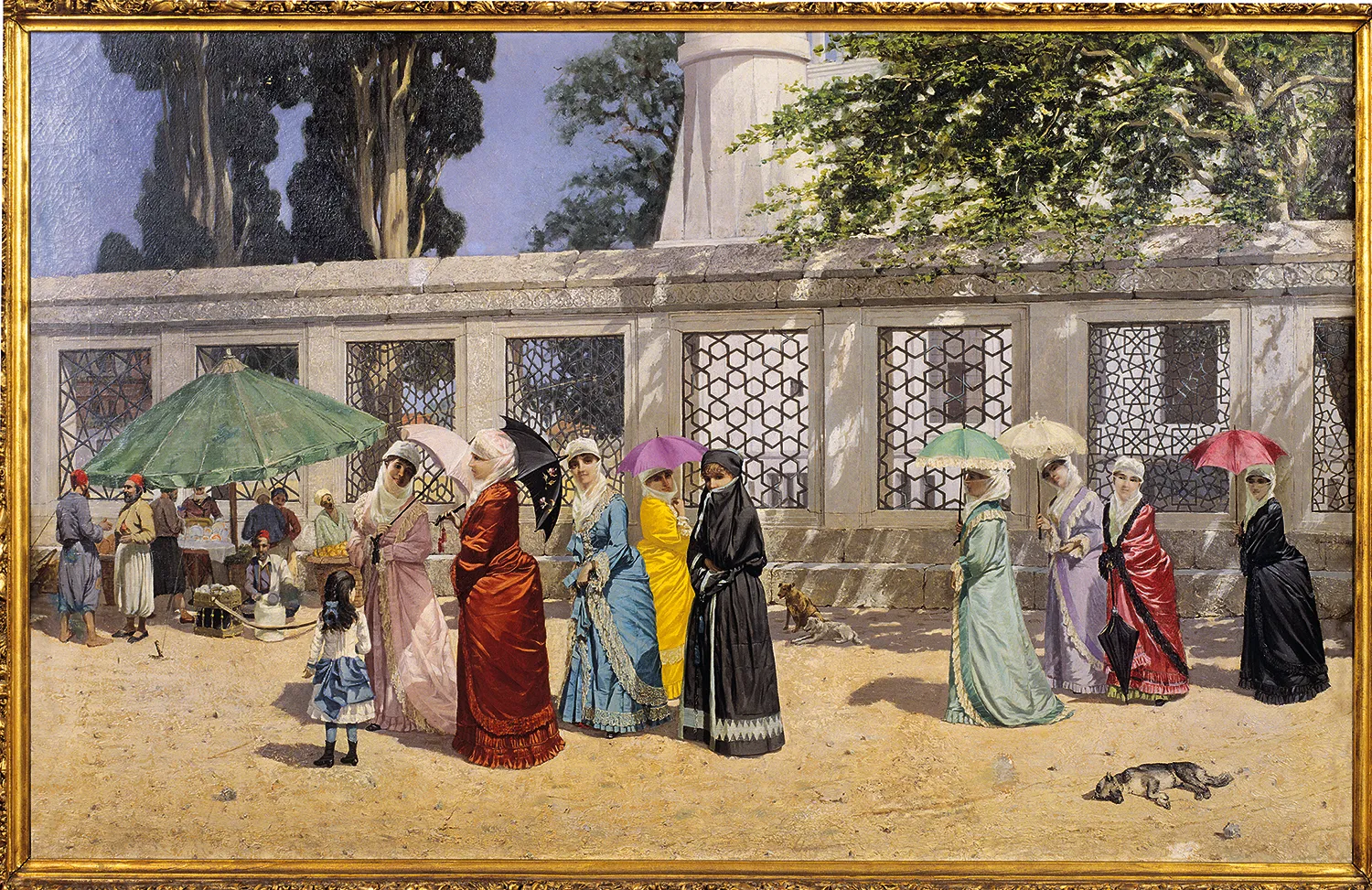
In the 19th century, the fascination with the Orient – Orientalism – found an outlet in painting and literature – and to an extent, architecture as well. Artists and writers usually presented a mysterious, sensual (suggestive?) or despotic picture of the East. However, a less patronising Western style inspired by Eastern civilisation emerged within the decorative arts.
The leader of the Arts and Crafts movement, William Morris, maintained a close relationship with the South Kensington Museum (which later became the Victoria and Albert Museum). Early in his career as a designer, he used the museum’s collections as a study resource; later he served as its consultant for acquiring Islamic art.
Morris accumulated an extensive collection of Islamic art and artefacts, and Persian and Ottoman influences can be found throughout his work. He adopted biomorphic stylisation, avoiding realistic depictions of living things (just like Islamic artists). His ceramic collection featured Iznik plates with their distinct red tulip motif, which also became a staple in his wallpaper, tile and textile designs.The clearest example of Ottoman influence in Morris’s design is evident in the popular Wild Tulip pattern (not featured in the exhibition), which was directly inspired by 17th century Turkish brocades.
Listen to curator Tim Stanley talking about a Turkish pattern that inspired John Henry Dearle, William Morris’s successor at Morris & Co.
By the 17th century, some sultans barely ventured out of the comfort of the Topkapi Palace harem, leaving active governance to the grand vizier and competing administrative factions. Meanwhile the Janissary–the elite infantry units tasked with protecting the sultan–rejected modernisation, revolted frequently, and began meddling in politics.
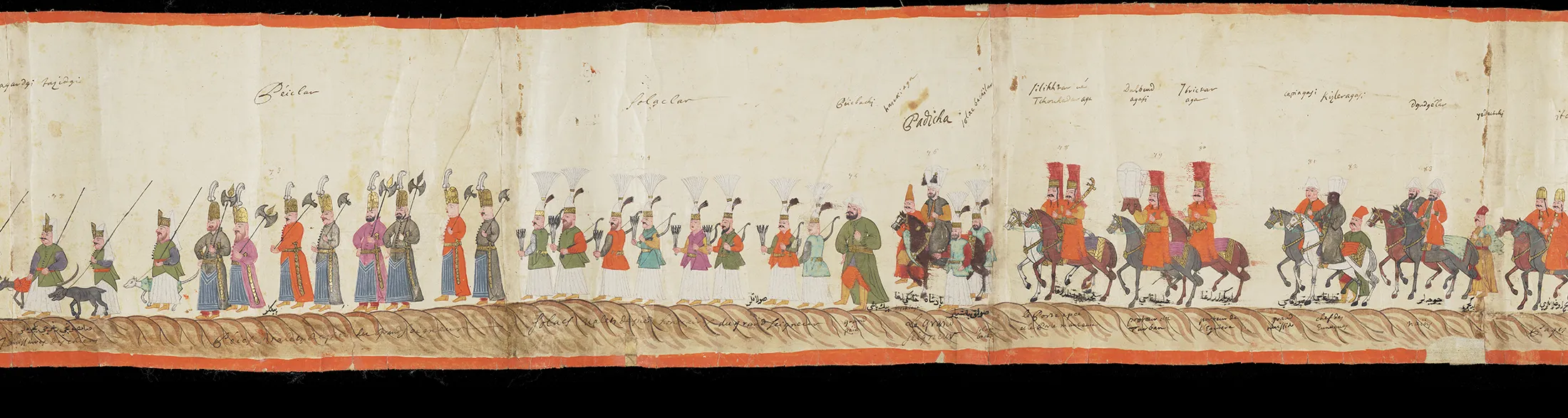
By the 19th century government corruption was widespread, while a rising tide of nationalism– particularly in the Balkans alongside French incursions in North Africa–led to considerable territorial losses. As early as 1853 Tsar Nicholas I described the Ottoman Empire as “a sick man.”
When the Great War broke out, the Ottomans struggled –and despite successfully fending off the Allies at Gallipoli–ultimately suffered defeat. The victorious Allies occupied Istanbul, and the Ottoman Arab territories were divided between France and Britain. And just like that, a 600-year old empire had disintegrated i9nto a puff of nargile smoke. The last sultan was deposed in 1922, and Ankara replace Istanbul as the new capital. The following year, the Republic of Türkiye was founded, with Mustafa Kemal Atatürk as its first president.
Until then, Ottomans had continued to use Kostantiniyye as the capital’s official name in state documents, while Istanbul was the colloquial name used by locals. In 1930 the Turkish government made Istanbul the sole official name, and the Turkish Postal Service stopped delivering letters addressed to Constantinople.
If you are planning a trip to Constatinople, sorry Istanbul, this is you perfect introduction to the cultural delights of this incredible metropole.
ALBERT EHRNROOTH
Constantinople to Istanbul: One City, Two Empires at the Victoria and Albert Museum, South Kensington. Closes 9 May 2027