Jack White. You probably only know him as a superb songwriter and musician: drummer, guitarist, founder member of the White Stripes, the Raconteurs and the Dead Weather. And not to forget, The Upholsterers. But there is more to Jack Antony Gillis – his real name – than music.
White has just debuted his own art at the Damien Hirst-owned Newport Street Gallery in London. ‘These Thoughts May Disappear’ has six large rooms of the gallery taken up by his sculptures, figurines, colourful pallets , found objects, musical interactive works, reupholstered furniture, screenprints, as well works by some guest contributors. You may have seen pictures of some of these art works earlier this year, on Stephen Colbert’s, now-sadly-axed Late Show. White appeared on the show five times over its 11-year run; that’s actually where I found out about all of Jack White’s various side projects.
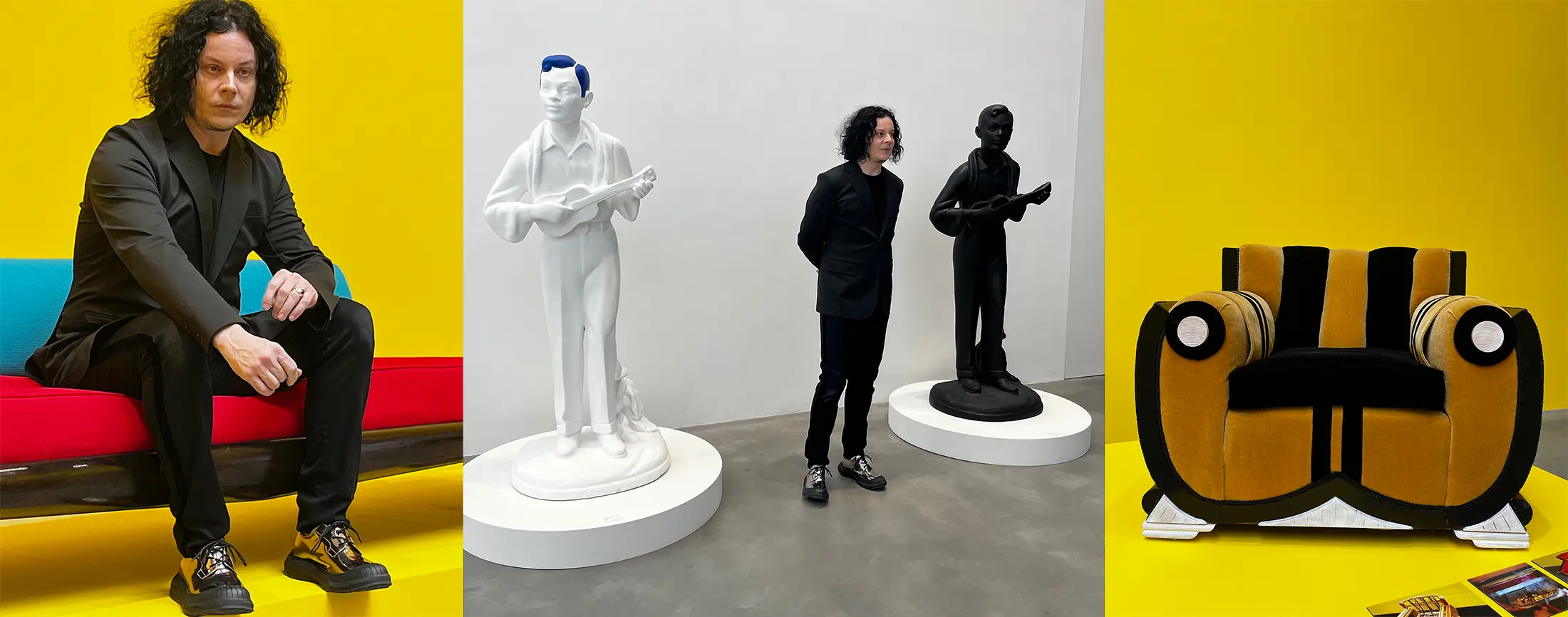
The first gallery features ‘Ukulele Boy’ or ‘Ukulele Joe’ in various guises, sizes and colours. There are 3 life sized Joes and 15 or so 3D-printed brightly painted Ukulele figurines placed on small shelves fixed to the wall. I can imagine that these resin-coated statuettes would sell like hotcakes if they were available at concert merchandise stands (are they?). The Hawaiian entertainers – slick Ukulele man and hula girl – look like they belong in a 1940s Honolulu tourist shop (pre-Pearl Harbor), or were acquired in a vintage store.
Musically and (so it turns out) artistically Jack White is a bit of a shape-shifter. He has in the past sported a haircut with a blue rinse that mirrors the suave looking Ukulele Boy, and a life-sized replica of the statue has even appeared on stage with him. I think it is his alter ego.
The next room is devoted to a 30-foot tree sculpture. It’s modeled on a real ¨decaying¨ tree and it’s red (the original dead tree is now home to a woodpecker’s nest). It might symbolise all the blood that it lost over the years. Well, tree sap, which is the blood of some trees, or resin, which is the ‘scab’ of some trees. The sculpture is probably made out of resin, the plastic variety – liquid plastic that hardens. Sorry, I didn’t check. It was an afterthought.
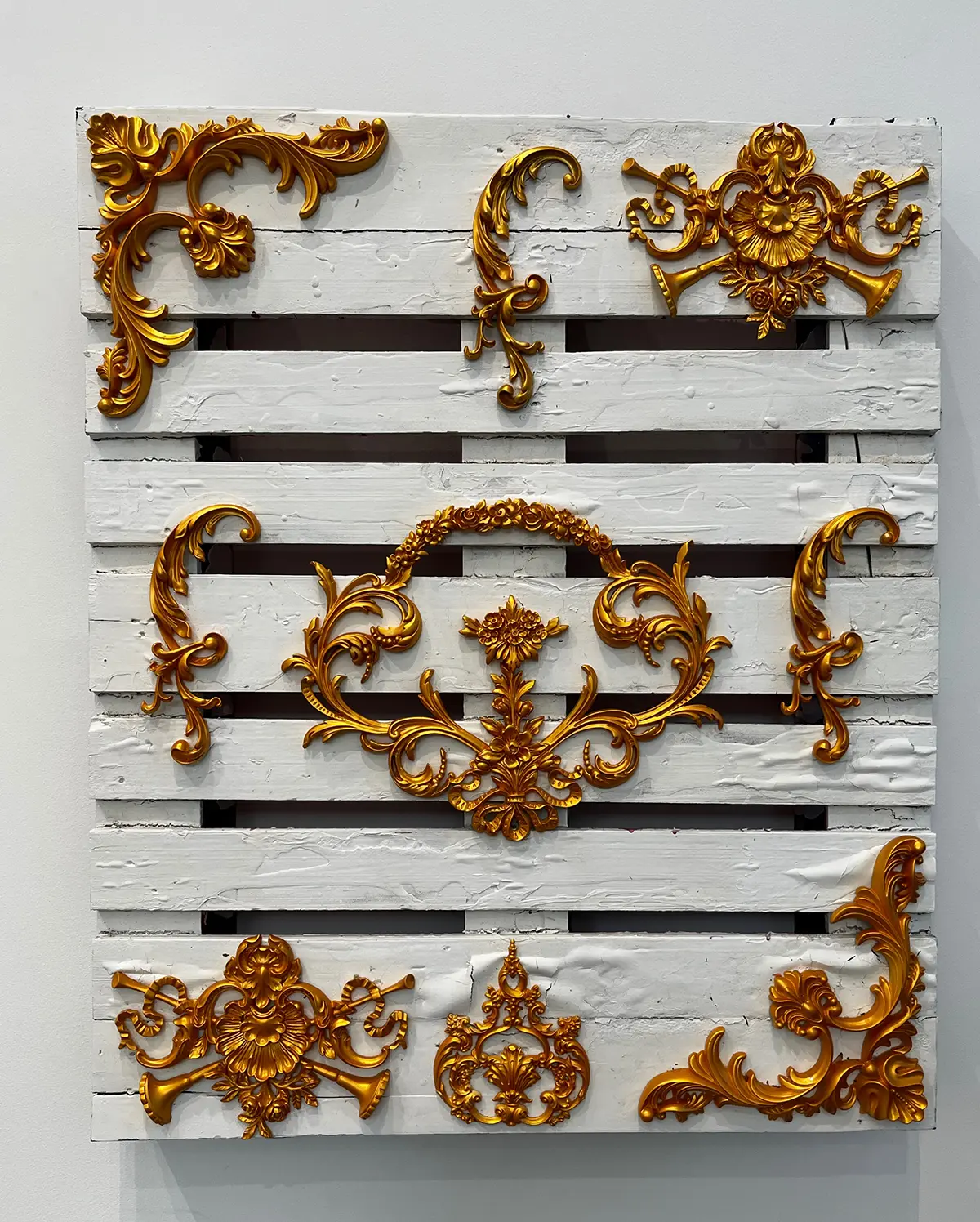
The third room houses all the pallets that have been resourcefully repurposed into wall and floor decorations. White founded the Pallet Cleanse Company with a singular mission; to rescue these amazingly sturdy and portable platforms from ending up on bonfires or in landfills. The company provides a safe environment for wooden, plastic and metal pallet designs, curating them beautifully for re-use.
The Children’s Xylophone pallet is a lovely concept and an ideal first musical instrument for your toddler. It would make a hell of noise if it were actually playable; luckily, it is crafted out of wood, epoxy resin, and lacquer, so it won’t make a sound. The Ambulance pallet is highly practical and could be a cheap alternative for when Medicaid services are inevitably scrapped by the current U.S administration. The Fruit Pallet serves as the perfect blueprint for roadside fruit vendors. The Presidential White House Model features the finest French Style gold moulding and blistering paint. This would look very classy in President Icky Trump’s Oval Office.
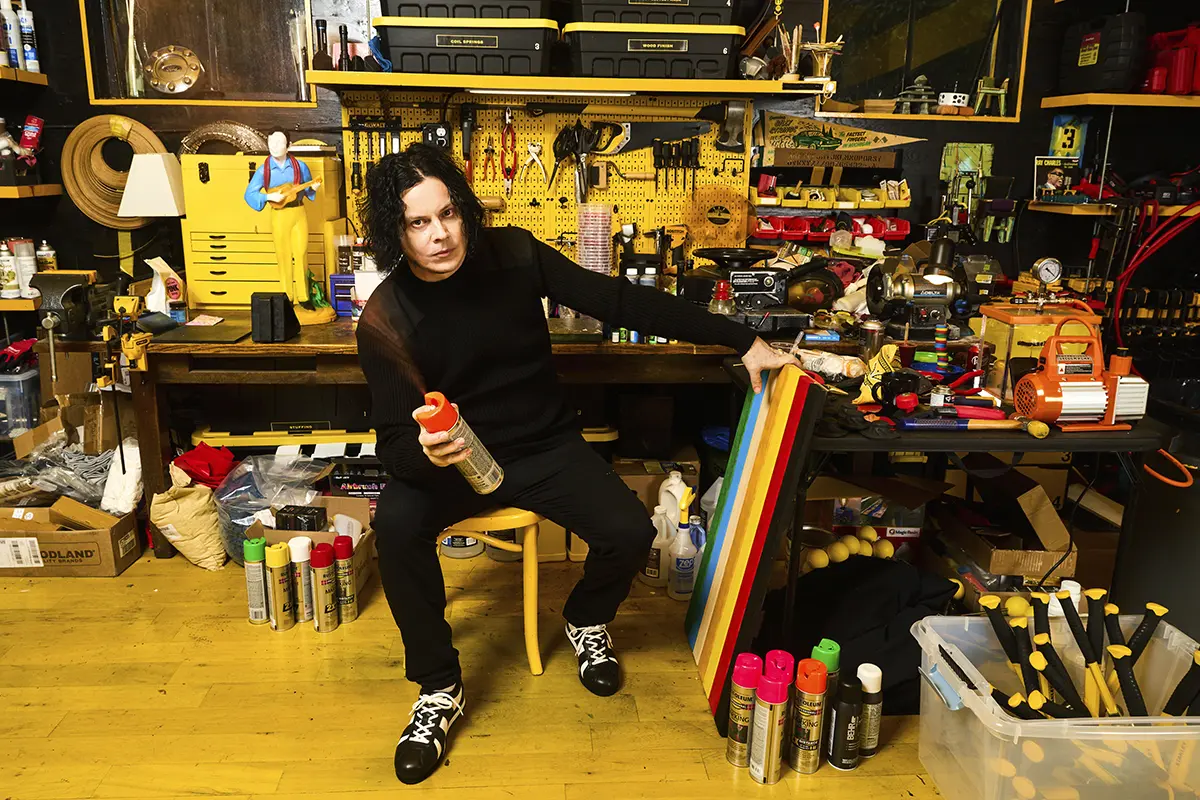
The true highlight of this show is the gallery space filled with all the furniture. This is where Jack is really at home. At fifteen, White apprenticed to become an upholsterer, and in 1996, he opened his own shop, Third Man upholstery. While he was still finding his way in the music industry, the business paid the bills. However, just two years later, the White Stripes began making waves outside the Michigan underground garage-rock scene. As touring and recording began to take up more of his time, White closed up shop. Although he was now making a good living through his music, he never stopped practising upholstery in his spare time. The difference today is that he can approach every piece of furniture as half sculpture and half functional art.
When a Masonic Temple closed down, White bought one of its benches at an auction. He stripped back the large sofa, built new upholstery frames, gave the wood a classy shellac finish, replaced the padding and applied luxurious Prussian blue mohair fabric. As an added feature, you can actually plug an instrument into My Sonic Temple’s audio jack, allowing the sound to emanate through the padding and into your bum.
White’s reputation as a master upholsterer has spread far and wide. When the custom-made couch at Sam Phillips Recording studio – the legendary Sun Records studio – needed upcycling, White refurbished it with the utmost reverence. After all, he was told: “Everyone from Jerry Lee Lewis to Sam The Sham has crashed on that couch,” The Sam Phillips Sofa has been given a new lease of life, and judging by the photographs, it looks more inviting than ever before.
A core maxim in design is ‘Form follows function’. White is sticking to that principle, while adding something little extra.
My favourite piece in this exhibition is The Warrior Chair, an Art Deco club chair. Dressed in ritzy looking gold and black mohair velvety fabric, and stuffed with rubberised horsehair and cotton padding, this is the swankiest and best piece in show. This restored warrior perfectly embodies the architect and interior designer Mies van der Rohe’s philosophy, that : ¨A chair is a machine for sitting.¨
However, functionality and aesthetics is not all. White has added a little something extra. He hides in all of his furniture a ¨secret¨ inside the stuffing. It might be a poem, a vinyl record , or, as in this case, ¨a customised scent.¨ A number of small mesh bags sewn into inside of the arms and the back of the chair contain bits of glove leather, baseball bat shavings, cedar wood and oil. When you sink into the comfortable chair, it emits the nostalgic aroma of an old-fashioned baseball locker rooms – I guess, an upgrade from the stale cigars smoke smell associated with antique club chairs.
With his debut exhibition, Jack White proves he is a master at recycling.
Of course, he has shown in the past that he is pretty adapt at repurposing music, too. His biggest hit to date, Seven Nation Army, – driven by the seven-note riff that everyone recognises – is very reminiscent of the main theme from Bruckner’s Fifth Symphony.
This is an entertaining show, but it will probably only appeal to the fans of White’s music. You get a chance to play with some of the interactive art works – which hadn’t been turned on for the press view and therefore I can’t judge if they are any good. These musical art works have been made by guests contributors like Damien Hirst, Wei Wei, and a number of other Detroit artists. So, go and have a butchers if you’re in town. After all, Jack White’s thoughts may disappear, but his furniture and pallets can always be repurposed.
Albert Ehrnrooth
Jack White These Thoughts May Disappear Newport Street Gallery London Now until 13 September 2026