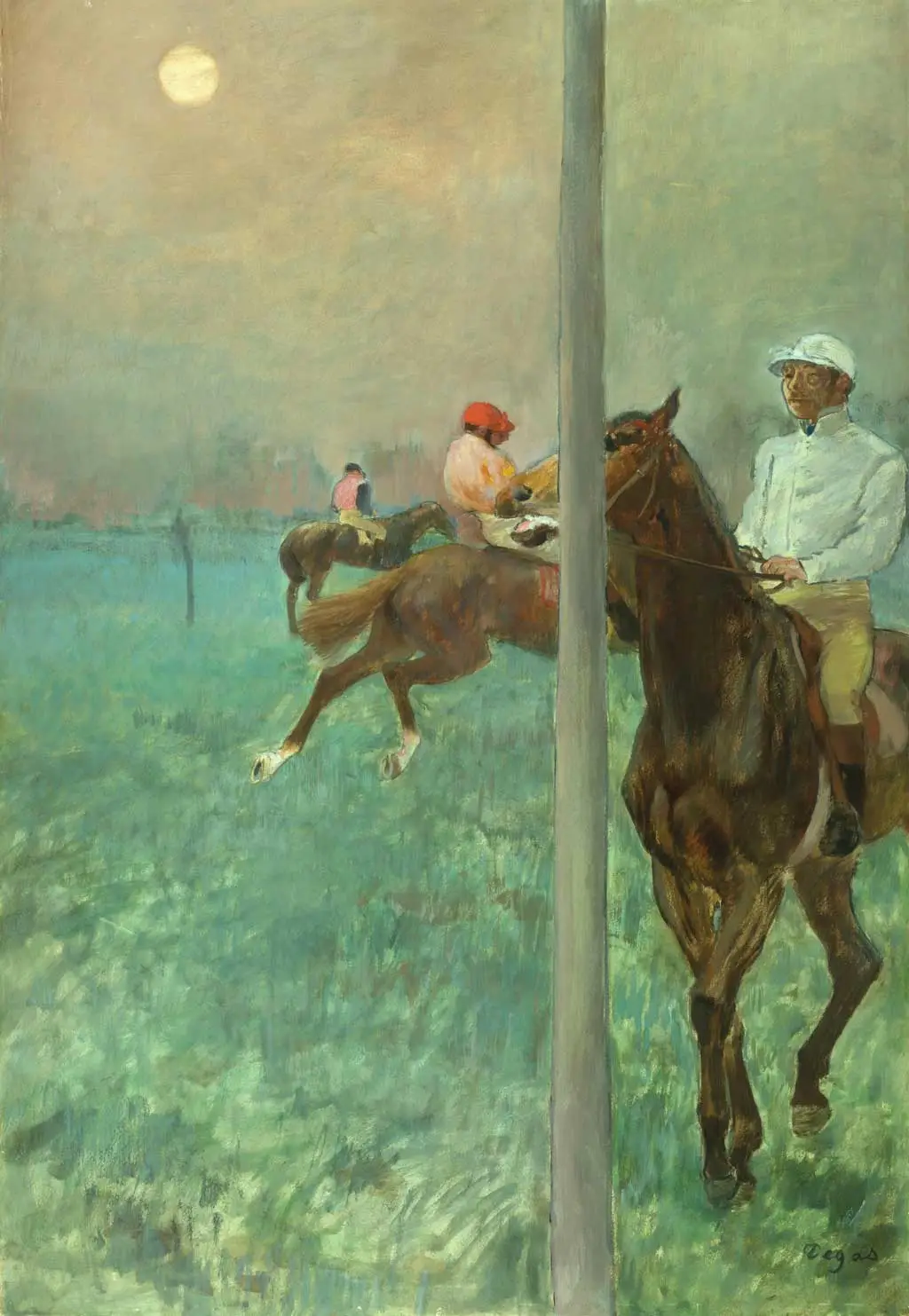
The versatility of Winston Churchill (1874 – 1965) knew few bounds. While he was first and foremost a towering statesman, he could have found success in any number of other disciplines. His stories about his ¨Indiana Jones-like¨ capers in the Boer war made him a celebrated correspondent at home and in America. He was a prolific Nobel Prize-winning author. He was even a certified bricklayer – a favourite pastime at Chartwell that he became so proficient at, that the Building Trades Workers’ Union invited him to join in 1928.
Perhaps an even more surprising talent was his ability to fill hundreds of canvasses with admirable landscapes, interiors and still lifes. Upon seeing Churchill’s painting, La Dragonniere, Picasso famously remarked : ¨He could have earned a good living as an artist if he did not have something else to do.¨
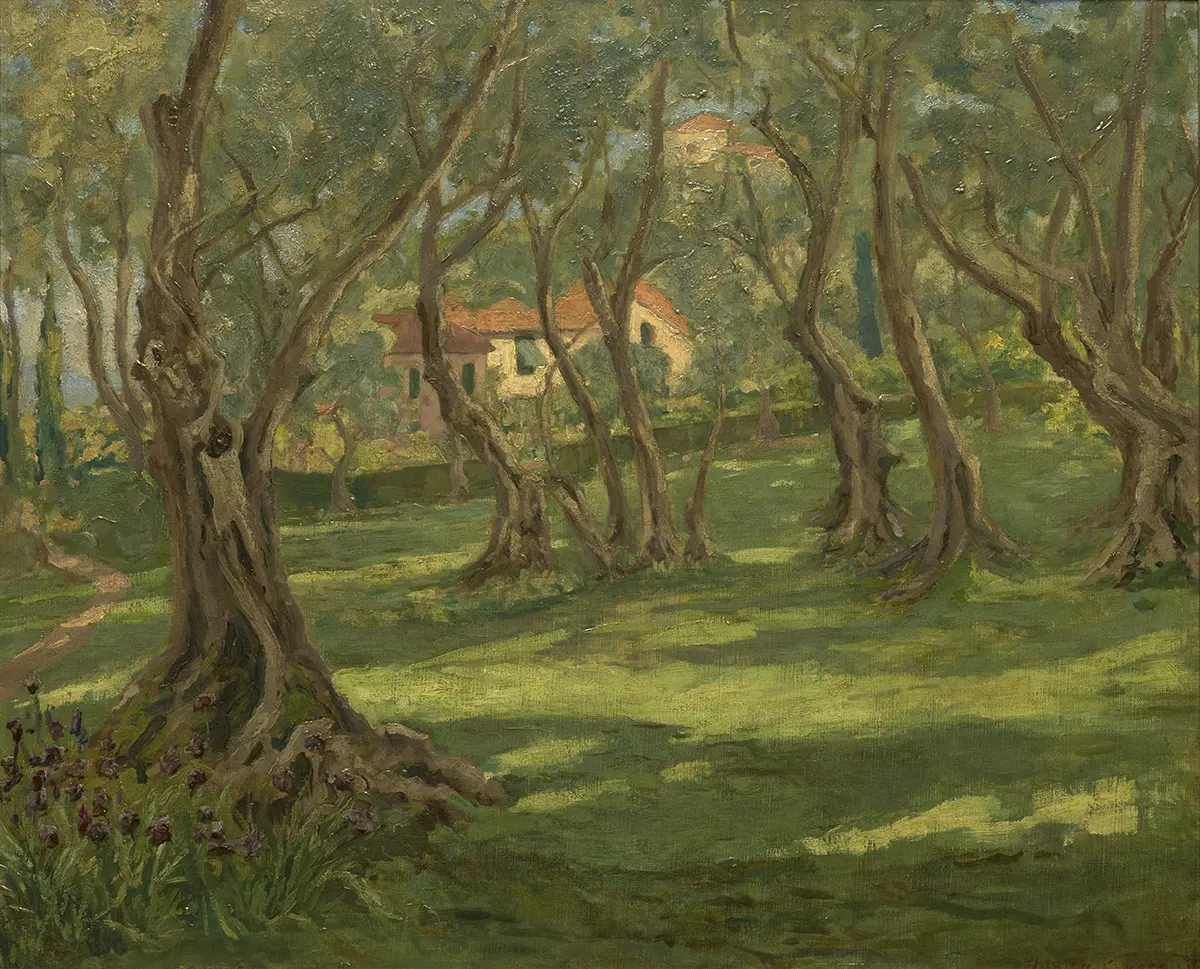
The Wallace Collection now presents the first major retrospective of Sir Winston Churchill’s paintings since his death in 1965. It is a revelation how accomplished he was for an amateur, and I don’t mean that in a condescending way. I agree with Picasso’s assessment – and I can equally assure you that Picasso would have made a rubbish prime minister.
While Churchill could be self-centered and irritatingly self-assured as a statesman, he was genuinely humble about his art. In the early days, whenever he was asked to exhibit he would do it under a pseudonym, to avoid trading on his fame. Painting was a respite, a refuge from the turbulence of politics. Over time, he found that his paintings were excellent presents for close friends, and they became weapons of ‘soft power’ when gifted to allies, prime ministers and presidents. After the Second World War he became more relaxed about exhibiting paintings under his own name. In 1958 president Eisenhower and J.C.Hall (of Hallmark cards), initiated the first retrospective of Churchill’s paintings which toured America, Canada, Australia and New Zealand.
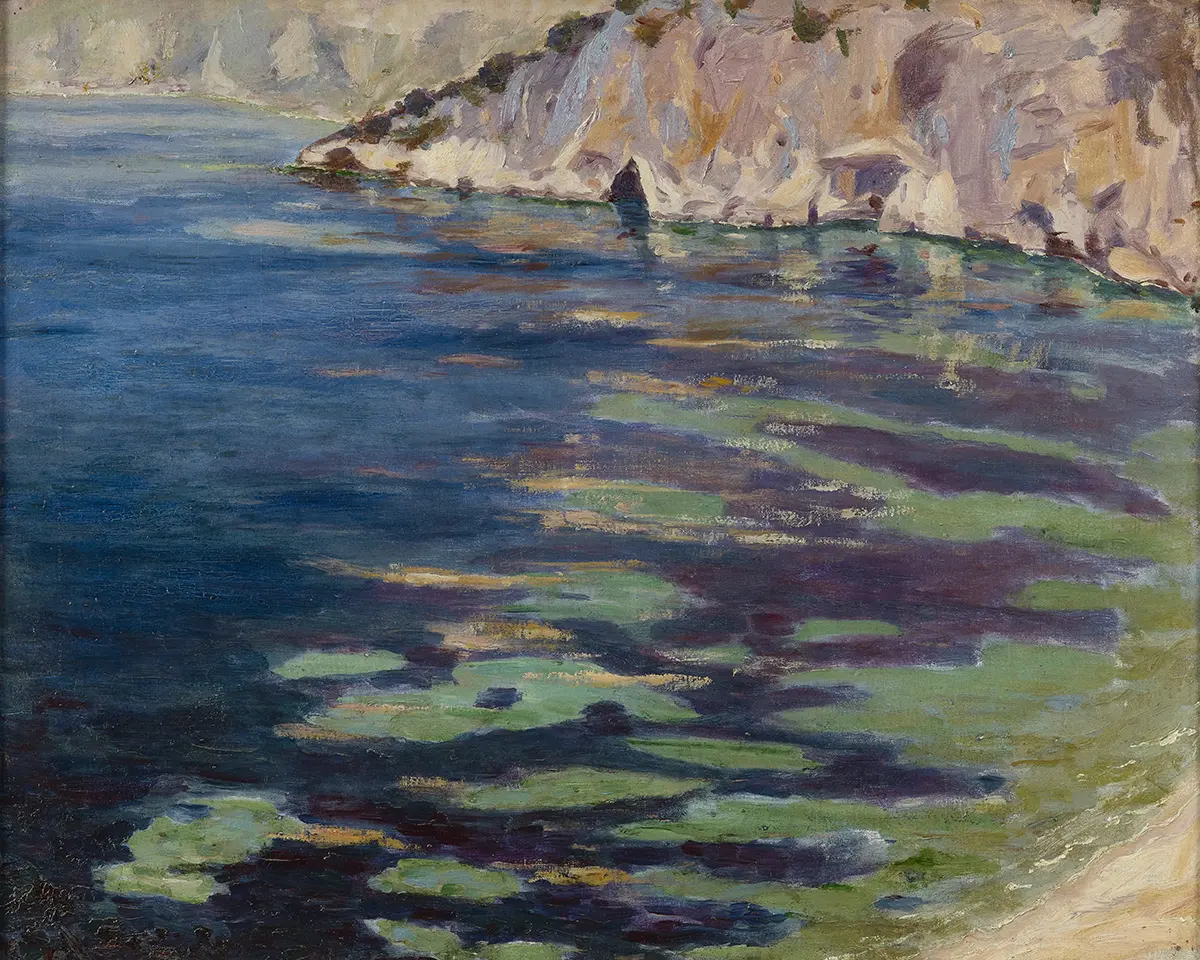
The exhibition at the Wallace Collection brings together over 50 works, many of them from rarely seen private collections. Over his lifetime Churchill produced more than 550 canvases. The largest collection can still be found in his studio at Chartwell, his country home in Kent. That is an impressive output for a man who, I hardly need remind you, had quite a few other commitments.
I asked Katherine Carter, curator and manager of the house and the collections at Chartwell, to explain when he found time to paint:
Churchill did not pick up a brush until the age of 40. In May 1915, following the disastrous Gallipoli campaign – which Churchill had overseen as First Lord of the Admiralty – he was demoted and pushed out of the War Cabinet. Suddenly he was a persona non grata in political circles and faced an existential crisis. While staying with his family at a rented country house in Suffolk, he watched his talented sister-in-law, ¨Goonie¨, creating a few watercolours. Intrigued, he began to experiment with paint, encouraged by Goonie, who taught him the basics of watercolour painting. He soon switched to oil paints which he found more satisfying. He opened an account with Robertson & Co, London’s finest supplier of artists’ materials and started visiting the National Gallery’s to study the masterpieces. The influence of the impressionists, Cézanne, Matisse, William Nicholson, Walter Sickert and Turner are particularly noticeable in his painting. His long-suffering wife, Clementine, was deeply supportive, relieved that Winston had found an therapeutic outlet for his frustrations and depression.
A few years earlier the Churchills had become good friends with the Irish artist John Lavery and his beautiful wife Hazel, who was also a talented painter. John had been appointed an official war artist, and was commissioned to portray his friend in civilian dress (not exhibited in this exhibition). The portrait is considered to be a very good likeness. (The following year he made a rather odd portrait of Churchill in uniform, wearing a French infantryman’s helmet).
The Churchills lived just around the corner from the Laverys studio in South Kensington, in London. It was Hazel who gave him the confidence to confront the terrifying challenge of a blank canvas. In an essay about painting Churchill described Hazel’s ‘battle strategy’ vividly:
¨Painting! What are you hesitating about? Let me have a brush – the big one. Splash on the turpentine, wallop into the blue and the white, frantic flourish on the palette – clean no longer – and then several large, fierce strokes and slashes of blue on an absolutely cowering canvas.¨
Under Hazel’s tutelage Churchill learned to treat the brush as a weapon. Grappling with the ¨black dog¨ of depression, brandishing his newly found weapon, Churchill created a Self-Portrait (1915) which shows him emerging from an ink-black background, his face and body only partly illuminated by a harsh light.
The exhibition includes a picture by his first mentor, John Lavery, Winston Churchill Painting in Lady Paget’s Garden (1915), showing the amateur painter wearing a white smock, shaded by a parasol, at his travel easel, totally absorbed by his new hobby.
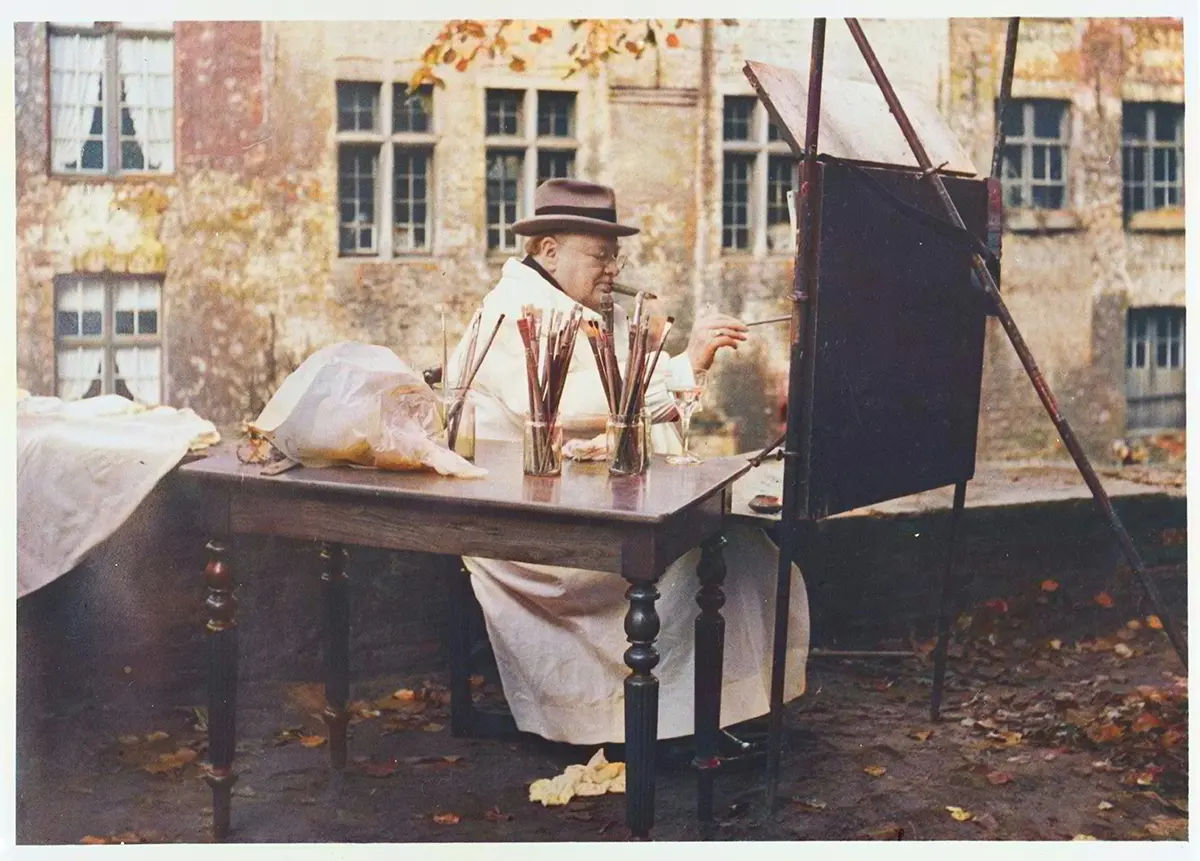
At the end of 1915 Churchill resigned and volunteered to serve as a soldier in Belgium. What may have appeared as a self-sacrificing move, was actually a clever, but risky way to rehabilitate his political career. In January 1916 he was temporarily promoted to lieutenant-colonel and arrived at the 6th battalion, Royal Scots Fusiliers with a black horse, two grooms, a valet, his easel, brushes and canvasses. Churchill never compromised on his luxuries. Initially there was scepticism among the veterans, but Churchill won their respect by improving their conditions and by participating in a number of dangerous patrols. The Germans were shelling relentlessly and the artillery noise never seemed to stop. Yet, Churchill found some time to make two fairly crude, almost naïve oil paintings depicting the damaged battalion headquarters in Ploegsteert, and another one showing the crater-strewn village under bombardment.
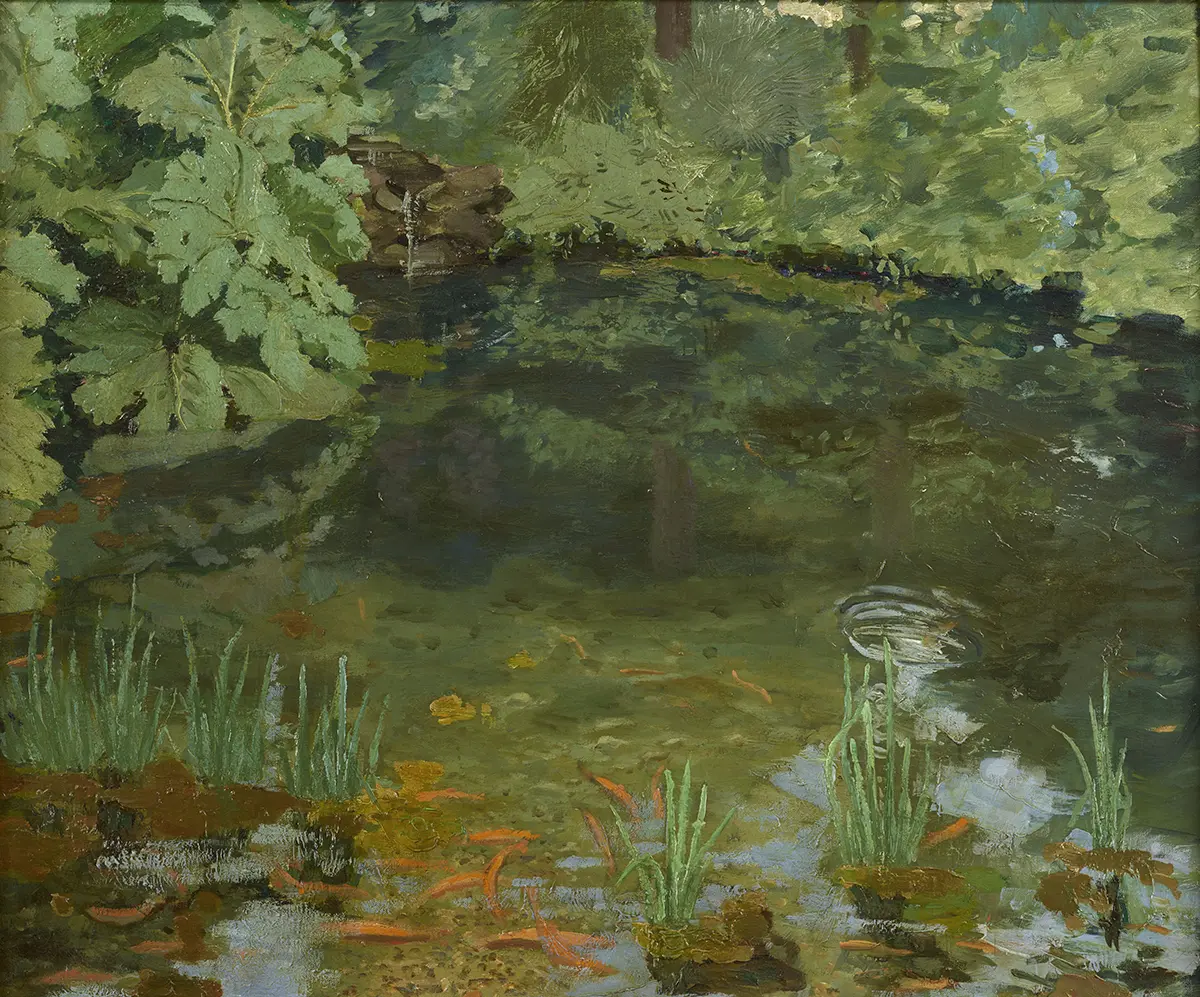
In 1922 Churchill bought an imposing red-brick edifice with extensive views over the Kentish Weald. Chartwell was transformed and refurbished to Churchill’s exacting standards. He used his bricklaying skills to build the walls that protect the kitchen garden, and showed off his labour of love in a painting in 1948. He oversaw the creation of a number of ponds and water features, that he filled with golden orfe and goldfish. The Goldfish Pool at Chartwell (1932) is artistically perhaps the exhibition’s most satisfying painting. The water reflects the lush vegetation’s many shades of green, while in the foreground the brightly coloured fish are awaiting their meal. But Churchill adds a small ripple – a disturbance of the peace – which will spread and ‘break’ the mirror effect. Here he achieves exactly what is expected from an impressionist. He doesn’t just attempt to render the pool, he captures the sensation. The ponds were Churchill’s sanctuary and visiting them, and feeding the fish, was a daily routine whenever he stayed at Chartwell.
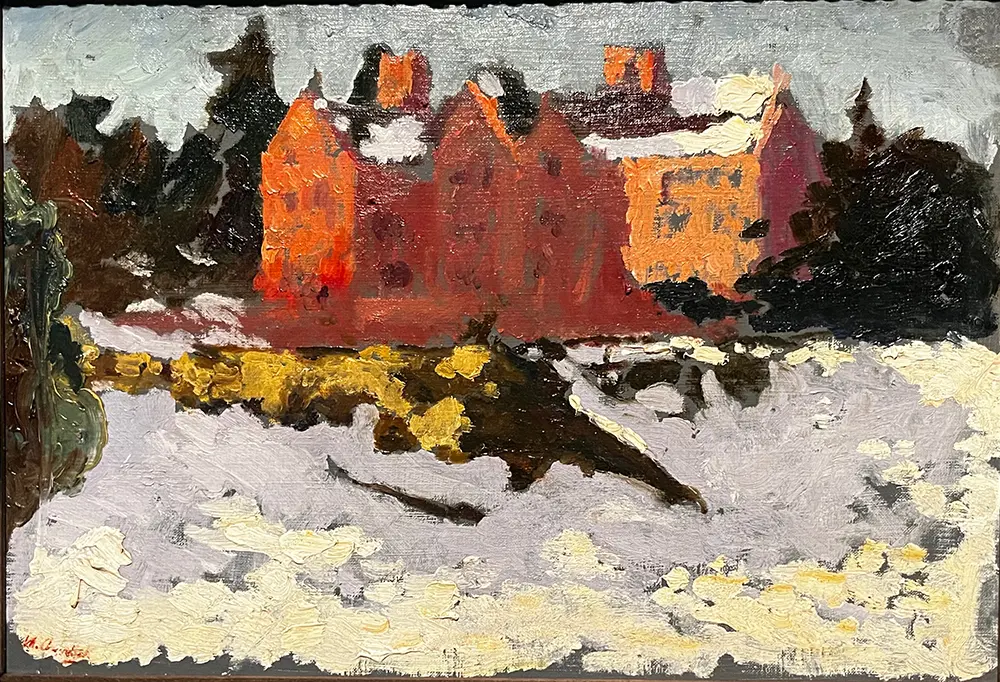
Winter Sunshine, Chartwell (1924) represents an even more daring foray into impressionism. The house that the family had only just moved into, is partly struck by sunlight, but mainly cloaked in shadow. The snow is applied with visible, fat brushstrokes, where Churchill suggests the texture of melting snow. The painting won the first prize in an amateur competition where it had been submitted anonymously. Decades later, encouraged by the President of the Royal Academy, Sir Alfred Munnings, Churchill submitted the work to the 1947 Summer Exhibition under the pseudonym ‘David Winter’.
During the ¨wilderness years¨(1929-1939), Churchill retained his Parliamentary seat but remained sidelined from the Cabinet. He became a vocal critic of his own Conservative party’s Prime Ministers, Stanley Baldwin and Neville Chamberlain. As Hitler rose to power Churchill used radio broadcasts and fortnightly articles in the Evening Standard to warn the public of Nazi intentions, vehemently opposing the government’s policy of appeasement.
The ¨wilderness years¨ turned out to be astoundingly productive for painting: he created about half of his output during the 1930s. Many of those paintings were made during the Churchills’ visits to their aristocratic relatives and wealthy friends at their country mansions. The exhibition features several paintings made in the grounds of Warren House, Sutton Place, Cranborne Manor, Wilton House, as well as depictions of sumptious interior scenes from Knebworth House and Blenheim Palace. Blenheim held deep personal significance for Churchill; it was his birthplace and the setting for his marriage proposal to Clementine. He remained a regular visitor throughout the 1930s, not only because the 9th Duke of Marlborough was his cousin and close friend, but also because it provided the resources for his research on Marlborough: His Life and Times the much praised four-volume biography of his ancestor.
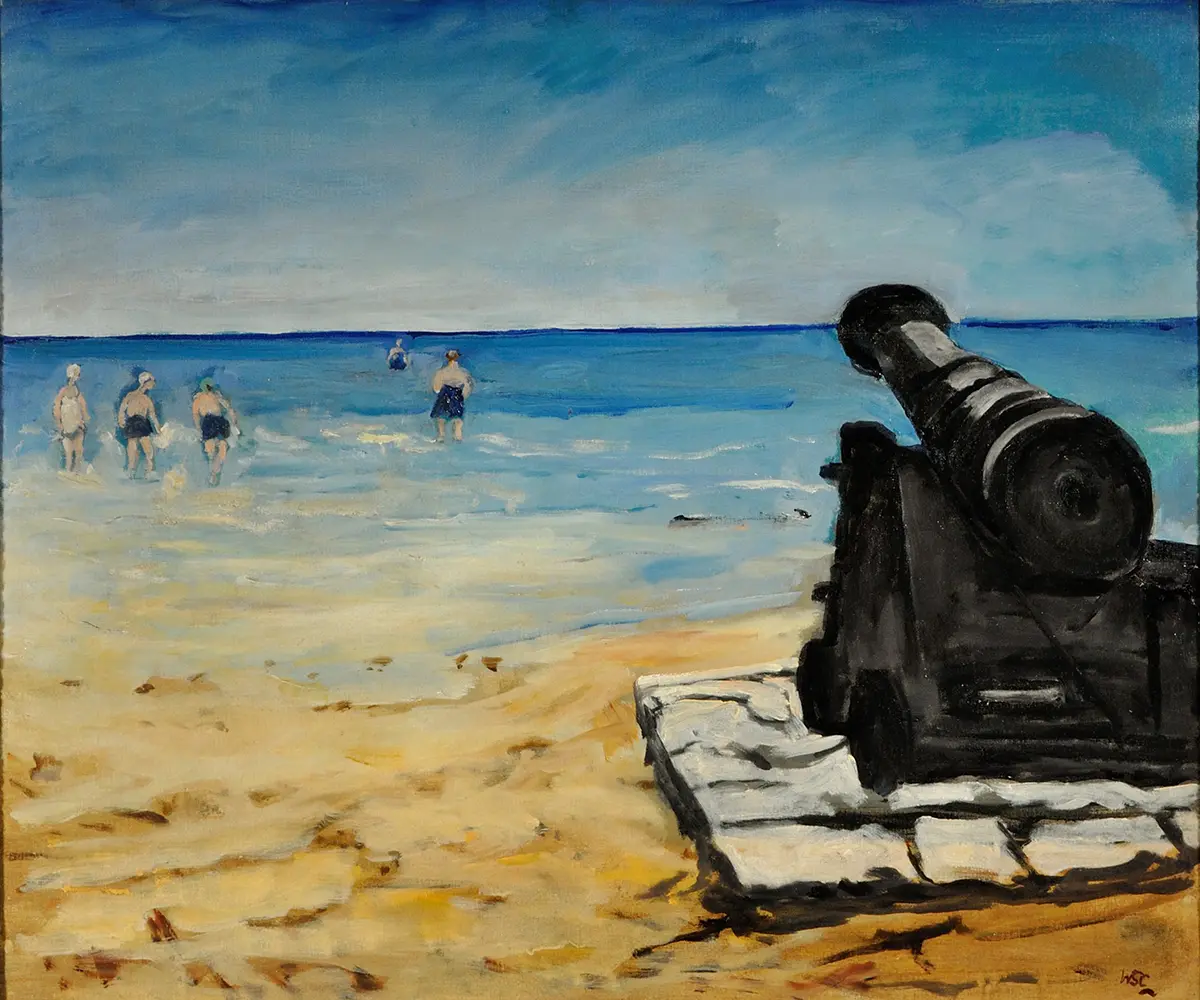
The Beach at Walmer (1938) is a painting that (probably) contains a deeper, symbolic message. The Churchill family is depicted in bathing costumes dipping their toes into the cold waters of the English Channel. Winston has separated himself from the women, appearing to contemplate the darkening sky. While the seascape is based on a black-and-white photograph, the vivid palette – cerulean blue skies and golden sands contrasting with the jet-black Napoleonic cannon in the foreground – makes the painting far more evocative than the its source material. At first glance, it appears to be an idyllic excursion to the seaside. However, the date of its creation is significant: Germany had annexed Austria in March 1938. With that context, the cannon pointing toward the Continent serves as a stark reminder of previous invasion attempts. Was Churchill using his brush as a weapon attempting to underscore the same warnings about the threat of war that he was making regularly in Parliament and in his journalistic writing?
William Nicholson was a master of light and texture and his virtuosic brushwork was particularly suited to depicting glass and silver ware. Under his tutelage Churchill painted two neoclassical sugar bowls and a salver, Still Life, Silver (1930s). It is competently executed, but nothing remarkable. The same is true for Jug and Bottles (1930s) and Bottlescape (1926), which apparently was praised for ¨its dashing virtuosity¨ when it was exhibited at the Royal Academy’s Summer Exhibition in 1955. I’m more interested in the recipients of these paintings. Anthony Eden was gifted the silver, the powerful American diplomat Averell Harriman received the jug and Clementine was happy to be able to keep the Bottlescape at Chartwell.
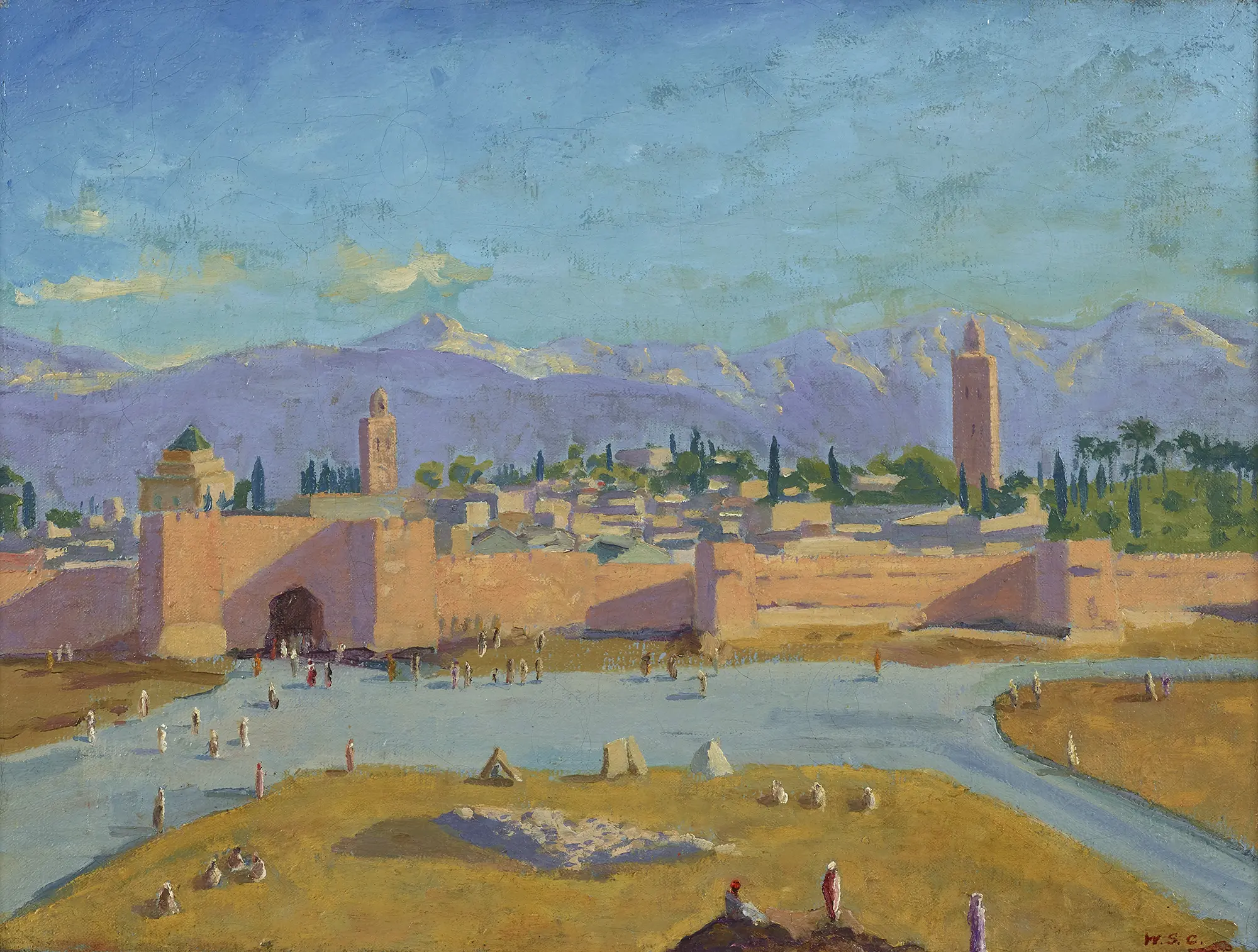
In 1935 Churchill visited Morocco, having been encouraged by John Lavery to look there for painting inspiration. He was immediately captivated by Marrakech – especially its perennial sunshine, vibrant colours and the sweeping panoramas from his luxury hotel balcony. Over the next two decades, he returned five times to the¨Red City¨, depicting palm groves, the Garden of the Mamounia Hotel, Valley of the Ourika and Atlas Mountains, The Mosque and The Gate at Marrakech, as well as many other places in and around, one of his favourite places in the world. While these paintings function primarily as straightforward picture postcards and mementos, they remain deeply decorative and uplifting.
During the Second World War Churchill had few opportunities and not the right mindset for one of his his favourite distraction. There is one exception. Churchill himself said that Tower of the Koutoubia Mosque (1943) was the only painting he attempted during WWII. The painting (which is this review’s featured image) was presented as a birthday gift to President Roosevelt, who visited Marrakech with Churchill after the Casablanca conference in January 1943.
Lucy Davis, Curator of Paintings at the Wallace Collection and co-curator of the exhibition tells the story of how the painting came about.
Despite his popularity as a wartime leader, Churchill’s Conservatives lost the 1945 election in a landslide to Clement Attlee’s Labour Party. Churchill had some ¨fits of depression¨, according to his own account, after the surprise defeat, but as Violet Bonham Carter points out in her memoir of Churchill ¨He seemed to be endowed by Nature with a double charge of life.¨
Churchill took up painting again at the first opportunity, following the end of the war, while visiting friends in the French Basque country – just before the Potsdam Conference in July 1945. In the post-war years, the Churchills spent a great deal of time visiting friends in France and Italy. Winston was particularly keen on painting holidays on the Riviera, though Clementine seldom joined him there.
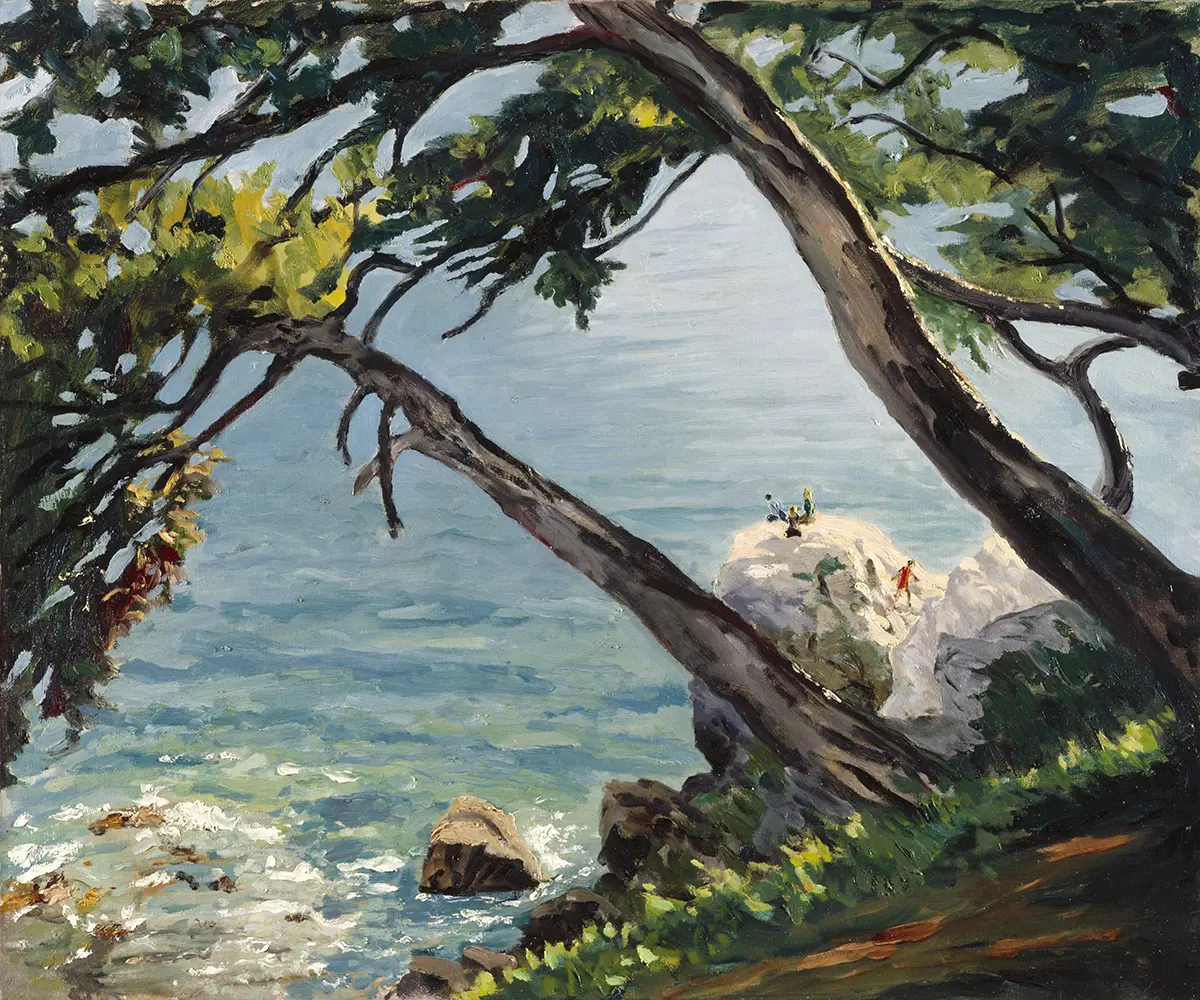
In 1947 he was invited to exhibit at the Royal Academy Summer Exhibition and he was appointed Honorary Academician Extraordinary the following year. The Diploma Work that he donated to the Royal Academy’s collection is one of the very few paintings finished during his second premiership (1951-55). Cap d’Ail, Alpes-Maritimes, from La Capponcina (1952) is a well observed study of light and shade occupying the foreground canopy and grass, set against an evocative Mediterranean blue sea with children playing on the rocks.
Whenever the weather permitted Churchill would work en plein air. As a backup however he would also ask his valet, bodyguard or friends to photograph the view he was working on so he could later refine the composition in his studio at Chartwell. Clementine introduced him to Walter Sickert – on whom she had a crush in her youth – and he became a regular guest in the 1920s to Chartwell. He taught Churchill how to lay down a monochrome underlayer on the canvas and introduced him to the technique of using a projector to cast scaled photographs onto the canvas. Visitors to the exhibition can admire Churchill’s Pullin slide projector alongside his paint brushes, his largest travel easel, a quarter bottle of Paul Roger champagne (his ‘life elixir’) and various other memorabilia.
Following Churchill’s resignation as prime minister in April 1955, he was invited by President Eisenhower to exhibit his paintings in the United States. The resulting tour was organised and funded by J.C Hall, who had previously been granted permission to feature Churchill’s paintings on Christmas and greeting cards. After its success in the U.S., the retrospective traveled to Canada, Australia and New Zealand. In 1959 the British public finally had a chance to see a display of sixty-two of his paintings at the Royal Academy.
Painting was Churchill’s antidote to politics, that much is clear. But was he a talented artist? While he may not have possessed a natural talent, he certainly had the next best thing: singleness of mind, dogged determination, and resilience. He took the craft seriously – far from being a mere hobbyist – and achieved a level of mastery in many of his works well beyond what one would expect from an amateur. Churchill published a collection of essays titled Painting as a Pastime, but over time the hobby became far more significant than just a distraction. It was his lifesaver. As he once confided to Sir John Rothenstein, the director of the Tate Gallery. “If it weren’t for painting. I couldn’t live: I couldn’t bear the strain of things.”
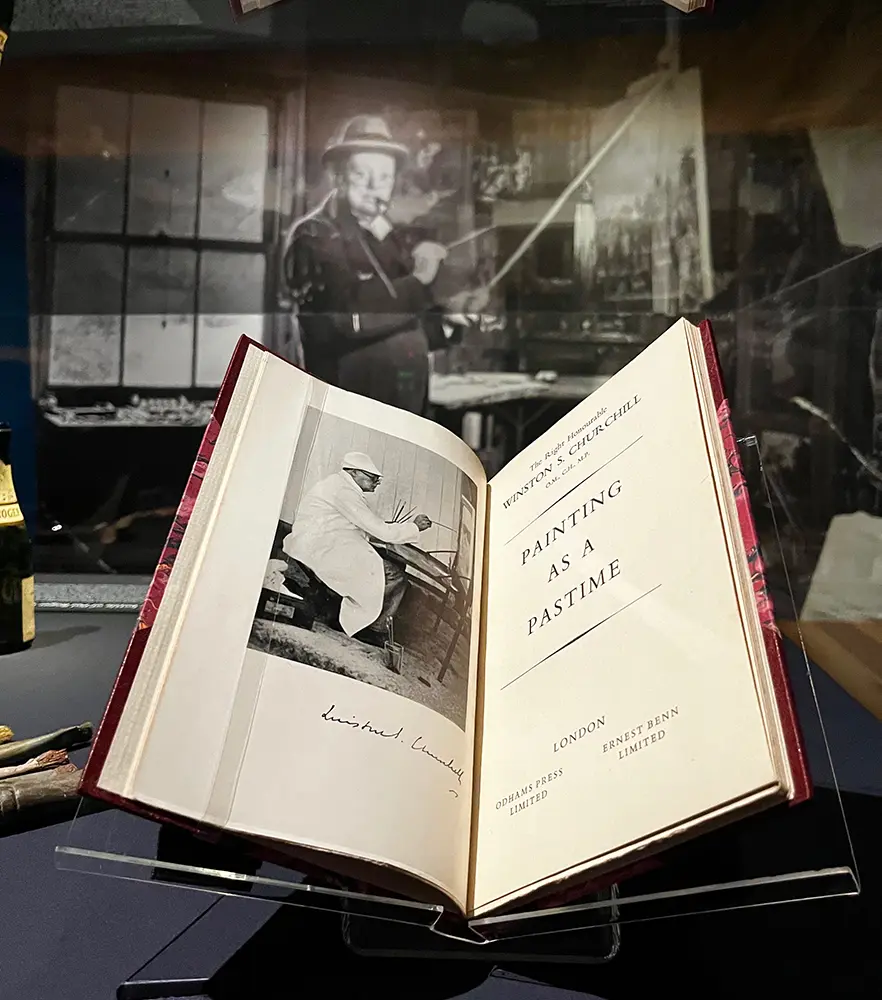
In Painting as a Pastime (1921-1922) Churchill writes:
“When I get to heaven I mean to spend a considerable portion of my first million years in painting, and so get to the bottom of the subject. But then I shall require a still gayer palette than I get here below. I expect orange and vermilion will be the darkest, dullest colours upon it, and beyond them will be a whole range of wonderful new colours which will delight the celestial eye.”
WINSTON CHURCHILL: THE PAINTER at the Wallace Collection until 29 November 2026
If your Swedish isn’t too rusty, I highly recommend listening to my radio programme about The Marshal and the British Bulldog, here. The Marshall refers to the Finnish Commander-in-Chief during WWII, who met Churchill for talks on several occasions. It is clear that Churchill respected Mannerheim and, like many other Britons. sympathised with Finland during the Winter War. Had Churchill been Prime Minister in December 1939, he likely would have assisted Finland with troops. Later, in the summer of 1941, Churchill also expressed understanding for Finland’s difficult situation. Katherine Carter, curator and manager of the collections at Chartwell is one of the interviewees (in English obviously)