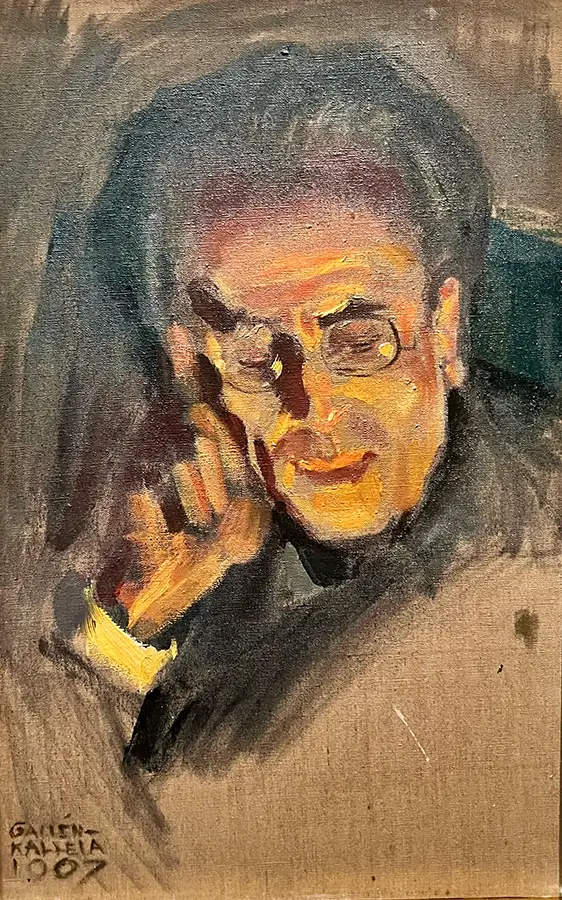
Gustav Mahler was a Bohemian by birth, but the family moved to Iglau in Moravia when he was only a few months old. It was a largely German-speaking town, and Mahler never learned to speak Czech very well. For Mahler, the question of nationality was fairly irrelevant; and he stated that he was `thrice homeless, as a native of Bohemia in Austria, as an Austrian among Germans and as a Jew throughout the world.¨
The Czechs have never claimed Mahler as one of their own. It was only after the Czech Philharmonic gave the world premiere of the Seventh Symphony (1908) that the orchestra started to build a Mahlerian reputation. In the 1960s, the Prague based ensemble made some outstanding recordings of Mahler symphonies with their Czech chief conductor Karel Ančerl. Later Václav Neumann recorded the whole cycle between 1976 and 1982. Meanwhile Rafael Kubelik’s much admired Mahler recordings were made with the Bavarian Radio Symphony Orchestra.
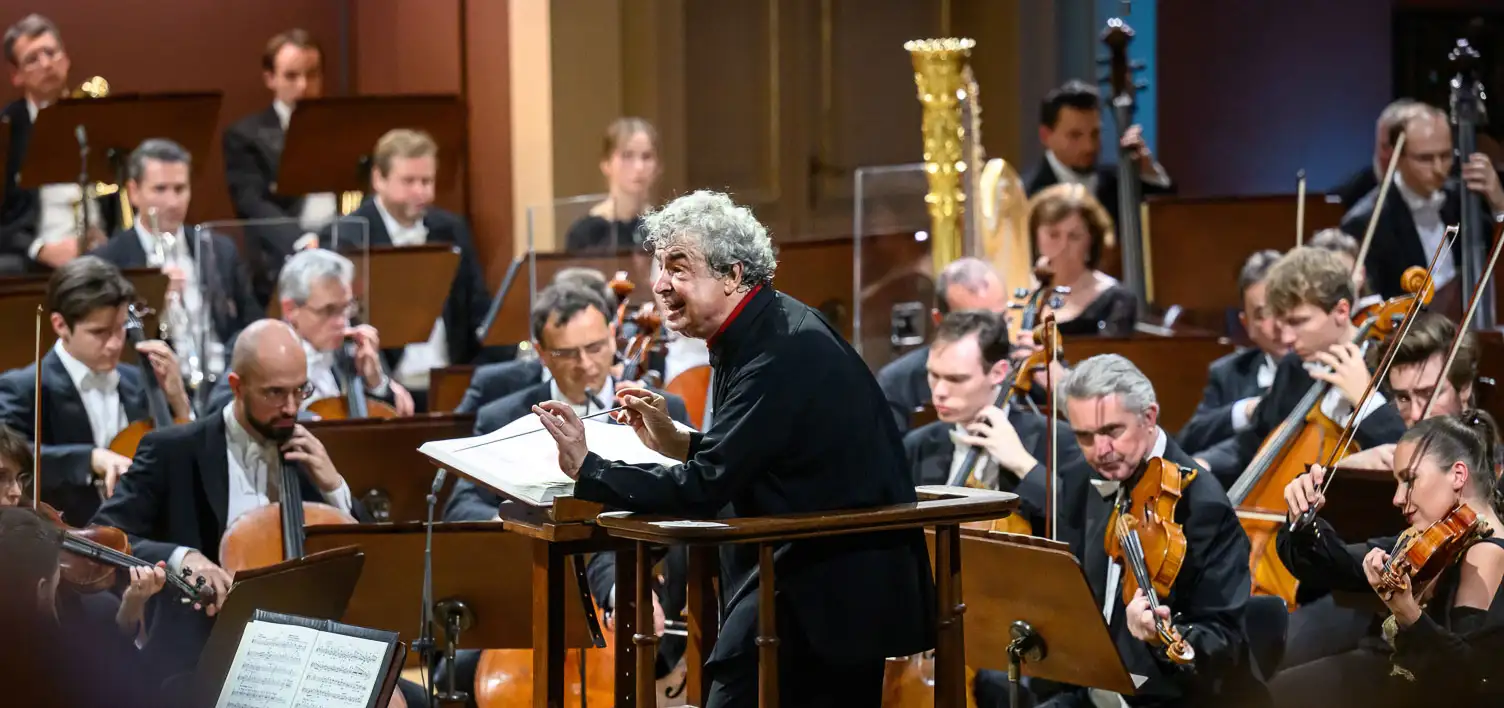
Semyon Bychkov, who grew up in the Soviet Union but emigrated to the U.S. 50 years ago, succeeded Chief Conductor Jiri Bělohlávek in 2018. During Bělohlávek’s tenure with the BBC Symphony Orchestra, Mahler appeared more regularly in the repertoire. Bělohlávek returned as Chief Conductor to the Czech Philharmonic in 2012 and planned to record a complete Mahler cycle, but he died before the project came to fruition. His successor, Bychkov, took over the mammoth task instead.
While a student at the conservatory Bychkov once walked into a rehearsal of the Leningrad Philharmonic between classes, not knowing what they were playing. ¨There was absolute silence, and suddenly I heard sounds that seemed almost otherworldly.¨ He discovered that he had heard the serene finale of the Third Symphony – subtitled ¨What Love Tells Me¨ – an experience that initiated his lifelong love for Mahler.
MAHLER’S FIRST
Mahler conducted the world premiere of his First Symphony – then titled a Symphonic Poem in Two Parts – in (Buda)Pest in 1889. It was not an unmitigated success, but the reviews were not entirely discouraging either. When it was performed in Hamburg four years later the score had been revised and Mahler had changed the title to Titan. In 1894 the Andante (known as Blumine) was cut, and the work was renamed Symphony in D major. Initially, Mahler provided a programmatic explanation, which he withdrew early on.
Bychkov gives the introduction – ¨Nature ‘s awakening from the long sleep of winter¨ – a guarded, slightly sinister touch, with the violins sustaining an ‘A’ for what feels like many minutes. Once the cuckoos and assorted birds start their calls – on a descending fourth, which becomes a recurring motif – it all begins to sound much chirpier. The Wanderer from Mahler’s song cycle Lieder eines fahrenden Gesellen makes a brief appearance ( he returns with another wordless song fragment in the third movement) to provide yet another nature theme, steeped in romanticism. The development sees the eerie drone in A return as tension builds. The main theme of the final movement is introduced after some complicated modulations, though it is not yet fully developed.
I’ve heard the second movement’s Austrian Ländler treated with a bit more foot-stomping, crude gusto. Bychkov keeps it smooth and pleasant, which means that the contrast with the trio section’s refined waltz is less articulated. The third movement – inspired by an engraving in a children’s book depicting animals accompanying the hunter’s coffin – lacks the ironic (or sarcastic?) tone in the Czech interpretation that Mahler surely intended. The fact that he transposed the well-known nursery rhyme Frère-Jacques into a minor key and had it performed on a double bass (most effective when played slightly off-key) says it all. This is a symphony full of contrasts and I think it works best when one dares to juxtapose the tragic and the comic, obviously without hamming it up. Here, the Czech Philharmonic plays it a little bit too safe.
MAHLER’S THIRD
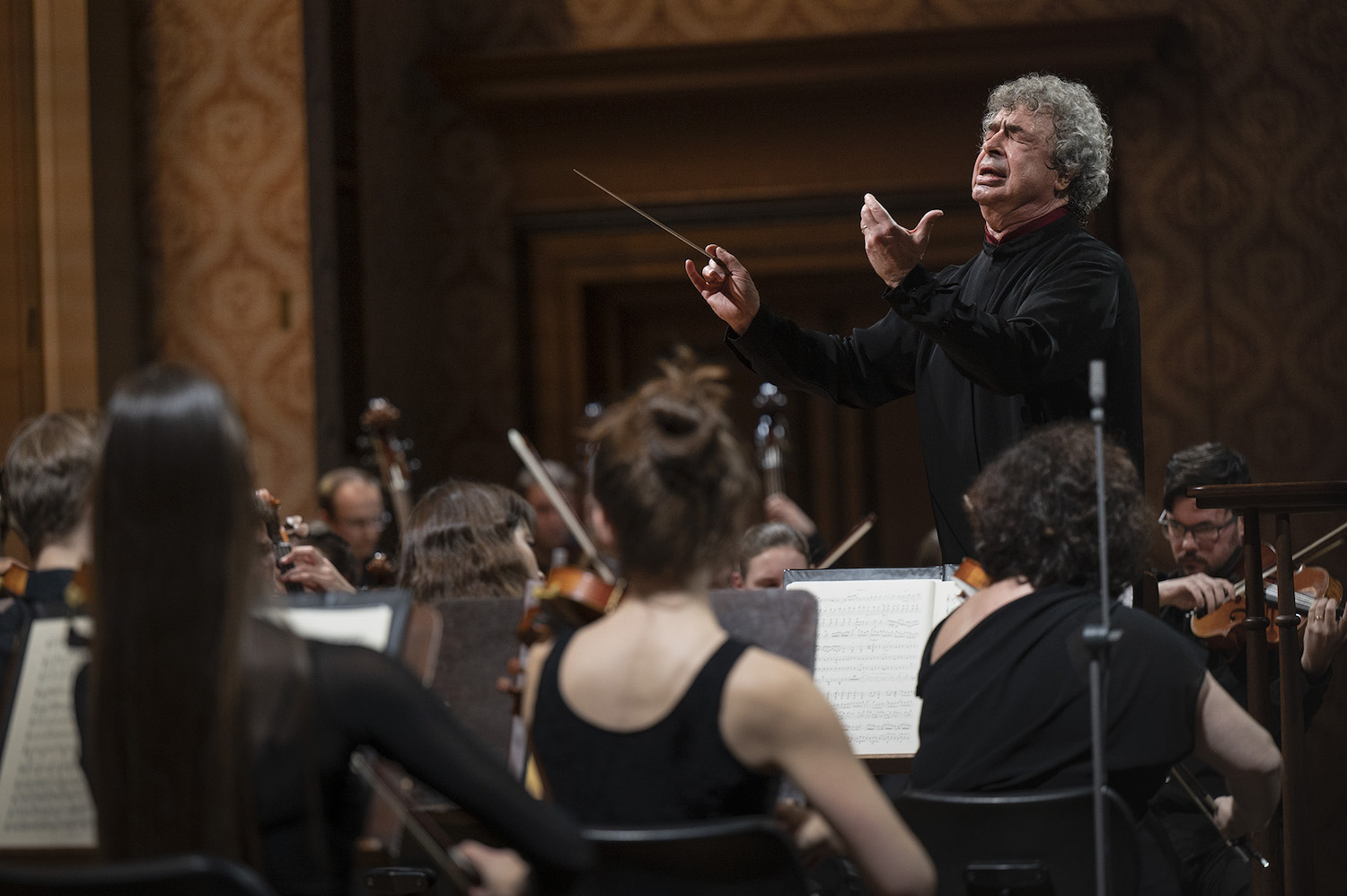
The First and Third symphony have much in common, but the Third is a mightier, more complex work. Both are a paeans to nature, but the Third attenpts to embrace a pantheistic worldview. To quote Mahler: ¨All of nature speaks in it, telling deep secrets that one might guess only in a dream.¨ To his lover, the soprano Anna von Mildenburg, he wrote: ¨In my symphony the whole of nature finds a voice¨
As if seven French horns in the First symphony didn’t create enough of a racket, Mahler opted for eight horns in the opening sequence of the Third. In all but one movement, several opening and subsequent themes start with an ascending perfect fourth. While the First Symphony utilised the descending fourth for bird calls, here Mahler tackles the terrifying force of nature; that ascending fourth is his opening move in a battle on this musical chessboard.
Initially every movement had a subtitle showing a natural progression: 1. Summer Marches In Pan Awakes 2. What the Flowers of the Meadow Tell Me 3. What the Animals of the Forest Tell Me. 4. What Night Tells Me, and so forth. By the time the score was published in 1898 the titles were gone. Mahler wanted ¨Some residue of mystery always to remain, even for the creator.¨
However, the philosophical plan remains helpful, particularly for an interpreter. The primordial sounds of the opening (the original Introduction or ‘Pan Awakes’) illustrates inert nature (Winter) thawing into life. The melody spans and solos for brass are unusually long for an orchestral piece in the 1890s. According to the conductor Willem Mengelberg the trombone solo was a ¨the proclamation of death.¨ As the earth awakes, the wonderful Czech trombones, tubas and trumpets produce a warm embracing sound, while woodwinds and strings provide a murmurous pastoral setting. However, when the military band marches onto the scene Bychkov appears to have dressed them in civvies instead of uniforms. He tones down the regimental air and focuses on the motivic details. Again, the execution is smooth and pleasant, but nowhere does it sound as strident or crude as Mahler probably intended.
The second movement opens with an oboe melody introducing a minuet that according to Mahler is treated to ¨ever richer variation¨ and some almost frantic meter changes.
In the third movement into the forest we go where we can hear the animals buzzing and chirping – it’s a happy place. As we progress deeper into the wood and the shadows grow longer, it feels as if we are joined by Puck, the merry and mischievous wanderer of the night in A Midsummer Night’s Dream. When played well this movement should trigger sentimental longing. The Czech Philharmonic achieves that sense of nostalgia, enhanced by Walter Hofbauer’s incredibly evocative posthorn solos.
After listening to flowers and animals, the fourth movement introduces the human voice. We are plunged into ¨deep (tiefe) midnight¨ with a setting of the “Mitternachtslied” from Nietzsche’s Also sprach Zarathustra. The mezzo–soprano Catriona Morison offers all the anguish, mournful self-reflection and¨joy, deeper still than heartache.¨
In the fifth movement it is is as if the sun had broken through the dark clouds gathered in the previous movement. One would be hard-pressed to find a more joyous imitation of pealing bells – bim-bam – than the one the Pueri Gaudentes Boys’ Choir produces here. The women of the Prague Philharmonic Choir reminds us that you can attain ¨Heavenly Joy¨ through Jesus and the love of God; indeed, in his music, Mahler frequently appears to lean more toward Christian imagery and mysticism than the heritage that his Jewish roots offer him.
Tchaikovsky had only recently ended his Pathétique Symphony with a slow movement, but it was still quite unusual when Mahler decided to follow a similar path. He briefly contemplated calling the sixth movement What God Tells Me. Considering that there are not many Adagios that come closer to expressing ¨the divine in man¨(to quote the author Philip Barford), the title would have been far from preposterous.
The first movement’s gloomy opening in D minor, the life-negating forces, and the existential questions posed throughout the work are finally dispelled and resolved in the all- encompassing finale in majestic D major. Bychkov paces Mahler’s vision of heaven perfectly. He takes his time without overemphasising the yearning themes, thereby allowing the listener to luxuriate in the sheer magnitude and spiritual significance of Mahler’s achievement.
MAHLER’S FOURTH
Mahler composed almost exclusively during the summer months, when he had time off from his conducting jobs. He began the Fourth Symphony in 1899 in the Austrian spa town of Bad Aussee. To begin with, the work progressed very slowly, but in the final weeks of his holiday a burst of inspiration allowed him to fill the sketchbook he always carried on his long walks. The following year, he built a house and a composing hut on the edge of the Wörthersee in Carinthia. He started out by complaining about the noise – ¨the barbarity of the outside world¨– but revisiting the sketches he’d made the previous year, gave him the momentum to finish the symphony in little over three weeks.
Throughout the Fourth Symphony you can hear themes from the song Das himmlische Leben, written seven years prior, based on the folk poetry and melodies from Des Knaben Wunderhorn. Motifs from the same song also appear in the Third Symphony, where it was originally intended to feature in the finale.
The Fourth is Mahler’s shortest symphony – Bychkov clocks in at under 57 minutes – and the orchestra is also reduced with no trombones and no tubas. Yet, despite the lighter textures, the work remains a profound meditation on life after death, culminating in a child’s vision of heaven.
The opening movement presents a sunny outlook with sleighbells, flutes and cheerful horns. The Czech Philharmonic navigates the complicated, Bach–inspired contrapuntal texture with ease. Mahler owned a virtually complete collection of J.S. Bach’s works – 46 volumes in total – and this was the only music that he kept in his composing huts, all built in stunning natural surroundings. The influence is particularly striking in the middle period symphonies ( nos. 4 – 7) which contain plenty of contrapuntal elements.
In the scherzo the solo violin is tuned up one tone to create a lugubrious scordatura effect (also used by Bach in the Fifth Cello Suite). The Czech Philharmonic’s violinist creates a suitably sinister effect, but who is he? The lack of a credit for any of the orchestra members in the CD booklet is a disappointing omission.
The third movement is a Beethovian set of variations that grows increasingly complex, evoking a deceptive calm before the storm. The Czech Philharmonic successfully captures the composer’s wish to ¨laugh and cry at one and the selfsame time,¨ delivering tasteful glissandos and a serenity that never slips into sentimentality
In the finale soprano Chen Reiss brings a silvery, sensual lustre to her portrayal of a child’s vision of the heavenly joys of life. While her timbre is appropriately light, I found myself missing the ¨childlike expression¨the singer should achieve.
MAHLER’S FIFTH
“The Fifth Symphony is a cursed work. No one gets it.”
How things have changed. Today the Fifth is Mahler’s most popular symphony.
In February 1901 the composer had a brush with death after suffering an intestinal haemorrhage. The following month, he had an operation for haemorrhoids. By the summer, however, things were looking up, both professionally (a salary increase!) and privately. These health crises may well have contributed to a clear shift in his musical vision.
In the Fifth Symphony – and later in the Sixth and the Seventh – Mahler abandoned the vocal elements that had been so distinctive in his previous symphonies. The mystical elements and descriptive titles were ditched and instead, inspired by his recent studies of Bach, he incorporated some highly complex counterpoint.
Mahler – the self-named “holiday composer “ – arrived in June 1901 at his newly built villa at Maiernigg. There, he retreated to his composing hut and produced an exceptionally large volume of work. By the end of August, he had completed four Rückert Lieder, three Kindertotenlieder, and the final Lied of the Des Knaben Wunderhorn cycle, as well as three of the movements of the Fifth Symphony.
During te autumn and winter his heavy workload was taken up by his conducting duties at the Court Opera.
In November, he met Alma Schindler. A whirlwind courtship and engagement followed, and five months later they were married. In November 1902 their first daughter, Maria Anna – nicknamed Putzi – was born.
It was during this unusually happy period in Mahler’s life he composed the Fifth Symphony. But you wouldn’t know it from listening to the first two movements
The orchestration of the symphony was completed in 1903. and it received its premiere in Cologne in October 1904. However, it left many critics – and even his musical assistant Bruno Walter – unsatisfied. Mahler himself also had his doubts and he continued revising the score until his death in 1911.
The first movement starts with a funeral march, just like the Second Symphony, but this trumpet fanfare has a military character. In fact, it quotes an Austro-Hungarrian army march. Next comes a lamentation that sounds Yiddisch – perhaps inspired by the cantorial singing Mahler must have heard in his youth. Bychkov is a non-practising Jew, but I am sure he recognises Mahler’s well=known ambivalence towards his own Jewish background. The fanfare motive returns, and Czech Philharmonic creates a real sense of foreboding and menace.
The “utmost vehemence” of the second movement with its anguished screams, sharp frictions and clusters of clashing soundscapes, changes the mood again – but not for the better. When the storm settles, fragments of the funeral march and carefully crafted counterpoint are woven into the musical fabric. The celli, accompanied by soft timpani offer some repose, but the restlessness soon creeps back in. The recapitulation introduces a new idea, only to be suddenly interrupted by a grandiose brass chorale that resolves….nothing, and it all ends quietly.
I have to admit that this movement doesn’t always keep my attention until the end, but the Czech Philharmonic handles it well, giving each melodic line in the busy polyphony a clear and distinct character.
The third movement, the Scherzo, is the turning point. At 819 bars, it is one of the most expansive scherzos in the classical repertoire. Mahler wrote to Alma after a rehearsal: “The Scherzo is a very devil of a movement. Conductors for the next 50 years will all take it too fast and make nonsense of it. And the public, oh heavens, what are they to make of this chaos of which new worlds are being forever gendered, only to crumble in ruin the moment after? What are they to say of this primeval music, this foaming, roaring, raging sea of sounds to these dancing stars, these breathtaking iridescent and flashing breakers?”
The Czechs stick to the script – no speeding – and the fast Ländler and the slower Waltz is full of joy. We are definitely in Austria and Der Kongress tanzt: the leaders of the world seek distraction instead of getting on with solving wars and other crises. If Mahler is being sarcastic, Bychkov is a little less so.
After all the hullabaloo Mahler strips the texture down to wistful woodwinds accompanied by pizzicato strings.. Jan Vobořil keeps the elegiac horn obbligato fairly cool and restrained.
The fourth movement – the Adagietto – is, in many ways, the biggest challenge for a conductor, precisely because it is so familiar to so many listeners. Written for strings and harp alone, it is not particularly complex musically. Yet interpretations vary enormously, depending largely on how slowly – or quickly the conductor decides to take it.
There is ample evidence that Mahler himself conducted the movement at a brisk pace, completing it in no more than seven and a half minutes. There are some expression markings, but only one indication of the desired tempo at the start of the piece– sehr langsam (very slowly).
Willem Mengelberg, the chief conductor of the Concertgebouw Orchestra and a close friend of Mahler, told the story that Mahler sent the manuscript of the Adagietto to Alma without any explanation. “She understood and wrote back that he should come.”
Bernard Haitink with the Berliner Philharmoniker, stretched the movement to 14 minutes, treating it more as an elegy than the wordless love song to Alma it was intended to be. Bychkov sets a pace that sounds pretty much ideal to me. There is no sense of dragging, sentimentalising (easily done) or over-emphasising the music’s intention. This is gentle and tender passion, like making love without disturbing the freshly mangled linen sheets. At a little over nine minutes the Czech Philharmonic achieves one of the most perfectly paced Adagiettos available on CD.
Mahler followed Beethoven’s guiding principle that a musical work should make a journey from darkness to the light. He applied Beethoven’s maxim to his Fifth Symphony: per aspera ad astra – through hardship to the stars.
n the fifth movement, the light breaks through, and things are looking up in D major – the same key as the Scherzo. It is a kind of homecoming, in which themes and melodies from the previous movements are gathered (welcomed home?) and repurposed. The wind instruments start off by conjuring up birdsong and even a donkey! Mahler quotes his own witty song Lob des hohen Verstandes ( In Praise of High Intelligence) from Des Knaben Wunderhorn. It is followed by some ingenious contrapuntal writing and another passage from the Adagietto. A high-spirited scene develops, becoming increasingly hectic. Bychkov never lets it get out of hand, however, steering the music through the turbulence and into the calm Grazioso section, without rocking the boat.
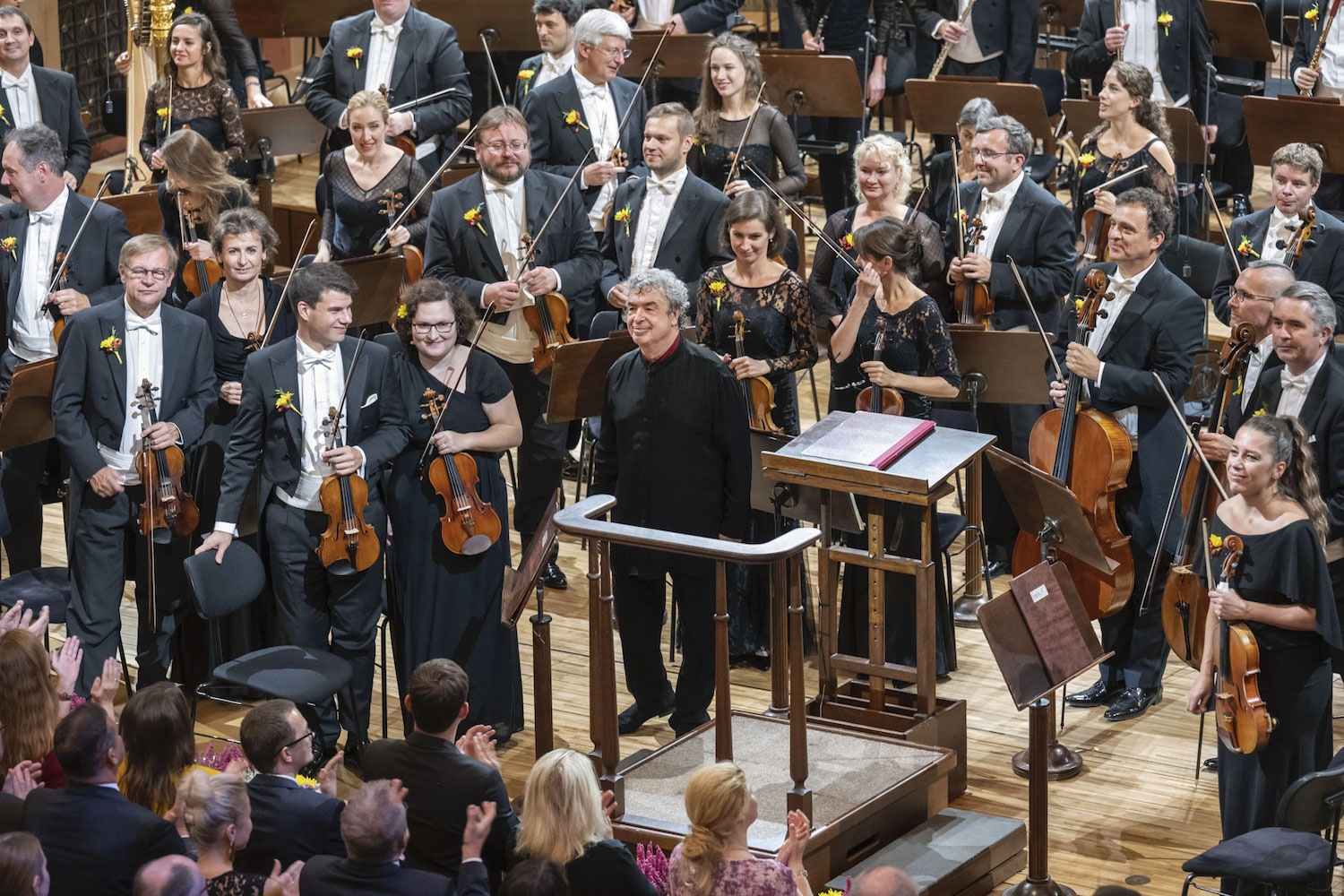
Of course it is only the calm before the storm, or rather the apotheosis, and “an orgy of counterpoint” unfolds. The chorale from the second movemnt returns, and a grandiose acceleration drives the music towards its conclusion: a final tutti chord that surely shook the rafters of Prague’s Rudolfinum, where all the symphonies were recorded.
There is no danger of this Rondo-Finale becoming overheated and orgasmic. These Czechs can play loudly without creating a ruckus and the fugato sections – which would have challenged orchestras 120 years ago – are negotiated with a kind of featherlight ease that only the very best musicians can muster.
I will in the near future also review Mahler 7, which Bychkov will conduct with the BBC Symphony Orchestra in November 2026.
ALBERT EHRNROOTH
Now available MAHLER SYMPHONIES 1-9 CZECH PHILHARMONIC, conducted by SEMYON BYCHKOV on PENTATONE
Read my review of the Berliner Philharmoniker, Karajan 1970-1979 Live in Berlin box set here https://acge.net/culture/karajan-berliner-philharmoniker/
and Berliner Philharmonic’s box set with recordings of works by Schoenberg,conducted by Kirill Petrenko https://acge.net/culture/schoenberg-box-set-berlin-phil-petrenko/
